Which cherry blossom varieties are suitable for growing in China
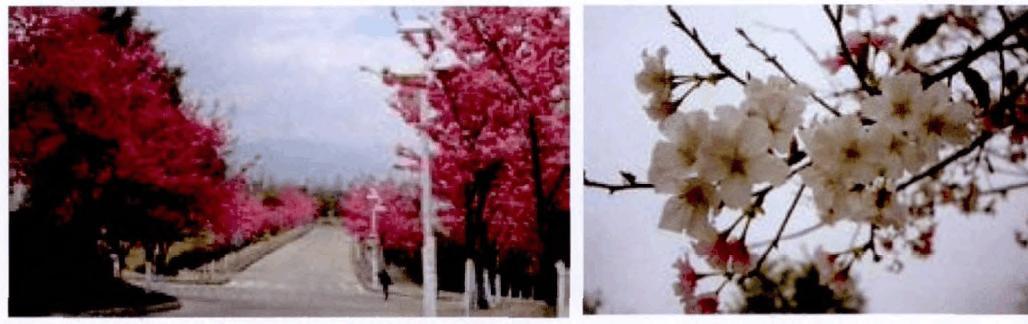
Cherry blossom varieties suitable for China
Cherry blossoms are widely distributed in China, from Heilongjiang and the provinces of North China in the north, to Hainan, Yunnan, Guangdong and Guangxi in the south, and to Qinghai, Gansu and Xinjiang in the west. According to "Flora of China", there are about 150 species of cherry blossoms worldwide, and China has about 50 species. China is the modern distribution center and diversity preservation center of cherry blossoms.
According to research by relevant experts, as early as the Eastern Zhou period more than 2,500 years ago, the "Book of Rites - Monthly Ordinances" already contained records about cherries: "In the month of midsummer, the Son of Heaven offers cherries as delicacies, first presenting them at the ancestral temple." During the Qin and Han dynasties, cherry blossom cultivation was already applied in palace gardens, with a history of more than 2,000 years. By the Tang dynasty, they were commonly planted in private courtyards. The Tang poet Bai Juyi wrote: "I know the official residence is not my home, so I prune the mountain cherries and plant them all over the courtyard. My superior has recently had many five-year assessments; I should have seen the flowers bloom at least four times." This describes the poet digging up wild mountain cherry blossoms from the hills and planting them in his courtyard for viewing. In ancient China, there were already many types of cherry blossoms, such as bell-flowered cherry, mountain cherry, and double-petaled white cherry. During the flourishing Tang period, from palace corridors to commoners' houses and fields, brilliantly blooming cherry blossoms could be seen everywhere. At that time, when envoys from many nations came to pay tribute, cherry blossoms were brought back to Japan by Japanese visitors along with architecture, clothing, tea ceremony, and swordsmanship.
According to the authoritative cherry blossom monograph "Sakura Taikan" written by Japanese scholars, cherry blossoms originated in China and were first introduced to Japan from the Himalayas. According to relevant literature and research, China has a history of more than two thousand years of cherry blossom cultivation, while Japan has a history of more than one thousand years. The cherry blossom tree has a graceful shape and spreading posture; in early spring it is full of abundant blooms, filling the garden with spring colors; in summer the branches and leaves are lush, forming a green canopy; in autumn the leaves change from yellow to red, rich with autumnal atmosphere. It is widely used for garden viewing or in new rural construction. It can be planted alone, in groups of three or five dotted in green spaces, in masses to form a "sea of flowers" landscape, in rows as street trees, or planted beside lakes. In addition, cherry blossoms combined with water can form garden waterscapes; they can also be combined with garden features to form artistic landscapes such as cherry blossoms dotting bridges, cherry blossoms leaning against rocks, cherry blossoms accompanying pavilions, and cherry blossoms beside pagodas. With the implementation of the rural revitalization strategy, beauty has become an important part of rural construction, so market demand for cherry blossom seedlings is very large.
I. Common cherry blossom varieties in China, divided by suitable planting region
Southern varieties:Nanguo Zaoying, Zhongguohong, Guangzhou Ying, Fugui Ying, Xiao Qiao, Fulushou.
Northern varieties:Diaochan, Yang Guifei, Xishi, Zhaojun Ying.
Divided by flowering time:
Early-flowering: Nanguo Zaoying, Zhongguohong, Guangzhou Ying, Fugui Ying, Fulushou. Mid-flowering: Xiao Qiao, Xishi, Zhaojun Ying. Late-flowering: Diaochan, Yang Guifei.
II. Growth habits
Chinese cherry blossoms like sunlight and a humid climate; they have some cold resistance and drought resistance; they are not tolerant of waterlogging or saline-alkali conditions, and the most suitable pH range is 5.5~6.5; they have weak resistance to smoke, dust and harmful gases; they are not tolerant of pruning, and excessive pruning must be avoided; they have shallow root systems and weak resistance to sea breeze; they prefer deep, loose, fertile and well-drained sandy loam or loam.
Planting time:Planting can be carried out in spring and in autumn and winter, but autumn and winter planting is preferable, because with autumn planting after leaf fall and before the arrival of severe winter, the root wounds of the seedlings can heal within the same year and some new roots can sprout, which is beneficial for accelerated growth in the second year.
III. Soil requirements and improvement measures
Deep, fertile, well-drained loam with pH 5.5~6.5. In places where the groundwater level is less than 1 m, use the raised planting method, that is, level the entire planting pit and then pile soil on top to plant the seedlings. For alkaline soil in northern regions, sulfur powder or ferrous sulfate is needed when necessary to adjust the pH value to about 6. Apply 2 grams of sulfur powder per square meter, with a validity period of 1~2 years, and measure annually so that the pH value does not exceed 7. For acidic soil, alkaline lime is commonly used to improve the soil.