Detailed Explanation of Bletilla striata Medicinal Resources and Intercropping Techniques
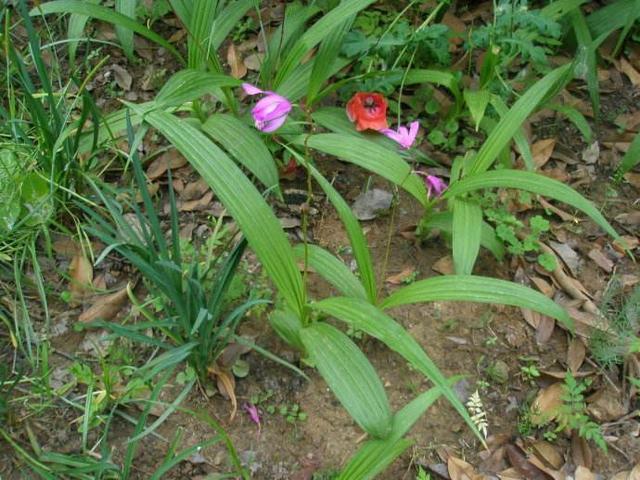
Bletilla striata Medicinal Resources, Intercropping Techniques
Intercropping refers to planting two or more crops at a certain row ratio in the same period on one piece of land, which can not only fully utilize the land, but also fully utilize light energy and carbon dioxide, increasing crop yield by about 20%. Bletilla striata grows slowly and has a long cultivation period, so short-term crops such as corn, green vegetables, and radishes, or crops with the same growth period, can be intercropped during the 1-2 years of cultivation to increase income [Jishan Huayao].
Intercropping Bletilla striata with Aucklandia lappa can not only reduce the cost of artificial shading for Bletilla striata cultivation, but also reduce the manual weeding cost for the tall Aucklandia lappa plants, while increasing crop yield and achieving the goal of increasing economic income. Main techniques: 1) Land preparation: apply 30,000-45,000 kg/hm2 of decomposed farmyard manure and 225-450 kg/hm2 of nitrogen, phosphorus, and potassium compound fertilizer as base fertilizer during overall preparation; 2) Bed making: open beds in the north-south direction, with bed width of 100-120 cm, bed height of 20-25 cm, and ditch width of 20-30 cm; 3) Interplanting: plant in March-April, plant Bletilla striata tubers 30-50 cm from the east side of the bed, and plant Aucklandia lappa seeds in the remaining land. The planting spacing for Bletilla striata is (8-10) cm x (10-15) cm, planted in furrows with a depth of 5-8 cm, and after placing the Bletilla striata tubers, cover with 2-4 cm of soil; Aucklandia lappa is planted by triangular hole sowing, with hole spacing of (10-20) cm x (20-30) cm; 4) Topdressing: the first time in May-June of the first year when seedlings are complete, apply 225-450 kg/hm2 of urea; the second time in August-September of the first year, apply 300-600 kg/hm2 of compound fertilizer containing nitrogen, phosphorus, and potassium; the third time in November-December of the first year, cover the bed surface with 15,000-30,000 kg/hm2 of decomposed farmyard manure; the fourth time in June-July of the second year, apply 300-600 kg/hm2 of compound fertilizer containing nitrogen, phosphorus, and potassium; 5) Field management: cultivate soil 2-3 times in the second year; 6) Harvesting: harvest both Aucklandia lappa and Bletilla striata simultaneously in November-December of the second year. In addition, during the interplanting period, plastic film can also be laid over the land, and after seedlings emerge, the film should be broken in time, and in November-December of the first year, all plastic film should be removed when applying decomposed farmyard manure.