Detailed Explanation of Medicinal Resources and Superior Variety Breeding Methods of Paris polyphylla
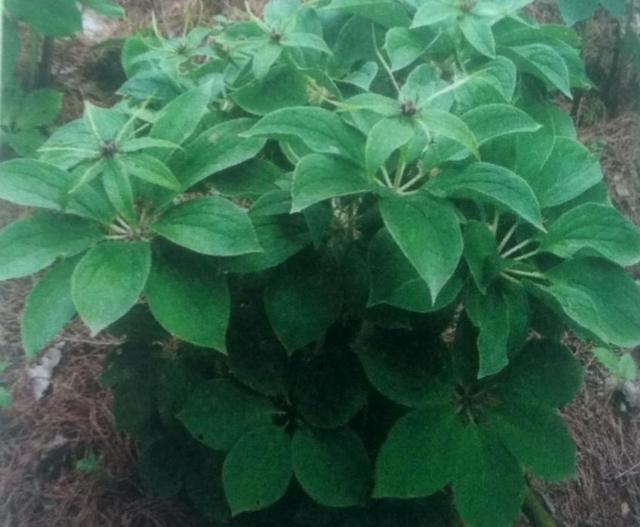
Medicinal Resources and Superior Variety Breeding of Paris polyphylla
The artificial domestication of Paris polyphylla has not been long. At present, artificial cultivation of Paris polyphylla mainly relies on digging wild resources as seed sources and propagation materials. Due to differences in seed source origins and growth years, mixed seed sources, and the lack of systematic identification and evaluation of resources, especially the almost blank research on the genetic laws regulating related traits and chemical components, the breeding of Paris polyphylla remains mainly at the primary stage of introduction and domestication.
As Paris polyphylla is first and foremost a medicinal material, efficacy is the primary breeding objective. According to the requirements of successive editions of the Pharmacopoeia of the People's Republic of China, a total content of Paris saponins I, II, VI and VII higher than 0.8% is the primary breeding objective for Paris polyphylla var. yunnanensis. Secondly, because Paris polyphylla grows slowly, has a long growth period and accumulates little dry matter, the breeding of superior varieties of Paris polyphylla is mostly aimed at high yield or fast growth while meeting the pharmacopoeia standard. In nature, Paris polyphylla generally has one stem and one leaf and sprouts only once a year; its assimilatory organs are small, its photosynthetic efficiency is low, and its dry matter accumulation is small. Therefore, the breeding of superior varieties of Paris polyphylla mostly uses large leaf area and multiple stems as morphological indicators for selection. In addition, wild Paris polyphylla grows scattered and rarely develops disease, but after large-scale cultivation, because Paris polyphylla var. yunnanensis is a perennial plant and is continuously cropped in the same plot for a long time, pests and diseases easily occur in large numbers. The main diseases found in Yunnan include leaf spot, root rot, stem rot and anthracnose. In plots with high incidence, the diseased plant rate reaches 50%-70%. Therefore, strong disease resistance is also an important breeding objective for Paris polyphylla.
Based on the above breeding objectives, scientific research institutions and enterprises such as the Institute of Medicinal Plants of the Yunnan Academy of Agricultural Sciences have bred new varieties of Paris polyphylla var. yunnanensis by using individual plant mixed selection and group mixed selection breeding. Because Yunnan Province is the main production area of Paris polyphylla, the current new varieties have all been bred by scientific research institutes and related cultivation companies in Yunnan.
(2) Introduction to Paris polyphylla Varieties
At present, the new varieties of Paris polyphylla are mainly "Dianchonglou No. 1", "Dianchonglou No. 2" and "Dianchonglou No. 3", selected through systematic breeding by the Institute of Medicinal Plants of the Yunnan Academy of Agricultural Sciences and Lijiang Yunxin Company. Other new varieties include "Yunquan No. 1" bred by the Yunnan Institute of Materia Medica, and "Baiyao Dianchonglou No. 1" and "Baiyao Dianchonglou No. 2" bred by Yunnan Baiyao Group Traditional Chinese Medicinal Materials High-quality Seed Source Breeding Co., Ltd.
1. Dianchonglou No. 1
Bred by the individual plant mixed selection method over 8 years (2000-2008). The stem is purple and single. The total content of the active ingredients Paris saponins I and II in the rhizome is 1.80% +/- 0.13%, higher than the 0.6% specified in the 2015 edition of the Pharmacopoeia of the People's Republic of China; the yield of plants over 6 years old is as high as 2700-3300 kg/hm2 (dry product), and it is resistant to leaf spot.
2. Dianchonglou No. 2
Bred by the group mixed selection method over 6 years (2004-2009). The stem is light purple and multiple, with more than 5 times the number of stems of "Dianchonglou No. 1", which is conducive to vegetative propagation; the rhizome weight of 6-year-old plants is 208.04 g +/- 93.29 g (fresh product), the rhizome length is 14.68 cm +/- 13.46 cm, and the rhizome diameter is 5.80 cm +/- 1.89 cm; the total content of the active ingredients Paris saponins I and II in the rhizome is 1.43% +/- 0.23%, 78.8% higher than the pharmacopoeia standard; the yield of 6-year-old plants is as high as 4500-6000 kg/hm2 (dry product), twice the yield of "Dianchonglou No. 1"; it shows good resistance to leaf spot (Figure 1).
1 Dianchonglou No. 2
3. Dianchonglou No. 3
Bred by the mixed selection method over 6 years. It is a disease-resistant variety with high active ingredient content and high yield. The total content of Paris saponins I, II, VI and VII reaches more than 1.98% (the 2015 edition of the Pharmacopoeia of the People's Republic of China specifies more than 0.6%). The rhizome weight of plants over 6 years old is 198.93 g +/- 54.04 g (fresh product), the rhizome length is 11.1 cm +/- 1.95 cm, and the rhizome diameter is 5.92 cm +/- 0.93 cm; the yield of plants over 6 years old reaches 5200-6000 kg/hm2 (dry product). It has good resistance to leaf spot and stem rot, with stable traits; its propagation methods are seed propagation and apical bud cutting propagation, and it is more suitable for cultivation in cool regions at altitudes of 1700-3100 m in temperate and subtropical zones; this variety has good stability and uniformity. "Dianchonglou No. 3" is relatively similar to "Dianchonglou No. 2".
4. Yunquan No. 1
From high-quality multi-bud Paris polyphylla var. yunnanensis seed sources in northwestern Yunnan, after 6 years of systematic breeding, characteristics such as obvious meristematic dominance of multiple budded stems, thick main rhizome and well-developed vigorous root system, relatively fast and uniform differentiation of multiple buds at the head of the main rhizome, differentiation of two buds at the top or lateral bud tip of each stem each year, thick buds, and neat development and growth of stems and plants were obtained. In two years, 4-8 thick rhizome buds for clonal propagation can be formed; in spring, summer and autumn, the stem buds and plants develop and grow neatly, are robust and not prone to lodging; the seed setting rate and plumpness rate are relatively high. The active ingredient content is high, with an average content of 2.43%, higher than the required indicative content of Paris saponins (the 2015 edition of the Chinese Pharmacopoeia specifies more than 0.6%). The average commercial yield of Paris polyphylla reaches 710.5 kg per mu, 150%-300% higher than the yield of similar varieties, and it has good stability and uniformity. It is more suitable for cultivation in cool regions at altitudes of 1700-3100 m in temperate and subtropical zones. Yunquan No. 1 is relatively similar to Dianchonglou No. 2 (Figure 2) [Jishan Huayao].
Yunquan No. 1
At present, "Dianchonglou No. 2" and "Yunquan No. 1" are used in production as superior varieties with high yield and excellent quality, and are relatively favored by growers.