Grafting and High-Yield Cultivation Techniques for Cherry Tomatoes (Cherry Tomatoes) in Boluo County, Guangdong
Grafting and High-Yield Cultivation Techniques for Cherry Tomatoes in Boluo County, Guangdong Province
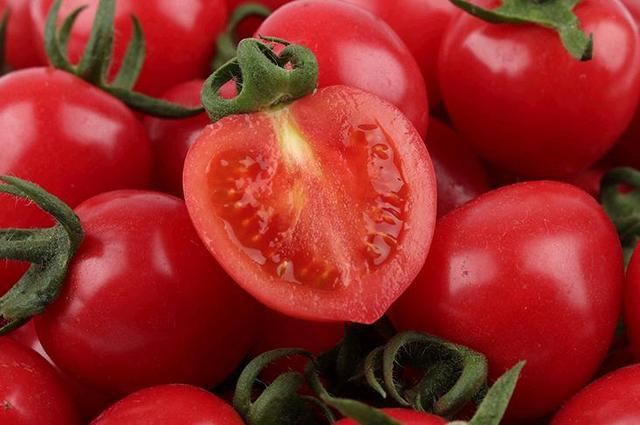
Cherry tomato is a fruit-type small tomato, commonly known as cherry tomato. Because it is exquisite and crystal-clear, moderately sweet and sour, and rich in various vitamins, it is deeply loved by consumers and is a best-selling variety of urban fruits and vegetables. Conventional cherry tomato cultivation mainly faces two problems. First, the problem of dead seedlings caused by bacterial wilt. This disease is a major enemy of tomato production, is easy to infect and difficult to control, often resulting in almost no harvest. Second, the problem of variety quality. At present, cherry tomatoes generally have an ordinary taste, and one cannot eat more than a few. High-quality cherry tomatoes, however, do not have the characteristic "green raw" smell unique to tomatoes; they are sweet, sour, crisp, and refreshing on the palate, leaving a lingering fragrance and making people recall them fondly. The high-quality grafted cherry tomato introduced by the Boluo County Agricultural Technology Extension Center is highly resistant to bacterial wilt. Through demonstration and promotion, it has a long fruiting period, first-class quality, and a unique flavor. Producers and consumers have responded strongly. Combined with leisure agriculture picking,the output value per 667 sq m can reach more than 60,000 yuan, with broad market prospects. The high-yield cultivation techniques for grafted cherry tomatoes are summarized as follows:
Although grafted cherry tomatoes have strong growth vigor and high stress resistance, considering the high temperature and high humidity climate of the early season, which makes management difficult, grafted cherry tomatoes are generally not promoted for planting in the early season. Planting is required in the late season. Grafted seedlings are transplanted starting in September of the same year, the first batch of fruits is picked from December to January of the following year, and regrowth fruits are produced after March of the following year.
1 Land preparation requirements
According to the developmental characteristics of grafted cherry tomatoes, neutral fields with loose soil, sufficient moisture, and convenient drainage and irrigation are generally selected for planting. The field is plowed and harrowed evenly, and mechanically cultivated into high beds about 1.2 m wide (including ditches) and about 25 cm high, ready for transplanting.
2 Trellising requirements
According to the indeterminate growth characteristics of this variety, a single-bed, single-row cultivation method is adopted (sufficient height, strong photosynthesis). It is required to saw bamboo poles about 2.2 m long or tail poles from eucalyptus processing bottom material as posts (inserted 20 cm into the ground), with a post spacing of about 3.5 m. Along the row direction, greenhouse film-supporting wire (purchased on Taobao) is used to wind around the tops of the posts and pull horizontal supporting posts. The ends of the rope are inclined into the ground for positioning (bamboo poles can be used as diagonal braces for reinforcement), completing the trellis along the row direction. Opposite posts between rows are also required to use greenhouse film-supporting wire, pulled vertically at intervals, with the wires intersecting in a "cross" shape, to improve wind resistance and self-weight anti-falling ability.
3 Planting requirements
Per 667 sq m, use 400 kg of refined bio-organic fertilizer, 50 kg of 15-15-15 compound fertilizer, and 20 kg of urea as base fertilizer. After mixing evenly, apply in strips on the bed surface about 25 cm on both sides of the transplanting row. Level the bed and clean the ditches, then begin transplanting the grafted seedlings. Grafted cherry tomatoes have strong tillering ability and are suitable for sparse planting. The transplanting spacing is about 1 m, and about 700-800 plants are transplanted per 667 sq m. When watering the root-setting water and the green-returning water, prevent the graft union from being buried by soil (a key task during seedling inspection).
4 Seedling and vine management
4.1 Vine guiding with special vegetable net. The main branch is trained with double stems. A special vegetable net (similar to a fishing net) is used to pull the net and guide the vines onto the trellis, winding them on both sides of the vegetable net and appropriately fixing them to the grid with string.
4.2 Regular vine training. Grafted cherry tomatoes have strong tillering ability. It is required to appropriately remove low-position vines, weak vines, dense vines, crossing vines, and weak flower clusters, and reasonably organize and guide the extension direction of side vines to enhance overall photosynthesis.
4.3 Mid-to-late stage management. Grafted cherry tomatoes are mostly indeterminate growth type. When branches and vines grow to the top of the posts, they often have nowhere to extend, bend, and then naturally droop. Old and tender vines overlap, seriously affecting the quality of regrowth fruits in the later stage. Therefore, about 30 cm on both sides of the horizontal film-supporting wire of the positioning posts, wire can be pulled horizontally to balance the planting rows, so as to support and spread the seedlings and improve production results.
5 Fertilizer and water management
5.1 Seedling and vine stage. Before grafted cherry tomatoes flower, fertilize according to seedling condition and leaf color. Generally, water-soluble fertilizer is used to promote seedlings. Per 667 sq m, use 40 kg of 15-15-15 compound fertilizer and 5 kg of urea, diluted 100 times with water, and apply as a drench. The number of applications is not fixed.
5.2 Flowering and fruiting stage. After the first flowers set fruit, apply fruit-strengthening fertilizer. Per 667 sq m, use 25 kg of 15-15-15 compound fertilizer diluted with water and drenched. During the peak flowering and fruiting stage, after each large-volume harvest, regularly supplement fertilizer and water. Per 667 sq m, use 40 kg of 15-15-15 compound fertilizer diluted with water and drenched, or broadcast and cover with soil (if rain is forecast). In addition, foliar fertilizers such as potassium dihydrogen phosphate and related trace element water-soluble fertilizers can be sprayed to preserve flowers and fruits.
5.3 Regrowth flowering stage. For grafted cherry tomatoes, after the first fruit production generally ends, they enter a "dormant period" around the Spring Festival of the following year. In March, they begin regrowth flowering for a second fruit set, which is an important supplementary yield period. The fertilizer and water supplementation method is the same as above.
6 Pest and disease control
Grafted cherry tomatoes have strong stress resistance, and bacterial wilt and explosive severe pests and diseases rarely occur. Common diseases mainly include leaf mold, late blight, and powdery mildew when extreme high-temperature and high-humidity climates occur in the mid-to-late stage. Pests mainly include leafminer, whitefly, and aphids, as well as physiological flower and fruit drop. Among the diseases, leaf mold can be controlled by alternating spraying with 80% dimethomorph water-dispersible granules at 5000-1000 times dilution, or 10% Score (difenoconazole) water-dispersible granules at 1200 times dilution, or 60% Baitai (pyraclostrobin + metiram) water-dispersible granules at 1000 times dilution. During the susceptible period, spray once every 7 d for 2-3 consecutive sprays. For late blight, 64% Sandofan wettable powder at 500 times dilution, or 58% Jinlei (mancozeb) wettable powder at 500 times dilution, or 72.2% Previcur (propamocarb) aqueous solution at 800 times dilution can be selected for spraying, once every 7-10 d for 4-5 consecutive times. For powdery mildew, 15% triadimefon at 500 times dilution can be used for spray control. In severe cases, 25% propiconazole at 3000 times dilution can be added for spraying. During the susceptible period, spray once every 7 d for 2-3 consecutive sprays. Among the pests, leafminer can be controlled by alternating spraying with 1.8% abamectin emulsifiable concentrate at 2000-3000 times dilution or 50% cyromazine water-soluble powder at 2500-3500 times dilution. Whitefly can be controlled by alternating spraying with 2.5% deltamethrin at 2000-3000 times dilution or 80% nitenpyram + pymetrozine water-dispersible granules at 1000 times dilution. Aphids can be controlled by spraying with 10% imidacloprid wettable powder at 2000 times dilution. For physiological flower and fruit drop, attention must be paid to photosynthesis and fertilizer and water control, thinning and pruning excessive vegetative branches and dense branches and leaves, and appropriately controlling fertilizer and water during rainy weather to reduce excessive vegetative growth, promote reproductive growth, and improve flower and fruit retention.
7 Regular harvesting
The grafted cherry tomatoes introduced by the center are harvested after natural color change. The total yield of the first fruits and regrowth fruits is more than 3000 kg per 667 sq m. Combined with leisure picking, the output value per 667 sq m can reach more than 60,000 yuan. Due to the significant benefits, it has already been promoted and demonstrated on a large scale, becoming an outstanding representative of profitable leisure agriculture.