Quick Coloring Techniques for Succulents: Easily Grow Jelly-Colored Plants
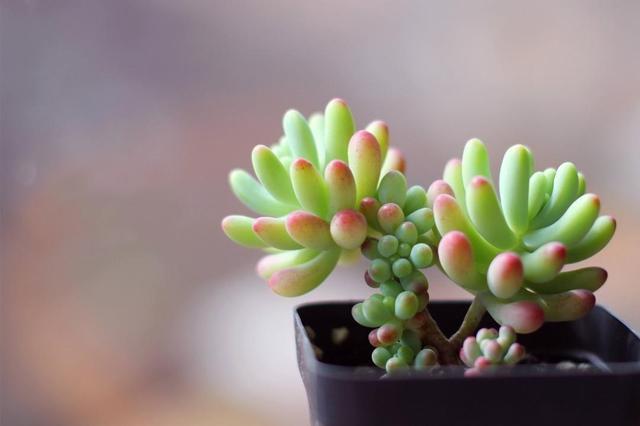
Other people's succulents are always plump, cute and shapely, with changeable colors, while your own succulents are always a plain vegetable green, leggy and sprawling. The most important reason is that you haven't mastered the key points of growing succulents well. Below, let's share with everyone the secrets of how to grow succulents that are plump, cute and shapely!
1. Give them plenty of sun
If you want succulents to become plump and beautiful, the most important thing is sun exposure. Aside from providing appropriate shade in summer, they need plenty of sun in the other seasons, and the longer the exposure, the better. Of course, it is best to expose them directly outdoors, because with glass in between, a lot of ultraviolet light is reflected away, which affects the results. Of course, if the summer sunlight is too intense, you still need to provide appropriate shade to avoid sunburn.
2. Water less
The leaves of succulents store a certain amount of water. If you water too much, the succulent will only grow upward endlessly, which leads to leggy growth. Only by controlling water appropriately can the succulent use its own leaves to store water, and the leaves will become thick and plump.
3. Large temperature difference
If you want succulents to develop beautiful colors, a large temperature difference is an essential condition. In spring and autumn, the temperature difference between day and night is best over about 15°C. Put them outdoors to grow in the open, and before long the succulents will change color. The effect is really excellent; basically, anyone who tries it knows.
4. Carrot water
This method is more suitable for succulents of the Crassulaceae family. Crassulaceae succulents absorb carotene, so carrot water is very suitable as fertilizer. Cut carrots into pieces, boil them, then put them in a plastic bottle to ferment. Generally, after one or two months they will be fully decomposed, and afterward you can dilute it and water the succulents with it. After using this method, the originally green leaves of the succulent may turn a transparent yellow, just like jelly.