Judging and Caring for Christmas Cactus During Its Summer Dormancy and Semi-Dormancy
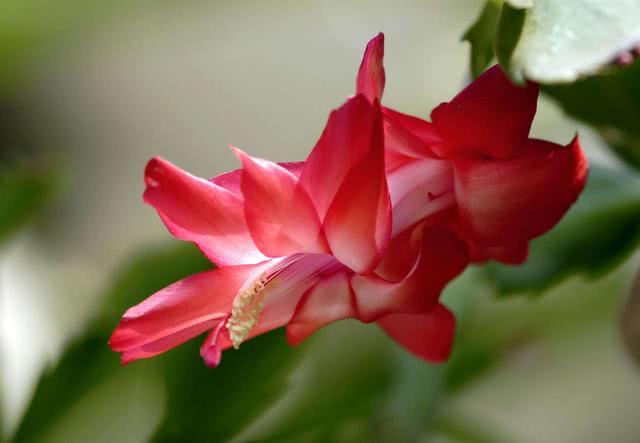
Anyone who has grown plants for a while knows that the Christmas cactus is a winter-and-spring bloomer, and its most suitable growing temperature is 15-28°C. Below or above this temperature, the Christmas cactus will enter dormancy or semi-dormancy because of the unsuitable temperature. How can you tell whether the Christmas cactus has entered dormancy? How does care differ during dormancy and semi-dormancy? Today we will tackle these one by one.
The Christmas cactus normally blooms from November to April of the following year. With proper care, it will have two blooming periods each year, though the blooming periods may be slightly earlier or later across the country due to differences in region and climate. After the second blooming period, around late April to early May, the Christmas cactus will enter a semi-dormant state for a time. Because it consumed a large amount of nutrients during the blooming period, you should promptly give the Christmas cactus a supplementary dose of a complete compound fertilizer. At this time the Christmas cactus is resting and recuperating, and after about 20 days it re-enters the growth stage and begins to grow new leaves. At first the leaves are red, and as the leaves gradually grow larger, they slowly turn green. At this stage the temperature is not yet very high, and all of the Christmas cactus's nutrients are concentrated in supplying the leaves, so it enters a period of vigorous branch and leaf growth. To make the leaves thick and plump and store energy for fall and winter blooming, you can apply 1-2 doses of a nitrogen-potassium fertilizer to promote lush branches and leaves.
Around June, as the temperature gradually rises, the Christmas cactus grown by some flower lovers may enter dormancy early because of the unsuitable temperature. How can you tell whether the Christmas cactus has entered dormancy? When the room temperature is above 30°C, if you find that the Christmas cactus is no longer growing new leaves even though it is not short of water, and the branches and leaves are slightly wilted, or you can clearly see that the leaf color is no longer as emerald green as before and has become somewhat dull, it indicates that the Christmas cactus has entered dormancy. At this point, note that if the leaves are severely wilted, promptly check the condition of the potting soil; if the potting soil is too dry, you need to water it promptly. If the potting soil is moist but the plant is severely wilted, then you should consider whether the roots have rotted. The Christmas cactus is fairly drought-tolerant, and once it is overwatered, the roots will lack oxygen and rot. In this case, you should promptly pull out the plant, cut off the rotted parts, disinfect the cut surfaces with a carbendazim solution and let them dry, then repot or take cuttings.
A Christmas cactus that has entered dormancy needs less water, but since summer temperatures are high, just keep the potting soil slightly moist, promptly move the plant to a cool, ventilated place, stop fertilizing, and frequently spray water near or above the plant to maintain the air humidity it needs.
Some flower lovers ask: does the Christmas cactus definitely enter dormancy in summer? The answer is no. The Christmas cactus's summer dormancy is determined by the temperature and the plant's growth vigor. If you place it in an environment below 30°C with good ventilation and moderate watering, the Christmas cactus will not go dormant, or will only enter a semi-dormant state. Some flower lovers find that their Christmas cactus is still growing new leaves during a high-temperature period of over 30°C, only growing slowly, having entered a semi-dormant state. Generally, a semi-dormant Christmas cactus still has emerald green branches and leaves, and you can clearly see that it is growing. During care, likewise keep the potting soil slightly moist, ventilate appropriately, and prevent infection by pathogens. You can apply a small amount of light fertilizer, such as diluted fermented cake fertilizer water, but by no means apply heavy fertilizer, to prevent burning the roots.