The leaf-cutting method for baby rubber plant is simple, roots fast, and even beginners can keep it alive.
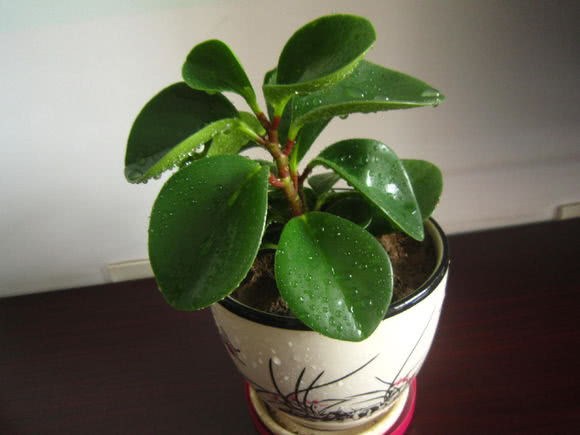
Whenever you see the glossy green leaves of the baby rubber plant, you cannot help but want to reach out and touch them. It would really be a shame not to keep a pot or two of such an adorable plant, and best of all, its vitality is extremely tenacious. I remember that time Huahua went out, and the pot at home went without care for a long time. After coming back, I found it was still just as sturdy, and from then on I became even more confident about growing it.
The baby rubber plant is not only easy to grow, but like other plants, its leaves can also be used for cuttings, especially since its leaves are fairly thick. Because they themselves contain a certain amount of moisture, the chances of rooting and sprouting are greatly increased.
The propagation methods are also divided into two types: you can use either stems or leaves directly for cuttings, and leaves are relatively simpler and more convenient. So today Huahua will tell you how to use leaves to take cuttings of the baby rubber plant!
First, we need to select the leaves for cutting the baby rubber plant. Remember to try to use ones that are larger and thicker. Once chosen, we can just pick them off directly with our hands. Because the plant is relatively small, using tools will inevitably damage other leaves, so using your hands is more direct and convenient. Be careful to keep the leaf stalk!
The picked leaves should be left for a while first. Once the wounds have mostly healed, they can be planted in pots. Because the leaves are relatively large, it is best not to use a seedling box. Just prepare a slightly larger flower pot. As for the soil, we can use ordinary nutrient soil or sand to encourage rooting.
If using sand, you can prepare a plastic bottle, cut off one half, and poke a small ventilation hole in the bottom of the bottle. Then you can fill it with sand. This method gives a relatively higher survival rate.
Finally, we can insert the leaf into the sand. Before inserting, we need to water the sand once to ensure its moisture. Also, when inserting, first use a bamboo skewer to poke a small hole, then put the leaf in. This both keeps ventilation and prevents blocking its "rooting opening."
Using a transparent plastic bottle also has another advantage: you can clearly see its rooting progress, which helps suppress the urge to pull it out out of curiosity.
If using nutrient soil, the method is about the same. Just gently bury it in the soil, then use a spray bottle to moisten the surface of the pot. This leaf-cutting process is relatively long, so gardening friends must be patient. For slow-growing ones, it is even possible for rooting to take a month.
Besides these, we can also use water to induce it to root, and then grow it in potted soil. First, we still need to prepare a transparent plastic bottle filled with two-thirds water, then poke a hole in a small piece of foam board and pass the leaf stalk through the other end.
Finally, we can put it in the bottle. During the period when it is rooting, as long as the water quality does not have problems, we do not need to change the water, because once the water is changed too frequently, it will instead make it uncomfortable and be even less favorable for rooting. Also, the water must be water that has been left to sit and is close to room temperature. Especially in this kind of weather, water that is too cold will "freeze" it.
After observing that it has rooted, you can take it out and switch to soil culture, but after taking it out, first let it dry for a while before potting it up. This can also be considered giving it a buffer period!