Comprehensive low-improvement and efficiency-enhancing technology for vigorous-growing, low-yield or non-bearing citrus orchards
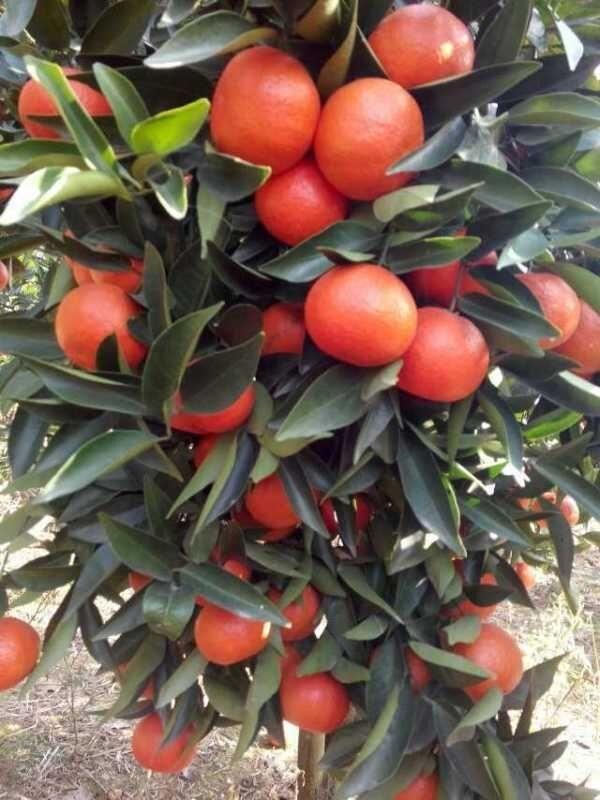
Comprehensive low-improvement and efficiency-enhancing technology for vigorous-growing, low-yield or non-bearing citrus trees (orchards)
Vigorous-growing, low-yield or non-bearing citrus trees (orchards) refer to citrus trees that have been planted for many years, with luxuriant branches and leaves, having reached the tree age of high and stable yield period, yet bearing very little fruit or almost no fruit, with no economic benefit. For such citrus trees (orchards), after adopting comprehensive measures for improvement, fruit set can be promoted and appropriately increased within 1 to 2 years, smoothly entering the high-efficiency period of high and stable yield.
I. Manifestations of vigorous-growing citrus trees (orchards) and the main reasons for their formation
1. Manifestations
Vigorous-growing, low-yield citrus trees have strong and vigorous tree vigor, tall or relatively tall trunks, many and disordered large branches within the canopy, poor branch ordering, irregular tree shape, numerous, disordered and slender water sprouts, fewer spring shoots, and abundant but slender summer and autumn shoots; some new shoots grow upright and extend beyond the canopy, the interior of the canopy is shaded and poorly ventilated and lit, and pests and diseases are severe; the taproot is thick and deep, and lateral roots are numerous and well-developed; leaves are numerous and thin, large or relatively large, dark green or light green in color. Such citrus trees (orchards) produce a large number of flowers every year, but flower and fruit drop is severe, fruit set is very little or almost nonexistent, with no economic benefit.
2. Main reasons for their formation
① Excessive nutrition. The soil of the citrus orchard is too deep and fertile, causing excessive tree growth, thus imbalancing vegetative growth and reproductive growth.
② Unscientific fertilization. The citrus orchard does not value organic fertilizer or the balanced application of nitrogen, phosphorus and potassium, or applies excessive or disproportionate nitrogen fertilizer, causing vigorous tree growth, numerous and long shoots, and numerous, thin, large, dark-colored leaves, disrupting the balance between vegetative growth and reproductive growth.
③ Planting too densely (or failure to thin out or transplant temporary trees in time). When the canopy expanded and closed in, effective canopy control was not carried out in time, nor were some trees thinned out or removed, resulting in overlapping and crossing branches between trees and poor ventilation and light penetration. When Satsuma mandarin is grafted onto ZhuLuan rootstock, the tree tends to grow excessively vigorously.
④ Unscientific shoot control. When spring, summer and autumn shoots emerge, shoots are released too late, resulting in numerous shoots that grow quickly but are not fully developed, especially when too many late autumn shoots emerge; when encountering adverse weather such as dry heat and freezing, shoots are prone to leaf drop or freezing damage, which greatly affects flower bud differentiation, reduces flower quality, and affects flowering and fruit set the following year.
II. Root control, rational fertilization, and flower and fruit preservation of vigorous-growing citrus trees (orchards)
1. Root control
① Trenching to cut roots. Trenching to cut roots from late August to early October is best. Depending on the situation, dig a trench on one or both sides of the tree at 20 to 30 cm inside the drip line, 50 to 60 cm wide, 50 to 60 cm deep, and of self-determined length, cutting 20% to 30% of the shallow lateral roots with a diameter of 1 to 2 cm. For trees that grow too vigorously, holes can be punched on one or both sides toward the inner side of the canopy, and a sharp knife used to chop through the taproot or some thick lateral roots. When cutting roots, whether the roots are relatively thick or relatively thin, the wounds must finally be trimmed smooth with a sharp knife and coated with lime water or other fungicides to promote wound healing and prevent infection by soil-borne diseases. After trenching and root cutting, depending on tree vigor and weather, choose sunny days to sun-expose the trench and roots for about 10 days, to better control the roots and soil moisture and enhance the effect of suppressing vigorous growth. If the soil is deficient or lacking in organic fertilizer, apply decomposed pig and cattle manure in layers in combination with trenching and root cutting. Trenching and root cutting should be carried out continuously, once a year, until the vigorous-growing citrus trees (orchards) enter high and stable yield.
② Deep medium tillage to cut roots. Each year before summer shoots emerge and after autumn shoots stop growing, choose sunny weather for deep medium tillage, hoeing through some fine roots to suppress excessive absorption of fertilizer and water by the root system. This can effectively control the emergence and growth of shoots, promote shoot fullness and thickness, accelerate nutrient accumulation in the tree and flower bud differentiation, and improve flower quality. The position of deep medium tillage starts from 0.8 to 1.2 m from the trunk and gradually expands outward; the depth of medium tillage goes from shallow to deep, with 16 to 20 cm being appropriate.
2. Rational fertilization
Vigorous-growing citrus trees (orchards) are mostly caused by failure to value the combined application of nitrogen, phosphorus and potassium fertilizers, applying little or no organic fertilizer, and disproportionately applying chemical fertilizers (especially nitrogen fertilizer), which promotes excessive shoot growth. Farmyard manure such as pig and cattle manure has comprehensive nutrients and decomposes slowly, contains large amounts of organic matter, can improve the soil, increase the soil's capacity to retain and supply fertilizer and water, and enhance the tree's stress resistance, so it must be valued and applied.
① Balanced fertilization. For vigorous-growing trees (orchards), the suitable ratio of nitrogen, phosphorus and potassium fertilizers is 2:1:1.6. Nitrogen fertilizer should not be applied disproportionately or heavily; it is best to apply small amounts multiple times, and strictly control excessive or single application of nitrogen fertilizer in the middle and late stages of shoot growth, to avoid causing excessive vegetative growth.
② Base fertilizer and topdressing should be applied according to the situation. Vigorous-growing trees should have the number and amount of topdressing controlled. Base fertilizer: focus on increasing the proportion of base fertilizer; the application amount of base fertilizer should account for more than 60% of the total fertilization amount, of which organic fertilizer should account for 70% to 80%. Topdressing: for vigorous-growing trees, spring topdressing should be applied sparingly or not at all according to the situation; for trees that are excessively vigorous and have no hope of fruit set, do not apply spring fertilizer; for trees that can flower and bear fruit in the current year, if fertilizing, each tree can be trench-applied or hole-applied with 50 to 60 kg of water-diluted decomposed human and livestock manure water (or 1 kg of multi-element compound fertilizer); fruit-stabilizing and fruit-swelling fertilizer should be emphasized, and each tree can be trench-applied or hole-applied with 50 to 60 kg of water-diluted decomposed human and livestock manure water and 1 kg of superphosphate (or 1 to 1.5 kg of multi-element compound fertilizer); autumn fertilizer should be controlled, and trees with excessively vigorous growth may not receive autumn topdressing.
3. Flower and fruit preservation
① Before flowering. Spray 0.3% potassium dihydrogen phosphate + 0.1% borax solution on the foliage 1 to 2 times, spraying 30 to 40 kg per mu each time, with an interval of 10 to 15 days each time, which can increase the fruit-setting rate.
② Flower bud stage. Spray 0.3% potassium dihydrogen phosphate + 0.1% magnesium sulfate solution on the foliage once, spraying 30 to 40 kg per mu each time, which can significantly increase the fruit-setting rate. During this period, if encountering dry and hot weather with temperatures above 30°C and relative air humidity below 60%, spray 1 to 2 times with 500-fold diluted Xishimei (containing amino acids and chelated trace rare elements) on the foliage, spraying 30 to 40 kg per mu each time, with an interval of 10 days, which has a good effect on stabilizing flowers and fruit.
③ After flower drop. Spray 6 to 10 mg/L 2,4-D or 0.3% potassium dihydrogen phosphate solution on the foliage 1 to 2 times, spraying 30 to 40 kg per mu each time, with an interval of 10 to 14 days, which has a good fruit-preserving effect.
④ Young fruit swelling stage. Spray 0.3% potassium dihydrogen phosphate + 0.5% urea solution on the foliage 1 to 2 times, spraying 30 to 40 kg per mu each time, with an interval of 10 to 15 days, which has a good effect on preventing and controlling fruit drop.
III. Pruning of vigorous-growing citrus trees (orchards)
① Winter pruning. For vigorous-growing trees, thin and weak branches, dead and dry branches, overlapping branches, severely diseased and pest-infested branches, branches that receive no light, and upright water sprouts that are not retained and disrupt the tree shape should be cut off from the base; crossing branches should be spread or short-cut; other branches should be lightly pruned and left long, and some inner canopy branches should be thinned to improve ventilation inside the canopy. For excessively shaded trees, remove 1 to 2 large lateral branches from the base within the canopy to open a skylight and let light reach inside the canopy. For vigorous-growing trees whose branches cross and close in, retract-prune or thin out some drooping branches and secondary and tertiary shoots; short pruning may be omitted to promote reproductive growth. Heavy pruning that induces numerous shoots is prohibited for vigorous-growing trees, otherwise it will intensify the shoot-fruit conflict.
② Thinning out and removing overcrowded trees. Planting citrus trees too densely has a hundred harms and few benefits. For overcrowded vigorous-growing trees (orchards), thinning out and removing some trees in winter or early spring can relieve shading and improve ventilation and light conditions.
③ Bud removal, pinching, and shoot control. Unwanted buds or young shoots should be removed as early as possible. When shoots grow to 30 cm long, pinch them to promote shoot fullness and thickness. When vigorous-growing trees are at the bud stage, timely regulate spring shoots according to flower quantity and quality, and timely pinch and control the growth of vigorous shoots. For vigorous-growing trees that have already flowered and set fruit, all summer shoots should be removed as early as possible, removing buds once every 6 to 7 days starting from late May, and stopping bud removal from July 10 to 15, which can effectively alleviate the shoot-fruit conflict and play the role of stabilizing fruit with shoots and suppressing shoots with fruit. When shoot growth is too vigorous, spray 15% paclobutrazol wettable powder at 120- to 150-fold dilution on the foliage, spraying 30 to 40 kg per mu each time, which has a good effect on controlling excessive growth and can promote shoot fullness and thickness.
④ Branch spreading, etc. For retained upright vigorous shoots, from May to August, branch propping, branch spreading, and hanging with heavy objects should be carried out to increase branch angle and control excessive growth, thereby forming a good tree shape and branch shape.
⑤ Shoot twisting. During flower bud differentiation in September to October, twist and injure excessively vigorous new shoots at the base, or use rope to spread the branch angle, or coil the shoots to change the direction of shoot growth, letting shoots grow horizontally or at an incline. This can control the intensity of fertilizer and water transport to the shoots, effectively suppress vegetative growth, and accelerate the formation of fruiting mother branches.
⑥ Girdling or wire constriction. For excessively vigorous citrus trees, on May 10 to 20, late September and mid-October each year, use a sharp knife to alternately (staggered) make half-moon girdles at the base of main branches, secondary main branches and large branches, or use fine iron wire to constrict the base of main branches, secondary main branches and large branches, with the depth reaching the xylem but preferably not damaging the xylem. This can control the upward transport of nutrients to the upper branches and leaves in a short time, significantly suppress branch and leaf growth, accelerate the transformation from vegetative growth to reproductive growth, and can promote flowering and preserve fruit. Do not girdle or wire-constrict weaker trees or during drought, to avoid adverse reactions affecting the tree body and flower and fruit growth. For branches constricted with fine iron wire, the wire should be removed by the end of October.
IV. Pest and disease control of vigorous-growing citrus trees (orchards)
Vigorous-growing citrus trees (orchards) have poor ventilation and light penetration and relatively severe pests and diseases, so special attention should be paid to prevention and control. The key to pest and disease control is early prevention and early treatment. When pests and diseases occur locally or on individual trees, do not apply pesticide to the whole orchard; instead, treat only the affected trees. For pests and diseases that can be controlled with one pesticide or one class of pesticide, never use multiple pesticides or multiple classes of pesticides, to avoid pests and diseases developing resistance or tolerance, increasing pesticide cost and unsafety (pesticide residues).
For vigorous-growing trees (orchards), each time buds just sprout, the young shoot and young leaf stage, the flowering and flower-drop stage, and the young fruit stage are key periods for control. The main pests and diseases include canker, scab, gummosis, anthracnose, sooty mold, red spider mite, aphids, rust mites, yellow spider mites, scale insects, leafhoppers, citrus leafminer, swallowtail butterflies, etc., and targeted pesticides should be selected for control.