High-quality and high-yield cultivation techniques for Isatis indigotica in Zoucheng City, Shandong Province
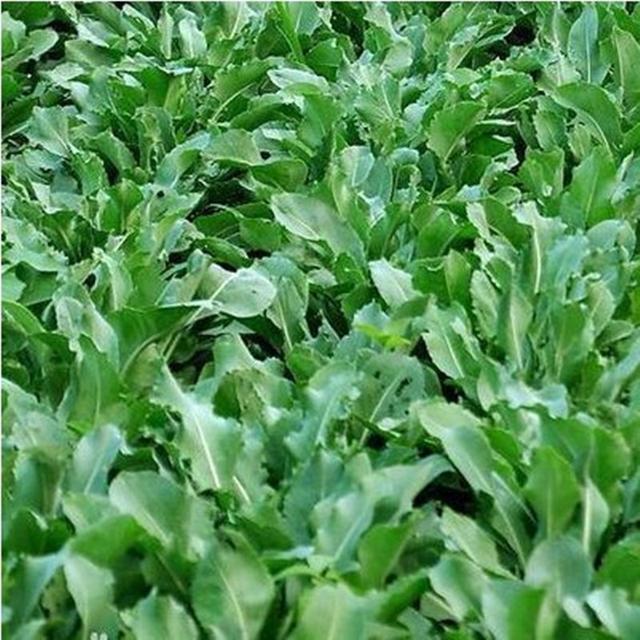
High-quality and high-yield cultivation techniques for Isatis indigotica in Zoucheng City, Shandong Province
Isatis root (banlangen) is the dried root of Isatis indigotica, a plant of the Brassicaceae family; its upper leaves are known as Daqingye, and it is a common Chinese medicinal herb. According to historical research, artificial cultivation of Isatis indigotica in China began as early as the Tang Dynasty. At present, the main production areas for Isatis indigotica are Shandong, Anhui, Gansu, Shanxi, Shaanxi, Inner Mongolia, Heilongjiang and other provinces. In 2017, the Shandong Provincial Department of Agriculture launched the construction of an innovative system for Chinese medicinal herb cultivation, making high-quality and high-yield cultivation techniques for Isatis indigotica a major technology research, development and extension project, further improving the technical regulations for high-quality cultivation and management of Isatis indigotica and raising cultivation returns.
I. Morphological characteristics and growth habits
1. Morphological characteristics
Isatis indigotica is a biennial herbaceous plant. The plant height is 50-100 cm. The root is thick and fleshy, nearly conical; the root diameter is generally 2.0-3.0 cm, and the marketable root length is 20-30 cm. Its surface is earth-yellow, with short transverse wrinkles and a few fibrous roots. The flowering period is April to May.
2. Growth habits
Isatis indigotica has strong adaptability and is characterized by a preference for light, fear of waterlogging, a preference for fertilizer and tolerance of severe cold. It has no strict requirements for soil, and can generally be planted in ordinary soils in both cold and warm regions.
II. Land selection and sowing
1. Land selection and land preparation
To achieve high quality and high yield of Isatis indigotica, it is advisable to choose sandy loam soil with good permeability that does not accumulate water after rain. The most suitable previous crop is a non-Brassicaceae crop such as corn, sorghum or sesame. After the previous crop is harvested, promptly clear away dead branches and fallen leaves, and destroy them at a distance or bury them deeply on site. For plots planted with Isatis indigotica, a two-tillage-per-year system is adopted. The first is deep ploughing before winter; in principle, only ploughing is done without harrowing, so that through alternating freezing and thawing, the soil's physical and chemical properties are improved, the soil's water- and fertilizer-holding capacity is enhanced, and production potential is increased. Winter ploughing reduces the occurrence of soil-borne diseases and lowers the field population base of overwintering insect eggs. The second ploughing is carried out 10-15 days before sowing after the beginning of spring. In conjunction with deep ploughing, apply 3500 kg of fully decomposed farmyard manure per mu or 4500-5000 kg of edible mushroom spent substrate per mu; after broadcasting, plough deeply, harrow finely and level the land.
2. Bed making and sowing
To facilitate management, especially irrigation and drainage, production mainly uses flat beds 1.2 m wide. After the beds are made, apply 200 kg of lignin microbial fertilizer per mu to the bed surface, then carry out one deep inter-row tillage. Before sowing, treat the seeds by soaking and seed dressing, soaking the seeds in clean water for 12-24 hours. To sow evenly, remove the seeds, wipe the surface moisture dry with oil-free gauze, mix them evenly with sieved fine sand or fine soil, and then sow. The seeding rate is 2-3 kg per mu. Isatis indigotica sowing is divided into spring sowing and autumn sowing. Spring sowing is from early April to early May, and autumn sowing in the southwestern Shandong region is generally in early August. Spring sowing requires the temperature at 5-10 cm of soil to remain stable above 12 degrees C, with relative soil humidity of 60%-80%. There are generally 3 sowing methods: broadcasting, drilling and hole sowing. To achieve uniform emergence and reduce labor intensity, drilling is preferable, with a row spacing of 30 cm and a sowing depth of 2-3 cm; after sowing, press the soil to preserve moisture.
III. Field management
1. Thinning and final singling of seedlings
In conjunction with weeding, when the seedlings are 4-7 cm tall, thin them to a plant spacing of 4-6 cm. After final singling, for plots with poor soil moisture, water lightly to stabilize the seedlings. Note: when thinning, remove weak seedlings and diseased seedlings, and carry them out of the planting field for deep burial.
2. Weeding
To ensure the quality of Isatis indigotica and avoid the damage of herbicides to the plants, manual weeding is adopted. Once the canopy of Isatis indigotica seedlings closes over the bed surface, only weed without loosening the soil, until withering in autumn.
3. Water and fertilizer management
In the early growth stage of Isatis indigotica, a moderate degree of drought can, to a certain extent, encourage the roots to grow downward. From May to June, in conjunction with watering, apply a mixture of 20-25 kg of potassium sulfate compound fertilizer (15-15-15) per mu and 30-40 kg of lignin microbial fertilizer per mu broadcast between the rows, then water after light inter-row tillage. In the southwestern Shandong region, the upper leaves (Daqingye) are generally harvested twice, in late June and mid-to-late August. To prevent the harvesting of upper leaves from affecting the lower roots (Isatis root), 2-3 days after each harvest, water and topdress once, and keep the soil moist regularly.
IV. Disease control
1. Main diseases
(1) Downy mildew. This disease mostly occurs from late June to mid-July. Besides harming the leaves of Isatis indigotica, it can also infect the stems, flower stalks and siliques. In the early stage of infection, polygonal or irregular yellow-brown spots appear on the leaf margins; when humidity is high, dense white to gray-white mold, namely the pathogen's zoosporangia, grows on the underside of the leaf corresponding to the lesions. In the late stage of the disease, the leaves dry up, and the affected stems, flower stalks, petals, calyxes and siliques turn brown, with white mold growing on them, causing deformation of the fleshy tissues.
(2) Sclerotinia rot. The whole plant is affected. Affected leaves develop round lesions on both sides, with a lesion diameter of 2-6 cm, slightly sunken, gray-white in the center and brown at the edges; in the later stage the lesions become thin and brittle, cracking or perforating, and in humid conditions brown mold-like matter grows on them, which consists of the pathogen's conidiophores and conidia. Old leaves are affected first, spreading from bottom to top; in severe cases, multiple lesions merge with each other, causing the leaves to wither early.
(3) Root rot. Root rot is one of the diseases that has caused relatively serious damage in recent years. It mainly harms the roots of Isatis indigotica. The fibrous roots and the root tips of the main root are affected first. In the early stage of the disease, the root epidermis appears black, and the root vascular bundles turn brown, until the entire root system rots, the aboveground part wilts, and the whole plant dies.
2. Comprehensive disease control measures
(1) Formula fertilization. While meeting the nitrogen requirements of Isatis indigotica, increase the amounts of phosphorus and potassium fertilizers and biological microbial fertilizers. From late June to early August, during the rainy season in southwestern Shandong, spray the leaves with a mixture of 150-fold biological composite fermentation bacterial liquid and 20-fold soy milk, once every 7 days, for 4-5 consecutive sprays, to cultivate vigorous
plants and enhance the plants' comprehensive resistance.
(2) Keep the field clean. Before the rainy season arrives, promptly remove dead leaves and diseased leaves and carry them out of the planting field, maintaining good field permeability and reducing air humidity between plants and rows; after heavy rain, prevent water accumulation in the field; after harvesting the upper leaves, promptly clear away residual branches and fallen leaves.
(3) Reasonable crop rotation. Generally, a rotation system of more than 3 years is adopted, avoiding rotation with Brassicaceae crops such as Chinese cabbage, rapeseed and radish.
(4) Chemical control. For downy mildew, use 72% cymoxanil mancozeb (DuPont Curzate) wettable powder at 500-600 times dilution, or 50% metalaxyl mancozeb wettable powder at 600-800 times dilution, alternately sprayed on the leaves, once every 7 days in the early stage of the disease, for 3 consecutive sprays. In the early stage of sclerotinia rot, use 70% thiophanate-methyl wettable powder at 500 times dilution, or 40% dimethachlon wettable powder at 800-1000 times dilution for spraying, once every 10 days, for 2-3 consecutive sprays, focusing on the stem base of the plants and the ground. For root rot, before the disease occurs, use 80% thiram water-dispersible granules at 300-400 times dilution, or 50% carbendazim wettable powder at 800 times dilution to drench the roots; when diseased plants are found, promptly pull them out and bury them deeply at a distance or burn them.
V. Pest control
1. Aphids
These are piercing-sucking mouthpart pests. Besides sucking the leaves of Isatis indigotica and reducing its photosynthesis, their excrement very easily causes epiphytic fungi to grow, and the quality of the upper leaves (Daqingye) declines. Use the method of hanging yellow boards in the field to trap and kill them, generally hanging one yellow board every 5 sq m; for chemical control, use a mixture of 6000-fold 40% fenvalerate and 2000-fold 25% imidacloprid wettable powder for leaf spraying, or use 800-fold 0.3% matrine aqueous solution for spray control.
2. Cabbage white butterfly
Throughout the entire growth and development period, Isatis indigotica suffers the most serious damage from the cabbage white butterfly. The larvae chew the leaves, forming many small holes or notched holes. Use 3000-fold 45% beta-cypermethrin or 3000-fold 2.5% spinosad (Success) suspension concentrate for spray control.
3. Diamondback moth
It mainly causes damage in spring, chewing the leaves. Adults hide by day and come out at night, mostly hiding among the plant clusters during the day and beginning activity after sunset. Use 2000-fold 3% azadirachtin emulsifiable concentrate or 3000-fold 15% indoxacarb (Ammate) suspension concentrate for spraying, for 2-3 consecutive applications.
VI. Harvesting
1. Harvesting of Isatis root and Daqingye
For root harvesting, when Isatis indigotica stops growing and before the aboveground leaves wither, while the leaves are still green, choose a sunny day for digging and harvesting; mechanized harvesting is generally used. Before harvesting Isatis root, harvest the aboveground Daqingye on a sunny day; the method is to cut the leaves with a sickle 2-3 cm above the ground. After the Isatis root is harvested, remove all soil, the rhizome head and stems and leaves, dry in the sun, then tie into small bundles, sun-dry until completely dry, bale or bag for storage. Those with long, straight, thick, solid roots and abundant powder are considered the best. During sun-drying, turn them frequently, and strictly prevent rain exposure and mold, which would reduce the yield of Isatis root. The harvested upper branches and leaves (Daqingye) must not be placed in direct sunlight; after harvesting, tie them into small bundles and hang them in a ventilated shed to dry in the shade, strictly preventing moisture and avoiding mold.
2. Seed harvesting
Select robust plants free of pests and diseases. Harvest when the surface of the siliques turns purplish-brown or yellow-brown, sun-dry, remove impurities and select the seeds, then store in a dry, cool place. The lifespan of Isatis indigotica seeds is generally two years, and seeds older than two years must no longer be sown.