Wild fruit was everywhere 20 years ago, farmers cut it down to feed pigs, yet it is an expensive kidney-tonifying medicine
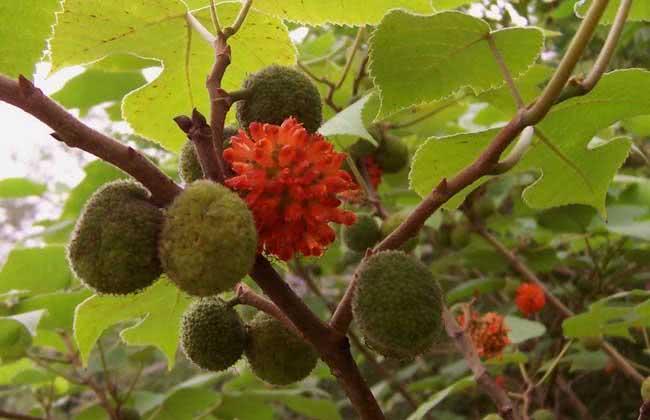
Twenty years ago, almost every rural household kept one or two pigs in the pigsty, raising them for a year and slaughtering the New Year pig at the Spring Festival. Pigs are animals with a huge appetite, and back then there was not enough grain to feed them, so when I was little there was a very important job, which was going out into the wild to "gather pig feed." So-called pig feed was the wild grasses, tree leaves, wild fruits and other wild plants that pigs like to eat. I believe many people born in the 1970s and 1980s have had the experience of "gathering pig feed"! What impressed me most was a plant called "chu tree," whose leaves and fruits are the pigs' favorite.
The chu tree is also called the paper mulberry, a plant in the mulberry family. Its leaves contain a large amount of crude protein, and after eating them pigs become sleepy and put on fat, so it was very popular with farmers. On top of that, the chu tree grows everywhere in the countryside, and it grows fast, so after a few days you could go and gather a basketful of leaves, and even if you stripped all the leaves off, it would quickly grow back. By autumn, the chu tree's fruits ripen, hanging bright red on the tree, very beautiful to look at. They are also a wild fruit that pigs love to eat, called "chushizi," which is said to taste very sweet, but in the countryside basically nobody eats it.
In fact, chushizi is edible, and in our country's traditional Chinese medicine it is also a fine kidney-tonifying medicine. But after chushizi ripens it gives off a smell that insects love, and it is often covered with flies, ants and other insects, which looks rather disgusting, so generally no one picks it to eat. Chushizi is cold in nature and sweet in taste, and mainly enters the kidney meridian. In the Rihuazi Bencao its effects are mentioned: "Strengthens sinews and bones, assists yang qi, tonifies consumptive fatigue, supports the waist and knees, improves the complexion."It is a "kidney-tonifying seed" for tonifying the kidneys and treating consumptive fatigue.
Twenty years ago chushizi was everywhere and often overlooked; now it is rarely seen, and instead has become a very expensive medicinal material. After picking the chushizi that ripens in autumn, wash it clean, remove the fruit stalk, and dry it in the sun, and it can sell for 40 yuan per kilogram. It can be used as a tonic medicinal material, can be steeped in liquor, boiled in soup, and can also be eaten as a wild fruit. However, you need to pay attention to the hygiene of chushizi, since there are many insects on it, and eating too much chushizi also makes the mouth and tongue numb and itchy, so it is generally used as medicine.
Reader friends, the chushizi that farmers cut down to feed pigs, have you ever eaten it?