Key Points of High-Yield Cultivation Techniques for Tray Seedling Broadcasting of the Super Rice Jinong Simiao
High-Yield Cultivation Techniques for Tray Seedling Broadcasting of the Super Rice Jinong Simiao
Jinong Simiao is a super rice variety bred by the Rice Research Institute of the Guangdong Academy of Agricultural Sciences. It passed variety approval in Guangdong Province in 2010, was nationally recognized as a super rice variety in 2012, and was listed by Guangdong Province as a leading variety in Guangdong Province for consecutive years from 2012 to 2017. Starting in 2011, the Zhanjiang Academy of Agricultural Sciences introduced this variety for demonstration and extension planting in Zhanjiang. By 2015, the super rice Jinong Simiao had been extended over a cumulative area of 36,000 hm2 in Zhanjiang, with typical yields reaching 7,500 kg/hm2 and high-yield fields reaching 9,000 kg/hm2. The promotion and application of the high-yield, high-quality super rice Jinong Simiao won the second prize of the Guangdong Province Agricultural Technology Promotion Award in 2015.
1 Planting Performance
1.1 Characteristics and Traits
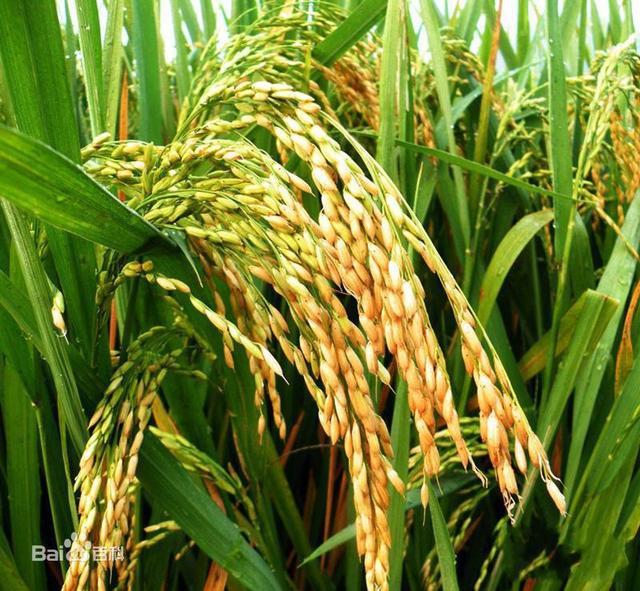
Jinong Simiao is a temperature-sensitive conventional rice variety that has been promoted for planting in Zhanjiang in recent years. The full growth period for the early season is about 123 d, and for the late season is 108 d. It has strong tillering ability, a moderately compact plant type, dark green leaves, and erect leaf posture. The panicles are long and large, with good color at late maturity, relatively strong lodging resistance, and medium-to-strong cold tolerance. Plant height is about 105 cm. The number of effective panicles is 3 million panicles/hm2, with 150 grains per panicle, an 85% seed-setting rate, and a 1,000-grain weight of about 19 g. The grain type belongs to the Guangdong Simiao type, and the rice quality reaches Grade 2 of the national standard and provincial standard. The cooked rice is soft and smooth, with a rich rice flavor, elasticity, and good taste. It is moderately resistant to bacterial blight and moderately susceptible to rice blast.
1.2 Yield Performance
When promoted for planting in Zhanjiang, the typical yield is 7,500 kg/hm2, and high yields can reach 9,000 kg/hm2, an increase of 600-900 kg/hm2, or 10%-15%, over the main locally grown varieties in Zhanjiang. In the early season of 2012, the Zhanjiang Comprehensive Demonstration and Training Station of the Guangdong Province Rice Industry Technology System planted 66.7 hm2 in contiguous fields in Shizaidun Village, Yingzai Town, Lianjiang City, with a core plot of 6.7 hm2. Experts organized by the Municipal Agriculture Bureau inspected and accepted this demonstration plot, and Jinong Simiao reached a maximum yield of 9,375 kg/hm2 and a minimum yield of 8,035.5 kg/hm2, an increase of 750 kg/hm2 in paddy rice over the main local varieties, with an increase of 11.6%. In the early season of 2013, in the Ministry of Agriculture's 10,000-mu high-yield rice creation demonstration plot, Jinong Simiao was the main promoted variety, and after actual harvesting and acceptance by provincial, municipal, and county experts, the average yield reached 9,274.5 kg/hm2. On November 6, 2014, the Zhanjiang Municipal Agriculture Bureau organized an expert group to conduct actual harvesting and acceptance of the demonstration plot of the 2012 provincial agricultural science and technology extension project "Super Hybrid Rice High-Yield Demonstration" undertaken by the Zhanjiang Academy of Agricultural Sciences. The actual harvested area totaled 0.204 hm2, and the total weight of actual harvested wet grain was 2,247.3 kg, equivalent to an average wet grain yield of 11,016 kg/hm2. Calculated at an average drying rate of 82%, this is equivalent to a dry grain yield of 9,033 kg/hm2. The results of promotion in recent years show that Jinong Simiao is a rice variety with outstanding super-high-yield performance, wide adaptability, and good yield stability.
2 Tray Seedling Broadcasting Cultivation Techniques
2.1 Preparation Before Seedling Raising
2.1.1 Seed selection. Rice tray seedling broadcasting requires a relatively small amount of seed. Before sowing, seeds should be selected with salt water. The salt water concentration is appropriate when a fresh egg stands upright in it and floats to the surface. The 1,000-grain weight of Jinong Simiao rice seeds is relatively small. Sow 35-40 g per seedling tray, and the seeding rate is about 22.5 kg/hm2.
2.1.2 Seed disinfection. Generally, strong chloroisocyanurate solution is used for seed soaking and disinfection. The method is to pre-soak Jinong Simiao seeds in clean water for 12 h to absorb water, remove and drain them, then soak them in a 300-500 times dilution of 85% strong chloroisocyanurate for 12 h [Jishan Huayao], then rinse clean with water before promoting germination and sowing.
2.1.3 Moderate germination promotion. For rice soft-tray seedling broadcasting, whether using pond mud or dry soil, the rice seed germination promotion time should not be too long. Generally, sowing can be done when the rice seeds begin to sprout and show white. At the latest, sowing must be done when the seed root has grown out and the bud sheath has not yet emerged. The principle of germination promotion is based on the standard of breaking the hull and showing white [2]. For the early season, the germination promotion time is generally 36-48 h, and for the late season it is 24 h.
2.1.4 Seedling tray preparation. Jinong Simiao has relatively strong tillering ability. In paddy fields, tray seedling broadcasting is generally arranged at 270,000-300,000 plants/hm2. Therefore, following the principle of sparse planting in fertile fields and dense planting in lean fields, the number of seedling trays should be determined according to the field fertility. Generally, 570-675 trays/hm2 of 561-hole trays are needed.
2.2 Sowing and Seedling Raising
Rice tray seedling broadcasting is generally delayed by 7-10 d compared with local transplanting and seedling raising. For early-season planting in Zhanjiang, the sowing period can be arranged in mid-to-late March, with a seedling period of 15-25 d; for the late season, sow in mid-to-late July, with a seedling-raising period of 10-12 d.
2.2.1 Sowing. Soft-tray seedling broadcasting usually uses 2 kinds of soil. When using pond mud for sowing, first arrange the seedling trays on the seedling bed, fill the prepared pond mud full into the trays, then sow, and then press the seeds. When using dry soil for sowing, first measure the soil-loading capacity of the trays (fill 1-2 trays with soil, scrape level, then pour the soil out and weigh it). Then, according to the amount of soil to be sown, mix imported compound fertilizer (ground) at 3.75 kg/hm2 evenly with the soil and grain seeds, then pour it into the seedling trays, scrape level, compact, and water thoroughly.
2.2.2 Seedling-stage management. Seedling-stage management is key to the quality of the seedlings. The optimum temperature for rice emergence is 28-32 °C. Therefore, after sowing in the early season, nylon film must be used to cover and maintain temperature and moisture. After emergence, when the weather warms and clears, remove the film to harden the seedlings [3]. In the late season, sowing-period temperatures are high and rainstorms are frequent, so after sowing, shade netting should be used to maintain moisture and prevent rain. After emergence, remove the film immediately to harden the seedlings, and pay attention to watering 2 times per day (watering is not needed for seedling raising in paddy fields) to prevent seedlings from being scorched to death. At the two-leaf stage of the seedlings, spray 10% urine water or 1% urea water as weaning fertilizer. Spray insecticide 2-3 d before tray seedling broadcasting to control pests. Stop watering 1 d before tray seedling broadcasting to ensure the seedlings are dry and easy to separate from the trays for broadcasting.
2.3 Land Preparation and Base Fertilizer Application
For paddy fields using tray seedling broadcasting, harrowing should make the soil break down and level, and the field should be harrowed 1 d in advance to allow the soil a period to settle, so as to avoid seedlings being planted too deep during broadcasting and affecting growth. Applying sufficient base fertilizer is key to achieving high yield. To ensure high and stable rice yields, a certain amount of farmyard manure must be applied to the paddy field, namely chicken manure at 2,250 kg/hm2, or pig manure at 7,500 kg/hm2, or peanut cake at 375 kg/hm2. In addition, compost it together with phosphate fertilizer at 375 kg/hm2 20-30 d in advance, and apply it during harrowing.
2.4 Shallow-Water Tray Seedling Broadcasting
When broadcasting tray seedlings, the main field should maintain a shallow water layer. The seedlings are broadcast in 2 rounds. In the first round, scatter-broadcast 70% of the seedlings. Grab a handful of seedlings with the hand and scatter them upward to broadcast, letting the seedlings fall freely. In the second round, spot-broadcast only a few seedlings at a time, filling the remaining 30% of seedlings into relatively sparse areas. Tray seedling broadcasting is suitable at a seedling age of 3.0-3.5 leaves. The younger the seedling age, the easier it is for the seedlings to stand, the stronger the tillering ability, and the easier it is to achieve high yield, but the higher the requirement for leveling of the main field. Jinong Simiao has relatively strong tillering ability, so the tray seedling broadcasting density should be determined according to local production conditions, soil fertility, seedling quality, and other aspects. For medium- and low-yield fields, 600 trays/hm2 is suitable; for fertile fields, 525 trays/hm2 is suitable. Broadcast at 270,000-300,000 plants/hm2, and prefer sparse over dense.
2.5 Fertilizer Management
In tray seedling broadcasting cultivation of Jinong Simiao, early growth and development are fast and fertilizer demand is relatively high; in the middle stage, the population is too large and the amount of fertilizer should be controlled; in the late stage, premature senescence is likely, so panicle fertilizer should be supplemented [4]. In terms of fertilization patterns, the principle of "sufficient at the front, controlled in the middle, supplemented at the back" should be grasped. The specific fertilizer amounts and application times are determined as follows: apply surface-layer fertilizer with urea at 75 kg/hm2; for the first topdressing 6-7 d after tray seedling broadcasting, generally apply urea at 150 kg/hm2 + herbicide butachlor at 1,200 mL/hm2 mixed together; for the second topdressing 12-14 d after tray seedling broadcasting, apply urea at 120 kg/hm2 and potassium chloride at 150 kg/hm2; 35 d after tray seedling broadcasting, apply young panicle differentiation fertilizer, namely urea at 60 kg/hm2 and potassium chloride at 90 kg/hm2; 50 d after tray seedling broadcasting, at differentiation stage VIII, apply urea at 30.0-37.5 kg/hm2 depending on climatic conditions, leaf color, and so on.
2.6 Water Management
Water management for rice tray seedling broadcasting is basically the same as for conventional cultivation. While paying attention to shallow-water tray seedling broadcasting, drainage and field drying should also be carried out as early as possible. Field exposure should begin 25-30 d after tray seedling broadcasting. For sandy fields, it may be appropriately delayed, while for low-lying fields and waterlogged fields, field drying should be carried out earlier.
2.7 Pest and Disease Control
Pest and disease control should focus on prevention, and sparse planting is the best control measure. Pest and disease forecasting is an important means of control. All localities should organize plant protection technicians to do timely pest and disease forecasting work and conscientiously implement control measures.