How to Grow High-Mountain Eggplant for High Yield? A Detailed Guide to Plastic Mulch Cultivation Techniques in Southern China
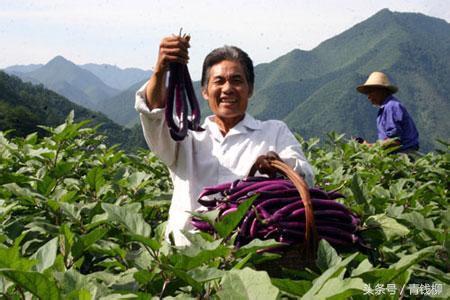
High-Yield Plastic Mulch Cultivation Techniques for High-Mountain Eggplant in Southern China
1 Variety Selection
When selecting varieties, first choose those that are high quality, have good market appeal and are disease-resistant. In addition, the specific local conditions should be taken into account. Therefore, Pioneer No. 1 and Hongfu No. 2 are mainly selected.
2 Cultivation Techniques
When cultivating eggplant, plastic film mulch is needed whether for seedling raising or after transplanting, especially in high mountain areas. Usually, early-spring early-maturing plastic film mulch cultivation is selected; in
addition, certain heat-preservation seedling-raising techniques must be adopted to extend the fruiting period and thereby increase yield. The cultivation techniques mainly involve the following aspects.
2.1 Selecting the Sowing Date and Determining the Sowing Rate
The seedling-raising sowing date is in late February. The sowing rate is 5 sq m of sowing bed per 667 sq m of land, of which the amount of new seed is 35 g, while the amount of old seed is 50 g.
2.2 Preparing the Seedbed and Nutrient Soil
The seedling-raising bed extends in an east-west direction, with a length of 3-5 m, a width of 1.3-1.5 m, and a depth of 40-50 cm. When preparing the nutrient soil, first take 6 parts of garden soil, which should be garden soil that has not grown solanaceous fruit crops for 5-7 a, then half a part of plant ash, 1 part of peat, and 2 parts of decomposed organic fertilizer. Sieve and mix them thoroughly to obtain the required nutrient soil.
2.3 Soaking Seeds to Promote Germination
Eggplant seeds have a dense and thick coat, with a gelatinous layer on the outside, and poor water permeability; therefore, eggplant seeds are somewhat difficult to germinate. The key to cultivating strong seedlings lies in mastering the technique of seed soaking and germination promotion. First, float out the shriveled seeds with clean water and soak them for 30 min, then use the method of soaking seeds in a medicinal solution to disinfect the seeds.
To achieve a good germination-promoting effect, the soaking time and the concentration of the medicinal solution must be strictly controlled. The medicinal solution needs to cover the seeds by 5-10 cm. The medicinal solution commonly used is 1,000-fold formalin, and the seed soaking time is 10 min, to avoid chemical injury to the seeds. After soaking the seeds in the medicinal solution, they need to be rinsed repeatedly with clean water, and then soaked in clean water, or treated with warm-water seed soaking, that is, placing the seeds in 55 °C hot water and stirring continuously until the temperature drops to about 30 °C, then rubbing and washing them clean with clean water.
In addition, during the seed soaking process, rubbing and washing should be carried out once every 3-4 h to remove the mucus outside the seed coat. The seed soaking time is 24-30 h, then use a
wet cloth to wrap the seeds well. The temperature required for germination promotion is 30 °C. Washing should be done once every day, then drain and continue germination promotion. Usually, germination occurs in 3-5 d, and when the germination rate reaches 50%, sowing can be carried out.
2.4 Sowing and Seedbed Management
On the day before sowing, the seedbed needs to be watered thoroughly. The solution selected is 3 L of boiling water and 10 g of 72.2% Previcur, which can effectively avoid diseases occurring at the seedling stage. When sowing, a small amount of fine sand or fine soil needs to be mixed into the seeds and evenly scattered into the seedbed, then covered with 1-2 cm of fine soil on top, and finally covered with plastic film. Before seedling separation, carry out hardening for 7-10 d. When there are three leaves and one heart, carry out seedling separation, with a plant and row spacing of 10 cm, or directly transplant the seedlings into nutrient pots. Then
water to promote seedling recovery, then loosen the soil, then control the amount of water and the temperature, and carry out seedling hardening; when the seedlings show 5-6 leaves, carry out low-temperature hardening. Before transplanting, water thoroughly.
3 Land Preparation and Fertilization
3.1 Land Preparation
When preparing the land, the soil should be selected. The soil should be loose and fertile, with good drainage and irrigation conditions, and solanaceous fruit crops must absolutely not be planted repeatedly or in succession. To ensure
that the soil is loose, the depth of autumn plowing should be greater than 25 cm, which helps with water storage and fertilizer retention. Level and harrow the soil finely to achieve moisture conservation.
3.2 Rational Fertilization
When cultivating eggplant in high mountain areas, it grows relatively fast, and the fruiting period is relatively concentrated, so rational fertilization is needed. Quick-acting basal fertilizer should be reapplied, among which 5,000-7,500 kg of decomposed barnyard manure, 200 kg of plant ash and 50 kg of phosphate fertilizer are applied per 667 sq m, while 1 kg each of zinc fertilizer and boron fertilizer needs to be applied per 100 sq m. First broadcast 50% of the fertilizer, then carry out plowing, and then apply the remaining fertilizer in a concentrated manner between the rows, thereby effectively improving the fertilizer effect.
4 Transplanting
4.1 Determining the Transplanting Date
Usually, transplanting begins when the soil temperature is 13-15 °C, and the transplanting date is generally in mid-May.
4.2 Determining the Transplanting Density
Different eggplant varieties have different planting densities. For Pioneer No. 1 and Hongfu No. 2, the number of plants transplanted per 667 sq m is about 1,200, with a plant and row spacing of (70-80) cm x (30-35) cm, or a double-row form is selected with a 1.2 m wide high bed, in which case the plant and row spacing is 60 cm x 30 cm.
4.3 Adopting a Reasonable Transplanting Method
Before transplanting, the plastic film mulch needs to be laid well. The main purpose of laying plastic film mulch is to raise the low temperature during the early growth of the crop. Compared with laying plastic film mulch after transplanting, laying the film at the time of transplanting or 1 week before transplanting makes the soil temperature several degrees higher, which is more helpful for crop growth and seedling recovery, and helps promote early ripening of the fruit. In addition, laying plastic film mulch before transplanting is easier to operate. Usually, when transplanting eggplant, it is best to choose a sunny and windless time, which helps with seedling recovery. According to the determined plant and row spacing, dig planting holes or pits, and at the same time,
apply 30 kg of diammonium phosphate per 667 sq m. Place the seedlings into the transplanting holes at an appropriate depth, and on the day of transplanting, the transplanting water needs to be watered once only.
4.4 Doing a Good Job of Post-Transplanting Management
The post-transplanting management mainly includes the following points. First, tidy the side branches. Adopt the double-stem pruning method, the first side branch below the first eggplant must be retained, and the leaf buds below it need to be removed. Second, remove excess leaves. Remove the bottom leaves of the eggplant, usually 2-3 times. The first time, remove the oldest leaves at the very bottom, 2-3 leaves, and then remove them once every 1 week. Finally, 1-2 d before harvesting the first eggplant, retain the side branch close below the first eggplant, and remove all side buds and leaves below the side branch, thereby helping the plant grow as quickly as possible and ensuring the plant shape is normal and robust. Third, protect flowers and fruits. Usually, 30-40 mg/L of 2,4-D and 40-50 m L/L of PCPA per l are selected as flowering-stage growth regulators. Note that repeated dipping or spraying of flowers must not be done, and even more so, do not dip it onto the growing point. Fourth, intertillage and earthing up. When cultivating eggplant with plastic film mulch in high mountain areas, weeds will basically no longer sprout on the soil surface under the film; therefore, usually, intertillage, earthing up and weeding are not needed. After removing the film, fertilization, watering and earthing up need to be carried out, changing the planting furrow into a high ridge. Fifth, rational watering. Eggplant requires a relatively large amount of water during the growth period. After 7 d of open-field transplanting, a seedling-recovery water needs to be irrigated once, and at this time, small water and slow irrigation are needed, irrigating from high to low, and flood irrigation must not be used. Sixth, rational fertilization. Usually, 4-5 d after transplanting, apply 1 seedling-promoting fertilizer. After the plant flowers and before fruit set, the supply of fertilizer and water needs to be appropriately controlled.
5 Harvesting
When harvesting eggplant, an appropriate time should be chosen. Generally, the place where the fruit and the calyx are connected is used as the judging standard. If the ring band is not obvious, it indicates that the fruit is growing slowly. For Pioneer No. 1 and Hongfu No. 2, harvesting can be carried out about 50 d after transplanting. Fruit harvested in the morning has the best quality, followed by the evening; avoid harvesting at noon.
6 Pest and Disease Control
6.1 Common Diseases and Their Control
When cultivating eggplant, the common diseases include Verticillium wilt, anthracnose, Phytophthora blight and gray mold. For different diseases, the control methods adopted are also different,
as follows.
Verticillium wilt usually appears after the first eggplant sets fruit, and harms adult eggplant plants. The control method is to select disease-free and disease-resistant seeds; promptly pull out diseased plants and bury them deeply outside the shed; in the early stage of the disease, adopt the method of drenching the roots with a medicinal solution. The medicinal solution is 1,500-fold 50% carbendazim wettable powder, and the amount of medicinal solution is 500 m L per plant.
Anthracnose harms ripe fruit. The control method is, after fruit set, begin spraying 1,000-fold 50% procymidone wettable powder or 600-800-fold 80% anthracnose-formaldehyde wettable powder, 600-fold 78% copper oxychloride wettable powder, and 1:1:200 Bordeaux mixture.
Phytophthora blight harms leaves, stems, roots and fruit. The control method is to spray the agent once every 7-10 d, for 2-3 control applications. The agents are 600-fold 69% dimethomorph-mancozeb wettable powder, 600-800-fold 72.2% Previcur aqueous solution or 600-fold 64% oxadixyl-mancozeb.
Gray mold harms fruit and leaves. The control method is to spray 1,000-fold 50% iprodione or 1,500-2,000-fold 50% procymidone wettable powder in the early stage of the disease.
6.2 Common Insect Pests and Their Control
When cultivating eggplant, the common insect pests include aphids and red spider mites. When controlling aphids, 1,000-1,500-fold 40% dimethoate emulsifiable concentrate or 25% cyhalothrin emulsifiable concentrate should be selected; for red spider mites, they should be eliminated promptly, and for control, 1,200-fold 73% propargite emulsifiable concentrate and 2,000-fold 20% clofentezine emulsifiable concentrate are selected.