Analysis of the Ecological and Climatic Impacts on Jujube Trees During the Fruit Ripening Period
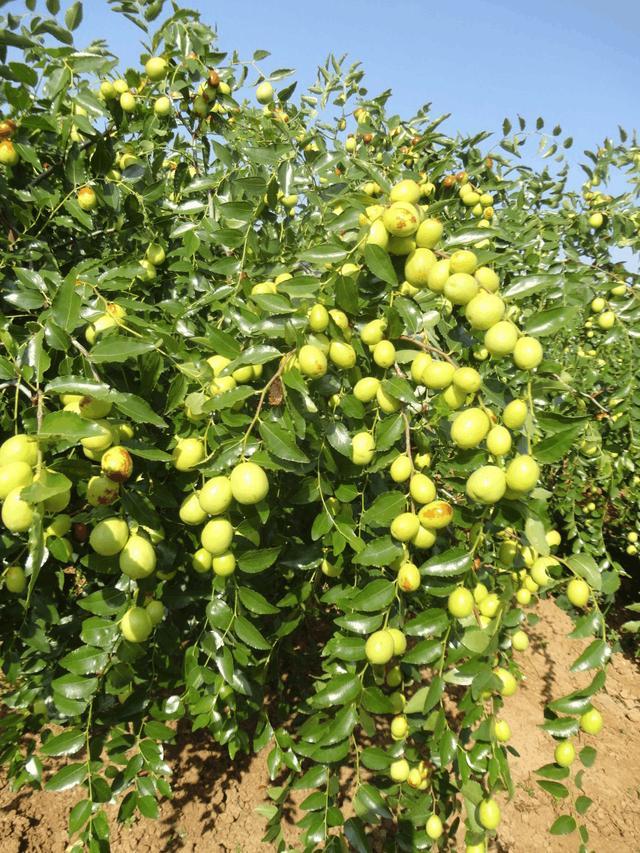
Ecological and Climatic Impacts on Jujube Trees During the Fruit Ripening Period
Funding project: Xinjiang Uygur Autonomous Region Meteorological Bureau Science and Technology Research General Project (MS201521).
Aral City is located in the upper reaches of the Tarim River, along both banks of the Tarim River there are 10 large state-owned agricultural reclamation farms and units such as Tokay Township of Aksu City, Xinjiang, with a total area of 4,196 km2. It is rich in light energy resources, and the heat conditions during the growing season are favorable for forestry and fruit trees. It is an important forestry and fruit industry base of the First Division of the Xinjiang Production and Construction Corps, and the cultivation of the specialty fruit jujube is the main economic industry of the area. Aral City has a long history of jujube cultivation and many varieties, but abnormal climate during the jujube fruit ripening period and frequent extreme weather cause serious damage to jujube trees, weakened tree vigor, and susceptibility of the fruit to disease, affecting quality and yield. Therefore, identifying high-yield indicators for jujube trees is of great significance for the scientific management of specialty forestry and fruit production.
1 Effects of Temperature Conditions on the Fruit Ripening Period of Jujube Trees
Jujube fruit coloring begins successively at the end of August, and the fruit gradually enters the mature edible stage in early September. The jujube fruit ripening period runs from early September to early October, about 40 d in total, and the full-ripening period is in mid-to-late October. Temperature has an important influence on jujube fruit ripening, and the ripening time is related to the daily average temperature. When the 5-day moving average temperature is 16-19 degC, jujube fruit normally enters the ripening period; when the temperature is between 20-21 degC, the ripening and growth process of jujube fruit accelerates, and the higher the temperature, the earlier the jujube fruit ripens. If the average temperature is <15 degC, the jujube fruit ripening period is prolonged, seriously affecting yield, which is unfavorable for jujube fruit ripening, and the number of shriveled fruit increases [Jishan Huayao].
2 Effects of Humidity Conditions on the Fruit Ripening Period of Jujube Trees
The level of air relative humidity during the ripening period determines the quality of the fruit. During the ripening period, relatively suitable air humidity is needed. When the air humidity is 50%-60%, it is favorable for jujube fruit ripening, with good fruit appearance and high quality. Drought is prone to occur from early September to early October. When the weather is dry and the relative humidity remains continuously below 46%, it will seriously affect the normal growth, coloring and ripening of jujube fruit, leading to nutritional deficiency of the fruit and the occurrence of fruit shrinkage, which is unfavorable for the continued growth and coloring of jujube fruit, resulting in a large amount of fruit drop and affecting jujube yield. When the air humidity during this period reaches above 63%, excessive humidity in the jujube orchard is likely to cause the breeding and spread of jujube fruit diseases, affecting fruit quality in mild cases and affecting jujube yield in severe cases, with serious disease and no buyers for the fruit.
3 Effects of Light Conditions on the Fruit Ripening Period of Jujube Trees
Jujube trees prefer strong light and have relatively high requirements for light conditions. During the jujube fruit ripening period, sunshine duration and light intensity have a direct impact on jujube tree photosynthesis and sugar accumulation in jujube fruit. Under continuous low-sunshine conditions, jujube fruit in high-density jujube orchards and shaded areas will show problems such as nutritional deficiency, smaller fruit, and poorer fruit quality. It is required that the sunshine duration in September be above 259.7 h, and when the sunshine duration of a ten-day period is less than 82 h, the sugar content of jujube fruit decreases significantly. With a jujube orchard planting density of 600 trees/hm2, methods such as "propping, thinning, pulling, pushing up, and pruning" can be used on branches to improve light conditions in the jujube orchard, increase the light energy utilization rate of the jujube orchard, ensure jujube tree photosynthesis, and promote normal growth and development of jujube fruit [3].
4 Effects of Precipitation Conditions on the Fruit Ripening Period of Jujube Trees
The jujube fruit ripening period requires suitable humidity, and the precipitation during the jujube fruit ripening period is required to be no less than 2.0 mm, but when precipitation lasts too long and there is continuous overcast and rainy weather, phenomena such as fruit cracking, fruit drop, black heads, and rotten fruit will occur, causing jujube fruit to fail to grow and ripen normally, and seriously affecting yield and quality.
5 Effects of Dew on the Fruit Ripening Period of Jujube Trees
From September, when jujube fruit gradually ripens, to October, the temperature difference between day and night is large. During the day, a large amount of dew and condensed frost remains on the jujube fruit and cannot evaporate completely by 12:00-13:00; at night, dew and condensed frost continue to form again, day after day, repeating in a cycle, leading to the breeding, reproduction and spread of a large amount of pathogenic bacteria. This is another important factor in the relatively severe black head disease during the jujube ripening period in 2013.
6 Effects of Hail Weather Conditions on the Fruit Ripening Period of Jujube Trees
In Aral City, early autumn is mostly dry with little rain, but in recent years the weather has been abnormal, with more localized hail weather. Because jujube fruit during the ripening period has weak resistance to hail, hail directly smashes or knocks jujube fruit to the ground; in severe cases, the smashing rate is as high as about 80%, and all fruit on the trees are damaged and diseased fruit, losing economic value [4-5]. At around 21:30 on September 25, 2016, strong rainfall and hail weather occurred in local farms within the jurisdiction of Aral City. Regiment 1 was the most severely affected; hail lasted more than 10 min, with a diameter of 3.8 cm. The jujube affected area was 1,266.0 hm2, and the direct economic loss was 10,097.70 million yuan; in Regiment 7, the jujube affected area was 133.0 hm2, and the direct economic loss was 3.2 million yuan.
7 Conclusion
The observation results show that September-October is the fruit ripening period of jujube trees. In September, a ten-day average temperature above 18.0 degC, precipitation below 3.0 mm, and sunshine duration above 82.0 h; in October, a ten-day average temperature above 11.0 degC, precipitation below 1.0 mm, and sunshine duration above 82.0 h, are the climatic environmental indicators for high-quality ecological forestry of jujube trees. Comprehensive analysis shows that meteorological disasters such as continuous overcast and rainy weather, low temperature, hail, low sunshine, hail, and dew have a great impact on the normal growth and development of jujube trees during the fruit ripening period. Scientific management should be strengthened, and small-climate conditions suitable for jujube fruit growth should be created artificially to improve the effectiveness of disease prevention.