A Detailed Guide to Courtyard Fruit Tree Cultivation Techniques and Horticultural Value
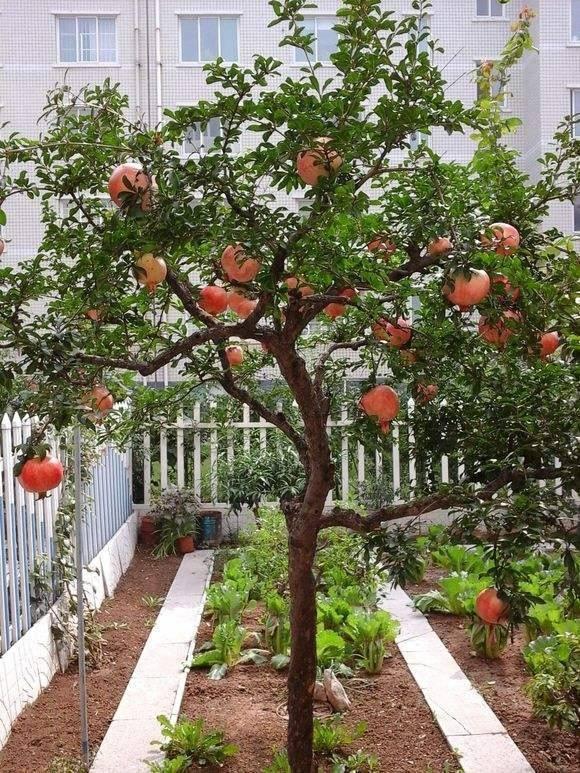
Horticultural Value and Cultivation Techniques of Courtyard Fruit Trees
1 The value of courtyard fruit tree horticulture
1.1 Increasing economic income
Economic benefit is the most direct manifestation of the value of courtyard fruit tree horticulture. Fruit produced by courtyard fruit trees has the characteristics of being healthy and pollution-free, its quality can be fully guaranteed, and it has relatively high commercial value; if sold, it can increase a certain amount of economic income. Surveys show that after developing courtyard fruit tree horticulture in the Puyang area of Henan Province, the economic income obtained by each household per year is generally between 300 and 400 yuan. As people's living standards continue to improve, many families regularly buy fruit, and developing courtyard fruit tree horticulture can achieve self-production and self-consumption, which over time can save a great deal of expense.
1.2 Optimizing the living environment
Developing courtyard fruit tree horticulture helps improve people's living environment. First, plants absorb waste gases and purify the air; planting fruit trees in a courtyard can absorb the waste gases produced by people's breathing as well as harmful substances in the air, thereby greatly improving air quality. Second, planting fruit trees in a courtyard can also regulate the microclimate, playing a role in adjusting temperature and air humidity, and it also has a certain influence on precipitation in the area. In addition, developing courtyard fruit tree horticulture includes not only the planting of fruit trees but also horticultural work such as pruning, so it can better enhance the ornamental appeal of the courtyard and further optimize the living environment.
1.3 Improving the rationality of resource utilization
The rational utilization of resources by courtyard fruit tree horticulture is reflected in several aspects. First, the development of courtyard fruit tree horticulture is currently concentrated mainly in rural areas, and work such as planting and pruning fruit trees is usually handled by the elderly or other idle members of the household, which helps make effective use of surplus labor in rural areas [1]. Second, although the area planted with fruit trees in a courtyard is relatively small, once it becomes widespread it can effectively ease the pressure on arable land, avoiding the occupation of large amounts of farmland by fruit tree planting, while also making good use of the remaining space in the courtyard. Third, in urban courtyards, the role of courtyard fruit tree horticulture in climate regulation and air purification can effectively replace equipment such as air purifiers and humidifiers, indirectly achieving energy savings.
1.4 Promoting rural development
Developing courtyard fruit tree horticulture is conducive to rural development. On one hand, courtyard fruit tree planting in rural areas reduces large-scale fruit tree planting to a certain extent, which not only lowers environmental pollution from pesticides, insecticides and chemical fertilizers but also provides better protection for arable soil, which is very beneficial for the overall improvement of the rural environment. On the other hand, the development of courtyard fruit tree horticulture increases ornamental appeal and raises the leisure, tourism and cultural value of rural areas, which can not only promote the development of tourism in rural areas but also drive the development of other related industries such as agritourism, increasing rural economic income and achieving rapid rural economic development.
2 Cultivation techniques
2.1 Selection of fruit tree varieties
China has a vast territory, and climate conditions, soil conditions and ecological conditions differ to a certain extent from region to region, all of which have a direct impact on fruit tree planting. Therefore, when developing courtyard fruit tree horticulture, the first step is to choose fruit tree varieties suitable for planting based on local growing conditions, so as to give full play to the value of courtyard fruit tree horticulture. For example, the climate in southern China is mostly relatively humid and the temperatures are relatively high, so fruit tree varieties tolerant of heat and humidity such as sugarcane and banana can be chosen; in western regions such as Shanxi and Shaanxi, because the climate is relatively dry and the soil is mainly loess, nut-type fruit trees such as jujube, pistachio, Chinese chestnut and walnut can be chosen.
2.2 Fertilization techniques
The fertilization techniques for courtyard fruit trees differ greatly from those for large-scale fruit tree planting. A courtyard is a residential area, and its environmental requirements are higher than those of land-planting areas such as orchards. Therefore, fertilization should use human manure and organic fertilizer, and chemical fertilizers should be avoided as much as possible to prevent pollution of the living environment. Human manure can be chosen from human and livestock excrement, while organic fertilizer can be made from expired food, rotting vegetables, fruit and other materials rich in organic matter; this can both improve fruit quality and reduce fertilization costs, achieving effective use of resources.
2.3 Pest and disease control
Pest and disease control is an important part of fruit tree planting and cultivation, so when developing courtyard fruit tree horticulture, great attention must be paid to pest and disease control. Pest and disease control work needs to take the living environment into account; to avoid pollution, chemical agents should be avoided as much as possible, and biological control methods and physical control methods should be chosen. Because the scale of courtyard fruit trees is relatively small, physical control methods do not consume too much manpower.
2.4 Fruit tree pruning
In order to improve the ornamental appeal of fruit trees in the courtyard, reasonable pruning should be carried out according to actual needs. If the shading function of the fruit trees is valued, the branches and leaves of the fruit trees can be retained when pruning; if economic benefit is sought, excess branches can be pruned away to ensure the nutrition of the fruit trees; and for courtyard fruit trees whose main value is ornamental, pruning should be carried out in combination with the courtyard space and the fruit tree variety [3-4]. For example, in a courtyard with limited space, the branches and leaves at the bottom of the fruit trees need to be cut off to encourage the trees to grow taller, thereby achieving the effect of saving space.
2.5 Courtyard cleanup
Soil conditions are a key factor affecting the cultivation and growth of fruit trees, and courtyard cleanup is the main way to improve soil conditions in courtyard fruit tree planting [5]. Before planting fruit trees, the soil quality of the courtyard needs to be investigated. If the courtyard soil quality is good, the courtyard soil can be manually cleaned directly to remove sand, stones or other impurities; if the courtyard soil quality is poor, the soil in the planting area can be replaced, and high-quality soil suitable for the growth of the fruit trees can be substituted according to the specific variety. In addition, after cleaning the courtyard, a certain amount of fertilizer should also be applied to improve soil fertility.
3 Conclusion
The value of courtyard fruit tree horticulture is reflected in many aspects, including environmental optimization, resource utilization and economic benefit. In future urban and rural construction, developing courtyard fruit tree horticulture is highly necessary, and in actual development, the planting and cultivation techniques for courtyard fruit trees still need to be promoted.