How to Achieve High Yield in Asparagus? A Detailed Guide to Cultivation Techniques in Puyang County
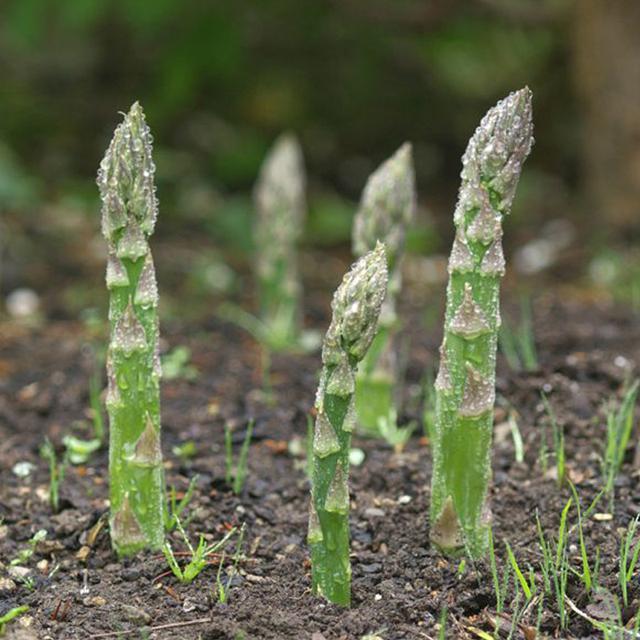
High-Yield Cultivation Techniques for Asparagus in Puyang County
Asparagus is the young shoot of Asparagus officinalis, a perennial plant in the Asparagaceae family. Its tender stems are consumed as food and are tender in texture, rich in nutrients, delicious in flavor, and soft and palatable. In recent years, Puyang County has introduced and developed more than 200 hm2 of asparagus, which has passed the green food certification of the China Green Food Development Center. Asparagus can be planted once and harvested for many years, with an output value of 105,000-120,000 yuan/hm2 and remarkable economic benefits. The high-yield cultivation techniques for asparagus are summarized below for reference.
1 Variety Selection and Seed Treatment
Select varieties with strong plant resistance and young stems that emerge early, are numerous, plump, uniform in thickness from top to bottom, and have blunt tips with tightly packed scales, such as Apollo, Giant New Jersey, and other new varieties.
First rinse the seeds with clean water to float off shriveled seeds and insect-damaged seeds, then soak the seeds in a 300-fold dilution of 50% carbendazim for 12 h. After disinfection, soak the seeds in warm water at 30-35 degC for 48 h, changing the water 1-2 times daily during this period. Then wrap them in a clean wet cloth and germinate them at 25-28 degC, rinsing with clean water twice a day. When about 20% of the seeds have sprouted, they are ready for sowing.
2 Sowing and Seedling Raising
Select a sandy loam plot with good drainage and aeration for the seedling nursery. Deeply plow the seedbed land to about 25 cm, apply 75 t/hm2 of high-quality decomposed base fertilizer, mix it evenly with the soil, level it, and make beds 1.2-1.5 m wide and 10-15 m long.
The suitable sowing period for asparagus is early to mid-April. The seed rate for the field is 1,125 g/hm2, and the seedling nursery area is 450 m2/hm2. Before sowing, water thoroughly to ensure adequate bottom moisture, draw lines at a plant-row spacing of 10 cm x 10 cm, and sow the germinated seeds one by one in the center of each square. Then use a fine sieve to evenly cover the bed surface with soil to a thickness of 2 cm[1]. If aphids appear during the seedling stage, use 10% imidacloprid wettable powder at 300 g/hm2 mixed with 600 kg/hm2 of water for spray control. Remove weeds promptly after the seedlings emerge completely. During the seedling stage, appropriately apply some quick-acting fertilizer, such as 45% compound fertilizer (15-15-15) or urea at 50 g/m2 broadcast, then water.
3 Land Preparation and Fertilization
Before planting, deeply plow and level the entire plot, and open planting trenches at a row spacing of 1.5 m. The planting trenches should be 40 cm wide and 40-50 cm deep. Apply 1,500 kg/hm2 of soybeans, 7,500-9,000 kg/hm2 of chicken manure, and 375 kg/hm2 of ternary compound fertilizer, mix them evenly with the soil, and place them into the planting trenches as base fertilizer.
4 Planting
Before planting, grade the seedlings and plant large and small seedlings separately. Standards for planting seedlings: seedling height 30 cm, with more than 3 aboveground stems and more than 7 underground storage roots. When planting, arrange the end of the seedling where the scale buds are borne on the underground stem along the direction of the trench, so that the positions of the young stems that emerge later are concentrated in the center of the bed, which facilitates earthing up. Spread the storage roots of the seedlings evenly, cover with soil and press lightly so that the roots are in close contact with the soil, water, and then cover with 5-6 cm of loose soil. After planting, starting from the emergence of young stems, cover with soil once every 15 d, with each covering 3-5 cm thick, until the underground stems are buried about 15 cm below the bed surface. The general planting density is a row spacing of 140-150 cm and a plant spacing of 35-40 cm.
5 Field Management
5.1 Fertilization
In the first year after planting, the fertilization method for asparagus is to apply 3 good fertilizations on the basis of sufficient base fertilizer, namely the sprouting fertilizer, the rejuvenation fertilizer, and the autumn growth fertilizer. Specific method: apply the sprouting fertilizer before earthing up in spring, using 150 kg/hm2 of urea; after harvesting the spears, combine with opening trenches and watering, and apply 150 kg/hm2 of compound fertilizer; in mid-August, apply the autumn growth fertilizer, using 375 kg/hm2 of compound fertilizer. From the second year onward, the focus of fertilization is in spring, followed by autumn. Each spring before the young stems emerge, dig trenches in the center of the planting rows and apply fertilizer, and apply quick-acting fertilizer with water 2-3 times. Spring fertilization accounts for 60%, and summer and autumn fertilization accounts for 40%. Asparagus is very sensitive to soil acidity, so acidic fertilizers should not be used excessively. In calcium-deficient soil, lime should be appropriately added[2].
5.2 Irrigation and Drainage
During the period of harvesting young spears, sufficient soil moisture should be maintained to promote thick and strong young stems, and generally watering should be done 1-2 times as appropriate. When the aboveground stems and branches of asparagus develop vigorously, that is, from late July to late August, it is exactly the high-temperature season of summer and autumn, with strong transpiration and high water consumption, so irrigation should be carried out in time, generally once every 10 d, to promote lush plant clusters and ensure a bumper harvest the following year. In rainy seasons, prevent water accumulation in the soil; otherwise, the soil will lack air and root growth will be affected[3].
6 Pest and Disease Control
6.1 Main Diseases
The main diseases of asparagus are stem blight and brown spot. Control methods: First, clean the field. Thoroughly clean the field before planting and burn diseased plant residues to reduce the amount of primary infection sources. Second, implement formula fertilization, apply more organic fertilizer, increase potassium fertilizer, pay attention to intertillage and weeding, and take measures against drought and waterlogging. Third, chemical control. For diseased plots, use a 400-fold dilution of 50% carbendazim for spray control.
6.2 Main Insect Pests
The main insect pests of asparagus include cutworms, mole crickets, white grubs, wireworms, seed maggots, and others. Control methods: First, strictly prohibit the application of incompletely decomposed organic fertilizer. Second, in early spring during the activity period of adults, use black light lamps or sugar-vinegar liquid for trapping and killing. Third, use 2.5% beta-cypermethrin at 20 g/hm2 mixed with 50 kg/hm2 of water for spray control.
7 Harvesting, Transportation, and Sales
Every morning, cut off young stems 21-24 cm tall at ground level. During the peak spear emergence period, harvest once in the morning and once in the evening. At each harvest, all young stems must be cut regardless of quality; otherwise, the remaining young stems will continue to grow and consume nutrients. After harvesting, immediately grade, sort, and sell. Asparagus young stems are prone to water loss and deterioration after harvest, so they should be packed and refrigerated in time. The suitable storage conditions for a cold storage warehouse are a temperature of 0-2 degC and a relative humidity of 90%-95%. For short-distance transportation of 2-3 h, a truck may be used; for long-distance transportation, especially in high-temperature seasons, refrigerated trucks should be used. For transportation time of 1 d, the temperature should be controlled between 0-5 degC, and for transportation time of more than 1 d, the temperature should be controlled between 0-2 degC, so as to ensure the freshness and tenderness of asparagus and avoid reducing quality. Asparagus on the market should be sold promptly to avoid rotting and deterioration.