Detailed Practical Techniques for Root-Burial Propagation of Superior Black Locust
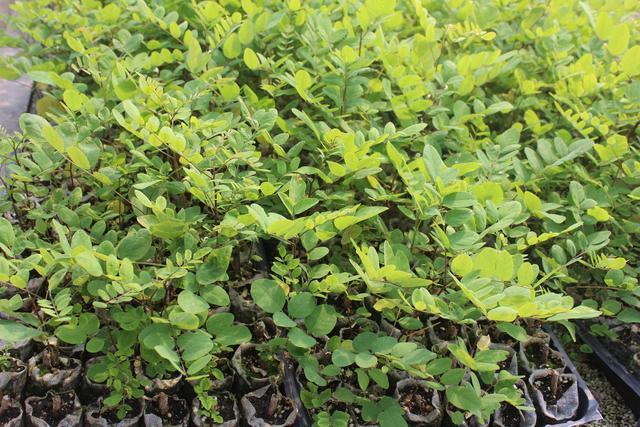
Practical Techniques for Root-Burial Propagation of Superior Black Locust
Black locust, also known as false acacia, is a deciduous tree of the genus Robinia in the family Fabaceae (Papilionaceae). It is not only a pioneer tree species for soil and water conservation, afforestation of barren hills and afforestation of saline-alkali land in the Liaoning region, but also an important tree species for urban and rural greening, a honey-source tree and a fertilizer tree [1]. However, black locust cuttings are not easy to root, which is quite unfavorable for the vegetative propagation of superior black locust. In recent years, the author, combining with his own practical work, carried out repeated trials on root-burial propagation of black locust and achieved success. The key technical steps are summarized as follows.
1 Nursery Site Selection
Select a plot with convenient transportation and irrigation conditions, good drainage, shelter from the wind and facing the sun, and flat terrain. The soil should preferably be loam, sandy loam or clay loam that is slightly acidic to slightly alkaline.
2 Land Preparation and Fertilization
Land preparation includes plowing, harrowing, leveling and compacting. Carry out deep plowing and fine preparation, remove grass roots and stones, and ensure the ground is level and the soil is crumbled. In autumn, the plowing depth is 25-30 cm; in [the other] season, the plowing depth is 20-25 cm. Harrow as you plow, and level and compact promptly.
Follow the principle of "mainly organic fertilizer, supplemented by chemical fertilizer, applying sufficient base fertilizer and appropriate topdressing." Before plowing, broadcast decomposed organic fertilizer at 25-35 t/hm2. When making beds (borders, ridges), apply diammonium hydrogen phosphate at 300-375 kg/hm2 and mix it into the 0-15 cm soil layer. Promptly disinfect and insecticide-treat the soil. Before making beds (borders, ridges), disinfect the soil by spraying 2%-3% ferrous sulfate solution to control soil-borne diseases, at a rate of 300 kg/hm2. To control soil-borne diseases, pentachloronitrobenzene powder can be used, mixed into the soil before making beds (borders, ridges), at a rate of 37.5 kg/hm2. For underground pests, phorate powder is used, mixing 40 kg/hm2 with 50 times its volume of fine dry soil to make poisoned soil, and mixing it into the soil when making beds (borders, ridges) [2].
3 Making Beds (Borders, Ridges)
When the soil is dry, irrigate thoroughly with bottom water 3-5 d before making the beds. For nurseries with sufficient water sources, good irrigation conditions and a high groundwater table, use bed planting or ridge planting; otherwise, use border planting or flat planting. Seedbeds, seed ridges and seed borders should be prepared before cutting or transplanting, and should achieve fine soil particles, a level surface and neat edges.
When making beds, the bed surface should be 10-20 cm higher than the path, the bed width 1.0-1.5 m, and the bed length 10-20 m; for mechanical operations it can be longer, and the path width is 30-50 cm. When making borders, the border surface should be 10-15 cm lower than the path, the border surface width 1.0-1.5 m, and the path width 30 cm; the length of the seedbed depends on the number of seedlings to be raised, and a drainage ditch should be left on one side of the seedbed. When making ridges, the ridge bottom width is 60-70 cm, the ridge surface width 30-35 cm, and the ridge length depends on the terrain. For flat planting, use strip operations, leaving 30-50 cm paths between strips; when cultivating large seedlings, no paths may be left.
4 Root-Burial Operation
4.1 Root Segment Collection and Treatment
Root segment collection should be carried out in spring before the mother trees or seedlings begin to sprout. Lateral roots cut off and pruned during nursery lifting, or lateral roots dug from around young and vigorous trees, can also be used. Generally, one- to two-year-old seedlings are selected for seed roots; the roots left after lifting or the roots pruned off are used, and the suitable thickness of seed roots is 0.3-1.2 cm.
4.2 Root Segment Cutting
The requirements are smooth cuts, no peeling of bark, no splitting and no damage to buds. Trim the root segments promptly to a length of 6-8 cm. After cutting, bundle them by thickness grade, divided into 3 grades (0.3-0.6, 0.6-0.9, 0.9-1.2 cm), with 50-100 roots per bundle.
4.3 Sand Storage Treatment
For seed root collection, it should be done as the seedlings are lifted, as the roots are cut, and as they are stored in sand, to prevent the root segments from losing water. In a sheltered, sunny place, bury the root segments in a sand pile and sprinkle a small amount of clean water to keep them moist. After 7-10 d of sand storage treatment, once the cuts have healed, they can be taken out for germination promotion and seedling raising.
4.4 Root Burial
From late April to early May, when the surface soil temperature reaches above 10 °C, bury the roots. The usual burial rate is 300 roots/m2, mostly using bed planting and border planting. Adopt the method of sealed warming, moisture conservation and germination promotion for seedling raising. On the leveled and finely harrowed border (bed) surface, evenly broadcast the seed roots (place the seed roots flat), cover with soil to a thickness that does not expose the roots, then compact and spray thoroughly with water. Set up arched frames on the bed or border, cover with plastic film, and press the two sides firmly with soil; press the two sides firmly with wooden blocks or bricks and stones. The two ends can be opened freely, and measures such as ventilation for cooling and spraying water for moisture conservation are taken. At night, cover with straw curtains and the like for insulation, keeping the temperature between 24-30 °C. Pay attention to spraying water to keep the relative humidity at about 65%. After germination promotion and graded root insertion, ensure complete emergence; generally full emergence can be achieved in 15-20 d.
5 Later-Stage Management
5.1 Transplanting Management
After full emergence, remove the plastic sheeting and replace it with non-woven fabric, paying attention to properly balancing ventilation and moisture conservation. When most seedlings reach a height of more than 5 cm, begin airing the border (hardening the seedlings), and transplant after 3-5 d. Those that have not germinated continue to remain in the border for germination promotion and are transplanted in batches. Transplanting operations mostly use ridge planting or flat planting. Transplanting is best done on cloudy days; if transplanting on sunny days, the work should be done before 9:00 or after 16:00. The transplanting spacing is 35 cm x 70 cm. When transplanting, plant appropriately deep against a straight wall, place the transplant seedling against the straight wall, cover with soil and water, and seal the soil to conserve moisture [4].
5.2 Water and Fertilizer Management
During the emergence stage, water moderately to keep the soil moist; during the seedling stage, water in small amounts but frequently. In all cases, watering should be done so that no water remains on the bed (border) surface. From mid-July to mid-August, after entering the fast-growing period, foliar topdressing can be carried out by broadcasting urea at 200 kg/hm2. After late August, broadcast potassium dihydrogen phosphate at 100 kg/hm2 to promote lignification of the seedlings. During the fast-growing period, water in large amounts but less frequently, and ensure that internal water does not accumulate and external water does not flood. After early September, stop watering.
5.3 Weeding and Soil Loosening
According to rainfall conditions, loosen the soil promptly to a depth of 2-3 cm, and pull out weeds promptly.
5.4 Plant Thinning and Sprout Removal
Root cuttings often produce clustered sprouts, so redundant plants (buds) should be removed promptly; when transplanting seedlings, select and retain 2-3 strong seedlings. After transplanting, when the seedlings grow to a height of 20 cm, retain 1 strong seedling. After transplanting, when the young seedlings reach a height growth of 10-15 cm, for the several sprouts sent out from one root, remove the weak and keep the strong, leaving 1 strong bud per plant for final thinning.
5.5 Pest and Disease Control
During the seedling stage of black locust, the main problem is aphid damage. In early July, Shanjian can be used to spray and kill aphids, adding about 30 mL of pesticide per sprayer (about 15 kg of water). Investigating the control effect the next day, the kill rate can reach 100%. Shanjian emulsifiable concentrate is a new type of pyridine insecticide with contact and stomach toxicity, and also has strong systemic conductivity, good quick-acting effect, and a residual effect period of about 20 d. It is suitable for controlling piercing-sucking pests such as aphids, whiteflies and thrips. It is low-toxicity to humans and livestock, has little killing effect on natural enemies, and is a pollution-free pesticide. It is usually diluted 2,500-3,500 times for spray control, and is one of the most ideal insecticides for controlling black locust pests, especially pests with piercing-sucking mouthparts.
5.6 Seedling Lifting from the Nursery
Lift the seedlings in autumn after the seedlings stop growing and in spring before the seedlings begin to sprout. Grade the quality of the seedlings to be lifted from the nursery, and at the same time do a good job in transport, heeling-in and other work. At the same time, do a good job in technical archiving in accordance with relevant regulations.