Detailed Explanation of Western Azalea Propagation Methods and Soilless Cultivation Techniques
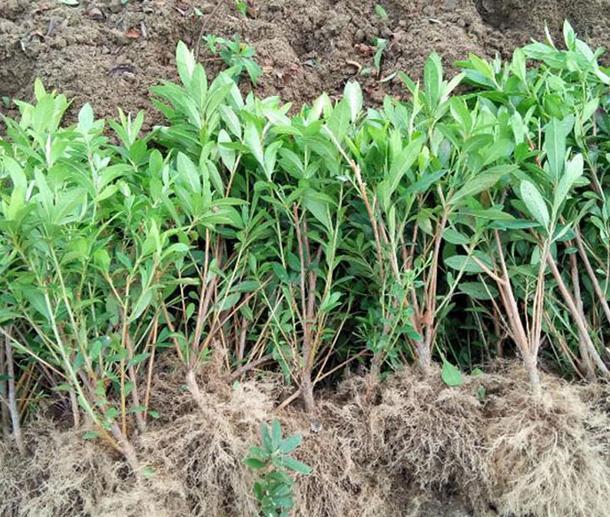
Western Azalea Propagation Methods and Soilless Cultivation Techniques
1 Morphological Characteristics
Rhododendrons are evergreen, semi-evergreen, or deciduous shrubs or small trees. In floriculture, most commonly cultivated are evergreen shrubs, with a plant height of 0.4-4.0 m. The branches are relatively thin, and young branches often bear very short brown or brownish hairs. Leaves are simple, alternate, ovate or lanceolate, papery or leathery, with acute tips, dark green on the surface, sparsely covered with stiff hairs, and entire margins. Flowers are terminal or axillary, funnel-shaped or bell-shaped, usually clustered in groups of 2-6, with the calyx united at the base and bearing bracts. The corolla diameter is 2-6 cm, and colors include white, yellow, pink, orange, violet-red, rose-red, and many other shades. Stamens number 5-10. The fruit is a capsule with a 3-5 locular ovary, and the seeds are very small.
2 Ecological Habits
Rhododendrons prefer a partially shaded environment and are intolerant of direct sunlight exposure. They favor cool and humid summer climate conditions, and their cold hardiness varies greatly depending on the place of origin. Rhododendrons are typical acid-loving plants, growing well in environments with a hydrogen ion concentration of 31.63-316.3 μmol/L (pH 4.5-5.5). However, some rhododendrons, such as Rhododendron mucronulatum (red-flowered rhododendron), can also survive in environments with a hydrogen ion concentration of 39.81 μmol/L (pH 7.4). In northern China's gardens, there are still no open-field plantings of rhododendrons in mass beds, because in alkaline environments rhododendrons suffer from a lack of iron (Fe2+) and manganese (Mn2+), causing leaves to turn yellow and eventually drop and die. The mechanism by which alkaline environments cause leaf chlorosis remains unclear to this day. However, in horticultural cultivation, there are many successful examples of using chelating agents such as EDTA chelated iron to prevent chlorosis.
3 Propagation Methods
Propagation methods include seed sowing, cuttings, layering, grafting, and division. Cuttings and grafting can maintain the genetic characteristics of cultivars and can be developed into commercial production processes. Seed sowing is beneficial for hybrid breeding and selecting superior individual plants. For cuttings, use green wood, selecting semi-lignified branches, and carry out the procedure during seasons with high air humidity such as the plum rain season for a high survival rate. If conditions permit, full-light mist propagation can also be used, or a small plastic tunnel can be built on the ground and watered several times daily with a watering can, also achieving a high rooting rate.
3.1 Cuttings
Some rhododendron cultivars have cuttings that are difficult to root, sometimes failing to root even after 2 months of propagation, and some superior Western Azalea cultivars are particularly problematic in this regard. In China, using the Evergreen Azalea (Rhododendron indicum) as a breakthrough, a highly efficient rooting promoter was developed, shortening the rooting time from over 2 months to 20 d and increasing the rooting rate from 20% to 80%.
The cutting medium is also one of the key factors affecting survival. Rhododendron cuttings require that the area around the base of the cutting not only has abundant nutrients, good aeration, and adequate moisture conditions but is also clean and hygienic. To meet these environmental requirements, 2 methods can be used. First, mist culture, which is the best cultivation method. Second, perlite culture, as perlite is also a relatively good medium.
3.2 Grafting
The grafting method can fully leverage the advantages of the rootstock's root system and the superior characteristics of the scion, producing excellent individual plants. Commonly used rootstocks include 'Guifei Zuijiu' (Imperial Concubine Gets Drunk), 'Yuhudie' (Jade Butterfly), and 'Zihudie' (Purple Butterfly), while the wild Rhododendron mucronatum is generally not used. Take the tender shoot tips of superior cultivars as scions, remove the lower leaves, keeping only 3-4 small leaves at the tip, and cut the base into a wedge shape with a cut surface 0.5-1.0 cm long.
When grafting, cut the current-year new shoot of the rootstock rhododendron at 2-3 cm, remove the leaves on that section, make a 1 cm vertical cut, insert the scion, align the cambium layers, and tie tightly with plastic film tape. Cover the junction area together with the scion in a plastic bag and tie the bag opening tightly. The following points should be noted when grafting. First, avoid direct sunlight. Second, maintain air humidity around the scion; generally, water droplets should be visible on the inside of the plastic bag; if not, spray the scion with water and re-tie the bag tightly. Third, if the scion does not wilt after 7 d, the grafting success rate is relatively high. Remove the bag after 2 months, and untie the binding in the following spring. Additionally, the tender shoot side-grafting method can be used, which is similar to top cleft grafting, allows multiple grafts on a single plant, and after successful grafting grows rapidly, enabling earlier canopy formation.
4 Soilless Cultivation Management Techniques
Evergreen rhododendrons are conveniently grown in containers for soilless cultivation, and especially some precious Western Azalea treasures are more suitable for container cultivation. Since Western Azaleas have delicate habits, once you succeed in cultivating Western Azaleas, you can master the cultivation and care methods for other rhododendrons. The following focuses on the soilless cultivation management techniques for Western Azaleas.
4.1 Medium
The cultivation medium for Western Azaleas must meet the following conditions. First, provide an acidic environment. Pine needles, peat, and sawdust are all acidic media. Second, ensure that roots in the medium do not dry out from dry weather. Pine needles or sawdust are both excellent cultivation media, but because air humidity is high, the medium must have sufficient permeability to benefit rhododendron growth. In dry northern regions, however, if pine needles are chosen as the medium, rhododendron roots will die from drying out, so it is best to use a mixture of peat with vermiculite or perlite [1-2]. Third, retain soil, retain fertilizer, and allow aeration. In rhododendron cultivation practice, the relationships among acidity, aeration, water retention, and fertilizer retention must be properly managed. For soilless cultivation, the hydrogen ion concentration in the medium should be maintained between 3.16-31.63 μmol/L (pH 4.5-5.5) under the condition that the pot bottom does not leak, and good aeration must be ensured. Nutrient and moisture conditions can be guaranteed through watering and applying nutrient solution.
4.2 Nutrient Solution
The nutrient solution for cultivating Western Azaleas should mainly meet the following requirements. First, appropriate pH. When the hydrogen ion concentration in the solution is 3.16-31.63 μmol/L (pH 4.5-5.5), it is most favorable for rhododendron root growth. Second, complete nutrition. Supply all the various nutrient components needed for Western Azalea growth. Although some references state that Western Azaleas are not tolerant of heavy fertilization, the proportions of various nutrient components in the solution must be appropriate; otherwise, single-salt toxicity to the plant can easily occur. Third, high acid-base buffering capacity. Ensure that the hydrogen ion concentration in the nutrient solution does not decrease significantly due to the addition of alkaline substances. If the water is alkaline, it should be avoided that the hydrogen ion concentration of the solution drops rapidly after watering.
4.3 Watering
Western Azaleas are not tolerant of alkalinity. Typically, the groundwater used in cities has a hydrogen ion concentration below 100 nmol/L (pH above 7), and watering rhododendrons with such water will cause leaves to turn yellow, drop, and even die. Although the reason for this is currently unclear, some methods can be used to solve it. Set up a water vat where rhododendrons are planted, put the irrigation water in the vat to sun for a few days, and also add green grass, tomatoes, and orange peels to soak. After about 7 d, the hydrogen ion concentration of the water can rise above 100 nmol/L (pH drops below 7). To achieve the goal of clean cultivation, vinegar essence or edible vinegar can also be used to adjust the hydrogen ion concentration of the water, approximately 1 spoonful of edible vinegar mixed with 500 mL of water. It is advisable to prepare a small packet of wide-range hydrogen ion concentration test paper, test the hydrogen ion concentration of the water after mixing, and if it is too alkaline, add an appropriate amount of vinegar to adjust, and if too acidic, add more water to adjust.
4.4 Other Aspects
Rhododendrons prefer shade and are intolerant of exposure, prefer coolness and are intolerant of stuffiness, prefer acidity and are intolerant of alkalinity, and prefer light fertilization and are intolerant of heavy fertilization.