Trident maple bonsai creation: Clever use of the approach grafting method to add roots
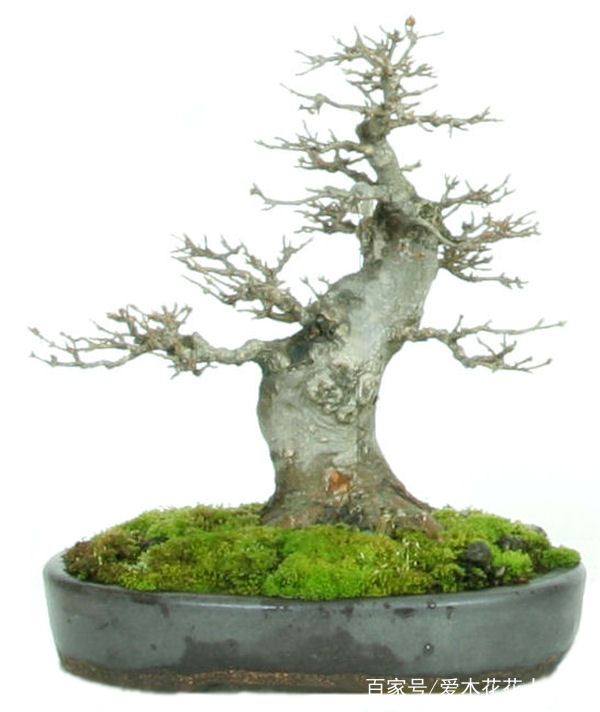
Bonsai artists are a bunch of obsessive perfectionists. If a bonsai has even a tiny flaw, it will feel like a fishbone stuck in their throat, leaving them unable to eat or sleep, and they simply have to make it perfect according to their own wishes. This small trident maple specimen is a typical Japanese-style small bonsai, with a conical trunk and a triangular canopy. This kind of small specimen is mass-produced in Japanese bonsai nurseries. This one was probably also shipped over from Japan, though it is also possible that the bonsai artist made it himself. The whole tree is fairly standard, but the roots are not perfect. There is a spot on the left side that lacks a root. In the eyes of a bonsai artist, this is unacceptable, so it had to be added.
So a trident maple was found at the nursery
A trident maple this thick has already been growing for two or three years
Tidy up the spot where the root needs to be added, dig a vertical groove, and cut open the bark,
Trim the scion to find a suitable spot
Then press the two together, line up the cambium layers, and nail them in place to secure them tightly together
Then use plant sealing paste to seal the area around the joined part
Looking at it this way, the root system is fairly close to perfect
Then it can be potted up. Pot it normally and care for it normally. After about half a year, once the two trees have organically fused together, the scion can be cut off