Can't get your clivia's flower scape to emerge? Here's an easy fix for the "stuck scape" problem
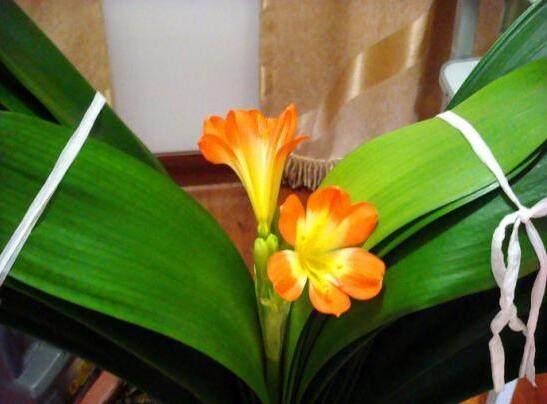
The flowers of clivia are so dignified and elegant that a stuck scape ruins the whole effect.
Many people are quite skilled at growing clivia. A few days ago, an old flower-growing friend told me he had been growing clivia for over ten years, and his clivia bloomed every year without fail. It was just that sometimes the flowers didn't look good, because once or twice the flower scape wouldn't emerge. But now things are much better. Someone recommended the method below to him, and sure enough the stuck scape resolved quickly. Hurry up and learn it~
Once a clivia's scape gets stuck, it really does look bad, so everyone should take it seriously. If the scape gets stuck, just do what's shown in the pictures. It can be corrected in about a week. There are many causes of a stuck scape in clivia, and most cases come from the following:
1. The temperature wasn't controlled well while growing the clivia. The temperature for scape emergence in clivia is 20°C-25°C. If the weather is too hot or too cold, it's very hard for the clivia's flowers to emerge.
2. In the early stage before blooming, the clivia lacked nutrients; a deficiency of nitrogen and phosphorus fertilizer causes the stuck scape. You can apply more organic fertilizer, using light applications applied frequently.
3. The clivia's root system is deprived of oxygen. This situation is fairly common. Because clivia has fleshy roots, the roots grow fast and become very dense, and over time the space in the pot becomes too small. Root oxygen deprivation is a major cause.
After a clivia's scape gets stuck, promptly separating the leaves is so far a fairly practical little method. Don't worry about affecting leaf growth. Clivia leaves are wide and thick, with very strong growth power. Even tying them up as shown below is no problem. First of all, we have to get the clivia's flowers to emerge.
Besides tying the leaves together with string, you can also try clamping the leaves with clips. When using small clips, be sure to pad them with some toilet paper or a small card (similar to what's shown below), so the leaves don't get pinched and damaged. Many experienced flower growers clamp them some time before the clivia blooms, which can also have a certain effect.
But to prevent a stuck scape in clivia, you still have to start with daily care.
Comparing with the causes of a stuck scape in clivia, to prevent it we should at least do three things well. First, maintain a suitable growing temperature; when it's hot, put the clivia indoors and shade it appropriately. Second, fertilize more; rotted bean cake, fermented milk, and so on are all good organic fertilizers. Third, repot at least once a year. It's best to do this in spring. Do these three things, and your clivia won't get a stuck scape. And it will bloom beautifully!
Clivia is noble and elegant, and it's most suitable for growing indoors in the living room. A large number of people are devoted clivia enthusiasts, and quite a few have kept a single clivia for twenty or thirty years. Many people say clivia blooms once a year, but these expert growers can often get clivia to bloom twice, or even three times, a year. In short, growing clivia well still comes down to two words: dedication!
I hope everyone's clivia grows stunningly beautiful!