Potted plants have outstanding air-purifying effects; it would be a shame not to keep one at home
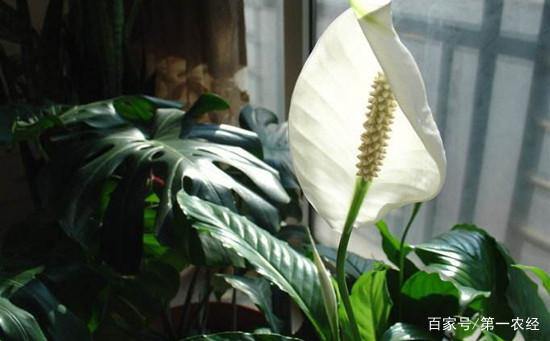
Fresh air and a pleasing environment are what everyone wants, because this directly affects the health of the family. It is also for this goal that many friends have started placing some potted plants at home, and choosing suitable plants can naturally yield twice the result with half the effort and bring fresher air. So, below we will introduce some potted plants suitable for growing at home. They have a very high air-purifying effect and many benefits, so keeping one is sure to be a good choice!
I. Peace lily
Peace lily, also known as spathiphyllum, can be enjoyed both for its leaves and its flowers, making it a very good potted plant. The leaves of the peace lily are rather elegant and remain evergreen all year round, and the flower shape is rather unusual, pure white, with high ornamental value. The peace lily can suppress the waste gas exhaled by the human body, and can also purify harmful gases in the air such as formaldehyde and benzene, and the peace lily can regulate indoor air humidity through transpiration. In the care of the peace lily, light is very important for plant growth. The peace lily needs relatively good light in winter and early spring, but when the light gradually becomes stronger, it should be shaded gradually. If it is being enjoyed in a shady place, it must not be placed directly in the sun to be scorched, as this is very bad for the growth of the peace lily; during the growing period, the peace lily should be kept with moist potting soil often, but it must not be watered too much. Too much watering will keep the potting soil wet for a long time, easily causing root rot and yellowing and withering of the plant.
II. Maidenhair fern
The maidenhair fern has a small and compact plant shape, slender and glossy leaf stalks, and emerald green leaves. Growing it at home will also bring a fresh feeling to the home. The maidenhair fern is called the most effective biological "purifier" and can effectively absorb gases harmful to the human body. According to online statistics, the maidenhair fern can absorb 20 micrograms of formaldehyde per hour, and placing it in the bedroom can also improve sleep quality. In the care of the maidenhair fern, spring and autumn are the growing seasons for ferns, and thin fertilizer can be applied as needed and according to growth conditions. If you want to grow a large pot, you can apply fertilizer once a week after repotting into a larger pot. At the same time, maintain humidity, spray water on the leaf surface every other morning as a must-do, and water thoroughly once a week; maintain ventilation, spray water on the leaf surface once each in the morning and evening. If the leaf surface shrivels at noon, you can spray water on the leaf surface at any time or spray water around the surrounding environment to increase air humidity, so as to ensure good growth. Water thoroughly once every 5 days. Of course, you can decide the number of thorough waterings yourself according to the condition of the potting soil.
III. Ivy
The leaves of ivy are rather elegant, evergreen all year round, and the stems and leaves naturally droop, swaying gently with the breeze, which has a special charm, and it can also produce small white flowers, with high ornamental value. Ivy can effectively resist nicotine in the air, can absorb harmful gases in the air through the stomata of its leaves, and can release oxygen through photosynthesis, making the indoors fresh and natural. In the care of ivy, ivy likes light and is also fairly tolerant of shade. Grown under semi-light conditions, the internodes are shorter, the leaf shape is consistent, and the leaf color is vivid, so it is suitable to grow it in a bright indoor spot; during the growing season, watering should follow the principle of watering when dry and stopping when wet, and the potting soil must not be kept overly moist, otherwise it easily causes root rot and leaf drop. In winter, when room temperature is low, watering should especially be controlled, and keeping the potting soil slightly moist is enough.
IV. Snake plant
The leaves of the snake plant are rather upright, evergreen through the four seasons, and have irregular spots on the leaves. Growing it indoors gives people a feeling of toughness. The snake plant is called the "natural scavenger" and can effectively absorb 80% of harmful gases indoors, and can absorb indoor carbon dioxide at night and release oxygen. Growing it in the bedroom can effectively improve sleep quality. In the care of the snake plant, the snake plant likes light, so it must be exposed to sunlight often, preferably placed in a spot where it can be directly illuminated. If conditions do not allow it, then it should also be placed in a spot relatively close to sunlight. Being placed in a dark place for a long time will cause the leaves to turn yellow; the snake plant also has rather high requirements for water. Generally speaking, if the soil is relatively loose, it needs to be watered twice a week, while in winter, due to climate factors, only once is enough.
V. African jasmine
The leaves of African jasmine are rather thick, emerald green and glossy, and the flower shape is rather elegant, umbrella-shaped, giving off a faint delicate fragrance. Viewed from afar, it gives people a pleasant mood. African jasmine can release oily substances and has a bactericidal effect, which can help people relieve stress and improve sleep quality. In the process of growing potted African jasmine, African jasmine likes sunlight, and its native environment is mostly semi-shaded. For home potting, it can receive full sunlight in spring and autumn, while in summer it requires a shed for shading, or it should be moved to a shady place, at least avoiding direct sunlight for several hours around noon. Special attention should be paid to the period from June to July, when after long rain comes a very sunny day, the temperature rises suddenly, and the light is very strong. Shading work must be done well to prevent young new shoots and tender leaves from being scorched.