Detailed Explanation of the Growing Environment Requirements and Cultivation Techniques for West Lettuce
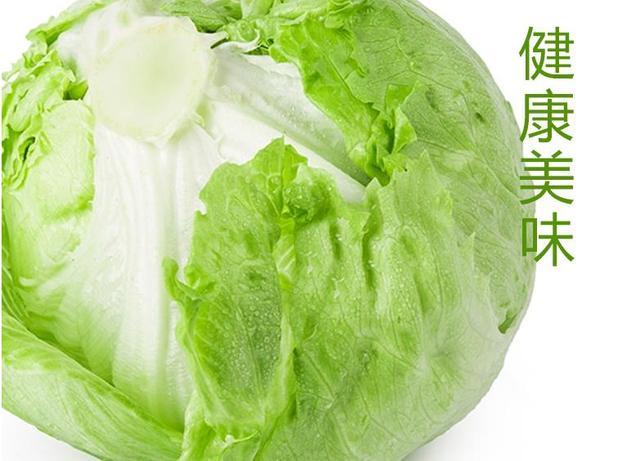
Environmental Requirements and Cultivation Techniques for West Lettuce
West lettuce was introduced from the West, hence the name west lettuce; it belongs to the genus Lactuca in the family Asteraceae. Leaf lettuce is eaten as fresh tender leaves, while for export it is mainly grown for head formation. West lettuce has a taproot system with a shallow distribution and a weak ability to absorb water and nutrients. The heads of head lettuce come in round, flat-round, conical and cylindrical shapes, with a tender texture, and are the main edible part.
1 Characteristics and Traits of West Lettuce
West lettuce has a taproot system and a weak ability to absorb water and nutrients. When direct-sown, the roots penetrate relatively deep, and there are few lateral roots. The stem is a shortened stem that slowly extends and thickens as the plant grows vigorously. After flower bud differentiation it continues to extend and thicken to form a flower stalk. The leaves are radical leaves, alternately arranged on the short stem, and are the main edible part [Jishan Huayao].
2 Environmental Requirements
2.1 Temperature
West lettuce is a semi-cold-season vegetable. The minimum temperature for seed germination is 4 °C, the optimum temperature is 15-25 °C, and germination is impaired above 30 °C.
2.2 Light
West lettuce requires moderate light and temperature. If the light is too intense and the temperature too high, it does not form heads easily and the quality is poor. If the light is insufficient, the plants shade each other, which affects leaf growth and photosynthesis.
2.3 Moisture
West lettuce has many leaves and tender tissues, a high evaporation rate and high water consumption, and is not tolerant of drought. The soil should be kept moist during the seedling stage, neither too dry nor too wet, so as to avoid seedling ageing or excessive vegetative growth. During the rosette stage, moisture should be controlled appropriately to promote full growth of the rosette leaves. During the head-forming stage, water should be supplied fully; insufficient water leads to poor head formation and a bitter taste. In the later stage, attention should be paid to controlling water; excessive water easily causes head splitting and root rot, and leads to disease.
2.4 Soil and Nutrition
West lettuce has a shallow root distribution, and its roots have a relatively high oxygen requirement, so it grows poorly on heavy, barren plots. Therefore, it requires soil with good structure, preferably soil or sandy loam rich in organic matter and with a strong capacity to retain water and nutrients, and attention should be paid to crop rotation. West lettuce prefers slightly acidic soil, with an optimum pH of around 6; growth is poor at pH above 7, and yield is lowest at pH below 5. It has a relatively high requirement for nitrogen fertilizer; nitrogen deficiency inhibits seedling growth and the increase in leaf area, while phosphorus and potassium fertilizers are also indispensable. Phosphorus deficiency in seedlings not only reduces the number of leaves but also results in small plants, low yield and poor quality; potassium deficiency affects leaf growth and weight, and also affects nitrogen uptake. N∶P2O5∶K2O=2∶1∶4 [3].
3 Cultivation Techniques
3.1 Sowing and Seedling Raising
Anning City has an average altitude of 1,800 m and an average annual temperature of 14.7 °C, so sowing is possible almost all year round. However, the quality is better and the yield higher for produce marketed from October to April of the following year. In spring and summer, direct sowing is preferable, while in autumn and winter, seedling raising and transplanting are preferable. After sowing and before emergence, the soil should be kept moist; when the temperature is high, water in the morning and evening. At 10-15 d after emergence, when there are 2-3 leaves, thin the seedlings so that they retain a certain nutritional area. After thinning, apply 1 application of dilute human manure and urine. West lettuce is sensitive to phosphate fertilizer, so a certain amount of phosphate fertilizer should be added to the topdressing to promote seedling growth. To prevent downy mildew damage during the seedling stage, spray 1-2 times with 75% chlorothalonil 600 times solution or 70% thiophanate-methyl 1,500 times solution. For direct-sown crops, final thinning can be carried out when there are 4-5 leaves; when thinning, select strong seedlings that grow well and are free of disease.
3.2 Transplanting
Immediately after the previous crop is harvested, dig deep and sun the soil clods. Before transplanting, apply sufficient base fertilizer: farmyard manure 45-75 t/hm2, ordinary calcium superphosphate 450-600 kg/hm2, potassium sulfate 150-225 kg/hm2, and urea 225-300 kg/hm2, and mix thoroughly and apply into the soil. When the seedlings are about 30 d old and have 4-5 leaves, they can be transplanted, carrying more soil and damaging the roots as little as possible. The transplanting spacing is 30 cm between plants and 35 cm between rows, and the planting depth should preferably not bury the growing point. The transplanting density is about 60,000 plants/hm2.
3.3 Field Management
3.3.1 Irrigation. Immediately after transplanting, water with settling water to help the seedlings recover and survive. In the early stage of seedling growth, keep the soil alternately dry and wet, generally watering once every 5-7 d, to promote root and rosette leaf growth. In the middle and later stages (with sufficient moisture during the head-forming stage), irrigation should be uniform; pay attention to drainage on rainy days, and keep the rosette leaves green. Uneven dry and wet conditions easily cause head splitting, hollow heads and loose head formation. Stop irrigation in the late head-forming stage to prevent head splitting. Before harvest, pay attention to controlling water so as not to affect quality and harvest transport.
3.3.2 Topdressing. West lettuce needs relatively more nitrogen fertilizer, and on the basis of sufficient base fertilizer, topdressing should be applied skillfully in stages. Generally, 3-4 topdressings are needed. The first is 3-5 d after transplanting and seedling recovery, when 0.3% urea water is applied; thereafter, topdress once every 7-10 d, each time with urea 75 kg/hm2 + Sakefu 15 kg/hm2. The principle of "promote early, control in the middle, push in the late stage" should be adopted: apply nitrogen fertilizer early to promote growth, control in the middle to prevent excessive vegetative growth, and apply heavy topdressing in the late stage to push head formation. Topdressing should be carried out in combination with watering.
3.3.3 Cultivation and Weeding. During the seedling stage, weed and cultivate 2-3 times; stop cultivation after the rows close [4].
3.4 Pest and Disease Control
Common diseases of west lettuce include gray mold and downy mildew, and the main insect pests include aphids and American leafminer, etc. In addition to agricultural control measures, chemical control should also be carried out well. For gray mold, spray promptly at the early stage of the disease; 70% thiophanate-methyl wettable powder 1,500-2,000 times solution or 50% procymidone wettable powder 3,000 times solution may be used, sprayed once every 7-10 d, for 2-3 consecutive sprays, and stop application 15 d before harvest. To control downy mildew, spray 1-2 times with 75% thiophanate-methyl 1,500 times solution during the seedling stage; at the early stage of the disease, spray promptly with 25% metalaxyl wettable powder 1,000 times solution or 75% chlorothalonil wettable powder 500-600 times solution, sprayed once every 10 d, for 2-3 consecutive sprays, and stop application 15 d before harvest. For aphids, spray with 20% fenvalerate emulsifiable concentrate 2,000 times solution for control, and stop application 10 d before harvest. For American leafminer, spray with Lvcaibao emulsifiable concentrate 800 times solution or 2.5% abamectin emulsifiable concentrate 1,200-1,500 times solution for control, for 2-3 consecutive applications, and stop application 7 d before harvest.
3.5 Harvest
After 50-60 d from transplanting of west lettuce, when the heads have fully grown and are tightly folded, they should be harvested promptly. The maturity period of west lettuce is not very uniform, so it should be harvested in stages at the appropriate time. At harvest, select plants with tight heads, cut them off from ground level and strip off the outer old leaves; at harvest, the moisture on the cut surface should be dried. Handle gently during harvest to avoid squeezing and bruising the leaves, pack into boxes promptly, and after chilling, transport to the cold storage, then grade, package and sell.