How to Grow Golden Pear? Detailed High-Yield Cultivation Techniques in Junan County
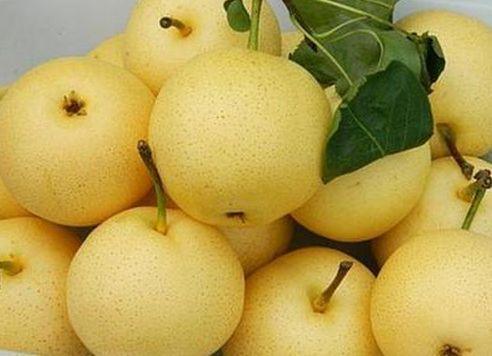
High-Yield Cultivation Techniques for Golden Pear in Junan County
The golden pear tree grows vigorously, with a relatively open tree posture, strong growth vigor in young trees, a low germination rate, weak branching ability, and is prone to forming short fruit branches that bear fruit, with good yielding ability. Young trees planted in the current year can partially bear fruit, and in the 2nd year the fruiting plant rate reaches 100%.
1 Reasonable Planting
1.1 Soil Selection
Golden pear has strong adaptability to planting and can be grown in sandy soil, loam, and clay. However, for efficient high-yield cultivation, it is advisable to choose plots with deep soil layers, fertile soil, rich in organic matter, and with a certain irrigation and drainage capacity, with a pH value between 5.0 and 8.5; sandy loam or loam is suitable, and the optimal pH value is 5.5 to 6.5. Golden pear is a deep-rooted fruit tree with strong horizontal root extension; for orchards with relatively barren soil layers, it is best to first carry out trench soil improvement or large-hole planting to obtain the best yield and quality.
1.2 Planting Density
Golden pear is suitable for cultivation at row spacings of 2 m x 3 m, 3 m x 1 m, 2 m x 1 m, 2.0 m x 0.7 m, and 1.5 m x 0.7 m, so as to increase leaf and branch coverage as quickly as possible, increase photosynthetic product accumulation, and promote early fruiting[1].
1.3 Reasonable Arrangement of Pollinator Trees
Because the floral organs of golden pear are incompletely developed, the stamens degenerate, and the amount of pollen is small, when there are insufficient pollinator trees, the fruit-setting rate of golden pear will be low, the fruit will be small, and the quality will be poor. Therefore, in cultivation, pollinator trees should account for more than 20% of the total number of planted trees. Better pollinator varieties include Lyubaoshi, Fengshui, etc., and they can be arranged at 1:3 to 8 when planting.
1.4 Planting Time and Method
Planting can be done from September each year to March of the following year, but October to November is best. Before planting, dig planting trenches 1 m deep and 1 m wide as required. The average application rate of high-quality base fertilizer is more than 45 t/hm2. After mixing with an appropriate amount of phosphate fertilizer, apply it to the bottom of the hole, cover with a layer of soil, and then plant the golden pear. Select strong seedlings with complete root systems, free of pests and diseases, and free of mechanical damage. After planting, water once thoroughly, about 20 kg of water per plant, and cover the plate with weeds or plastic film. After that, combine with base fertilizer application each year to deeply plow and improve the soil[2].
2 Fertilizer and Water Management
2.1 Appropriate Fertilization
After leaf fall each autumn, apply a sufficient amount of high-quality base fertilizer at 30 t/hm2 in combination with deep plowing. The amount of fertilizer applied during the growing season should be determined according to the yield level and soil fertility. The reference fertilization standard is that for every 100 kg of fruit produced, supplement 0.5 kg of nitrogen, 0.2 kg of phosphorus, and 0.3 kg of potassium. The 1st application is before germination (mid-March), mainly nitrogen fertilizer; the 2nd is from after flowering to before flower bud differentiation (mid-May to early June), mainly multi-element compound fertilizer; the 3rd is during the fruit expansion period (late July to early August), mainly potassium fertilizer, combined with an appropriate amount of phosphate fertilizer[3].
The 1st topdressing of quick-acting nitrogen fertilizer is in May each year, after which 3 more topdressings of quick-acting fertilizer are applied in combination with watering. In addition, foliar fertilization can be carried out in combination with pesticide spraying, mainly 0.3% urea solution in the early stage and mainly 0.2% to 0.3% monopotassium phosphate in the later stage. Stop fertilization from July to September to help promote flower formation. Apply little or no base fertilizer in autumn; where organic fertilizer is insufficient, the method of covering the rows with grass can be used to increase the organic matter content of the soil.
2.2 Timely Watering
In general years, water 3 to 4 times in combination with fertilization, respectively before budbreak and flowering, during the rapid growth period of new shoots, after fruit harvest, and before the soil freezes. In years with a lot of rain, attention should be paid to drainage and waterlogging prevention.
3 Training and Pruning
3.1 Free Spindle Pruning
Under planting densities of 2 m x 3 m or 3 m x 1 m, the free spindle shape is suitable. In the year of planting, leave 70 to 80 cm for trunk determination, and select 3 to 4 buds below the cut with suitable directions and spacing of about 10 cm for notching. During the growing season, pinch the competing branches at 20 to 30 cm, and open the angle of the remaining branches to 60 to 70 degrees. For 2- to 3-year-old fruiting trees, remove overly dense branches, and leave the branches sprouting on the main branches unpruned; after fruiting, cut back and cultivate them into fruiting branch groups. The tree shape is formed in 3 years, and at formation the tree height is within 2 m[4].
3.2 Central Leader Pruning
In orchards planted at 2 m x 1 m, 2.0 m x 0.7 m, and 1.5 m x 0.7 m, after the seedlings are planted, set 1 support post and tie the seedling to the support post at 30 to 40 cm above the ground. When buds sprout in early spring of the 1st year, pull all the seedlings flat along the row to promote rapid growth of branches on the back, and when the shoots on the back grow to more than 15 to 20 cm, straighten the seedlings again. When the new shoots are 20 cm, keep 7 to 8 lateral branches as fruiting branch groups and let them grow.
3.3 Winter Pruning
Winter pruning focuses on removing upright, overly dense large branches, water sprouts, diseased and insect-damaged branches, and ineffective branches, and keeping more auxiliary branches to enhance tree vigor.
4 Promoting Flowers and Fruits
4.1 Bud Removal and Pinching
After the pear tree sprouts, a large number of new branches will sprout at the cut. When the new shoots reach 30 cm, pinch them repeatedly. In early June, when the new shoots are semi-lignified, twist the shoots. At the end of June, spray 0.8 to 1.0 g/L 15% paclobutrazol, or spray PBO 250 times solution once in early June and once in early August [Jishan Huayao], so as to form enough flower buds and achieve the goal of high yield every year.
4.2 Spraying Fertilizer at Flowering Stage and Artificial Pollination
When the flower buds just begin to swell, spray 0.3% urea + 0.2% borax; spray Guodaduo once each at 5 d and 15 d after flowering; spray 1 g/L 15% paclobutrazol once 3 weeks after flowering, and carry out artificial pollination.
4.3 Flower Thinning and Fruit Setting
Golden pear easily forms axillary flower buds. When pollinator trees are reasonably arranged or artificial pollination is used, the fruit-setting rate of inflorescences is high, so flower and fruit thinning should be carried out in time. Thin flowers during the inflorescence separation stage and early flowering stage, leaving 1 inflorescence every 20 cm; complete fruit thinning within 25 d after flowering, leaving 1 fruit every 20 cm, and vigorous trees and branches may retain appropriately more fruit[6].
5 Pest and Disease Control
The main diseases of golden pear include pear powdery mildew, ring rot, and rust, etc.; the main pests include aphids, pear psylla, pear fruit borer, and pear stem sawfly, etc. In winter, clean the tree body, peel off loose bark, cracks, and diseased spots, and in combination with winter pruning, cut off diseased branches and insect-infested branches, and spray 3 to 5 degrees Be lime sulfur mixture to clean the orchard, so as to kill overwintering pathogens and insect eggs and lay the foundation for pest and disease control throughout the year. During the germination period, when the scales loosen and open, spray the pear orchard once with 5 degrees Be lime sulfur mixture. From mid-March to early April in spring, spray 20% imidacloprid EC 2 000 times solution to control aphids; from late April to early May, spray 50% carbendazim wettable powder 600 times solution + 50% phoxim EC 800 times solution to control pear fruit borer, pear stem sawfly, etc.; from June to September, alternately spray Bordeaux mixture + 12.5% diniconazole wettable powder 1 500 times solution + 10% cypermethrin emulsifiable concentrate 2 000 times solution to control pear scab, powdery mildew, rust, etc.