How to grow high-quality, high-yield Wendan pomelo? Share of planting techniques from Duwei Town, Xianyou County
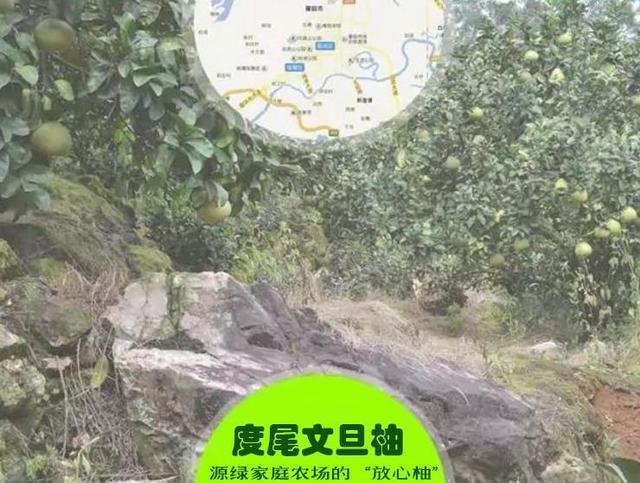
High-quality and high-yield planting techniques for Wendan pomelo in Duwei Town, Xianyou County
Duwei Wendan pomelo originated in Duwei Town, Xianyou County, Putian City, Fujian Province. It is a traditional famous fruit with local characteristics in Xianyou County. Its fruit has excellent quality, a fragrant aroma, tender flesh and mellow juice, moderate sweetness and acidity, no seeds or few seeds, a fresh and refreshing taste, and a unique flavor [Jishan Huayao]. From 2002 to 2008, "Duwei" brand Wendan pomelo was certified as a "Green Food Grade A Certificate" by the China Green Food Development Center for 3 consecutive times; in 2010, "Duwei" brand Wendan pomelo was recognized as a "Geographical Indication Product Protection" by the General Administration of Quality Supervision, Inspection and Quarantine of China. In recent years, Xianyou County has vigorously developed Duwei Wendan pomelo and actively built the Fujian Duwei Wendan Pomelo Industrial Park, with output rising year by year and quality continuously improving. In order to achieve the goal of high yield and high quality, combined with the author's work practice, the supporting cultivation techniques for high-quality and high-yield Duwei Wendan pomelo are summarized as follows.
1 Orchard establishment
1.1 Climatic conditions
The required annual average temperature is 19.9-20.2 °C, the average temperature of the hottest month (July) is 28.3 °C, the average temperature of the coldest month (January) is 11.0-11.2 °C, the minimum temperature is above -1.0 °C, the annual accumulated temperature at ≥10 °C is 6,000-7,500 °C, the frost-free period reaches more than 340-345 d, the annual sunshine hours are 1,500-2,100 h, the annual rainfall is 1,500-2,200 mm, and the relative air humidity is 80%-85%.
1.2 Soil conditions
For planting Duwei Wendan pomelo, plots with fertile and loose soil, deep soil layers (more than 1 m), and organic matter content above 10 g/kg should be selected. For planting in plain areas, low hilly red soil land with a groundwater level below 0.8 m, strong flood control and drainage capacity, and a pH value between 5.5 and 6.5 should be selected; for planting in mountainous areas, barren hills and low hills with gentle slopes with a slope below 25° and an altitude below 300 m should be selected, preferably with convenient transportation, water sources, and no environmental pollution.
1.3 Orchard planning
The main road runs through the entire orchard and connects with external roads, with a road surface width of 3-4 m; branch roads are 2-3 m wide, and turning areas are reserved; small paths are 1.0-1.5 m wide. For the drainage and irrigation system, the flood discharge ditch is required to have a surface width of 1.0-1.5 m, a bottom width of 0.8-1.0 m, and a depth of 1.0-1.5 m; mountain terraces are 2.5-3.0 m wide, with the outer side of the terrace 10-15 cm higher than the inner side, a soil-retaining ridge 15 cm high and 20 cm wide built along the outer edge, and a bamboo-joint-shaped drainage ditch 40 cm wide and 25 cm deep dug on the inner side, with the drainage ditch connected to the flood discharge ditch. For every 1 hm2 of orchard land, build a water storage pond with a storage capacity of about 20 m3.
2 Planting
2.1 Land preparation and application of base fertilizer
Before planting, dig planting holes 1 m long, 1 m wide, and 1 m deep according to the plan. After digging, sun-dry the soil, then apply 50-100 kg of green manure, 1-2 kg of lime, and 10-15 kg of dried poultry and livestock manure per hole. In the upper layer, apply 2-3 kg of cake fertilizer and 1-2 kg of phosphate fertilizer per hole, mix evenly with the topsoil, and then make a round soil mound 30 cm high and 80 cm in diameter.
2.2 Planting of seedlings
The planting time is generally selected after the autumn shoots mature in September-October or before the spring shoots sprout in February-March, but spring planting is preferable. When planting seedlings, select grafted seedlings with well-healed graft unions, no pests, diseases, or mechanical damage, well-developed root systems, and many fibrous roots. Seedlings transplanted with a soil ball can quickly resume growth after planting. At the same time, pair them with different varieties as pollinizer trees, with the proportion of different varieties at 1%-2% [3-7]. For flatland planting, the row and plant spacing is 5 m x 4 m, and for mountainous land it is 4 m x 4 m, with 500-615 plants/hm2; for sloping land planting, the plant and row spacing is 4 m x 4-5 m, with 615-700 plants/hm2. When planting, dig a hole in the center of the soil mound, allow the root system to spread naturally, straighten the seedling while filling soil and lifting gently and compacting, so that the root system is in close contact with the soil. The planting depth should be such that the root crown of the seedling is 10-15 cm above the ground surface, and it should not touch the fertilizer in the lower layer. Then water thoroughly to settle the roots, cover with a thin layer of soil again, and mulch with grass to keep the soil moist until survival.
3 Scientific fertilization
3.1 Fertilization for young trees
Fertilization for young trees is mainly water-soluble fertilizer, with good work in promoting and protecting shoots. Adhere to the fertilization principle of applying thin fertilizer frequently, applying shoot-promoting fertilizer before each shoot flush and shoot-strengthening fertilizer after shoot flush; apply nitrogen fertilizer such as urea at 0.1-0.3 kg/plant, phosphate fertilizer at 0.10-0.15 kg/plant, and human excrement and urine at 25 kg/plant, applied by digging ring-shaped ditches and watering. Apply quick-acting fertilizer before spring shoots sprout to promote early and abundant spring shoots.
3.2 Fertilization for mature trees
Fertilization for mature trees is mainly organic fertilizer, supplemented by chemical fertilizer, combined with foliar fertilization. The ratio of nitrogen, phosphorus, potassium, calcium, and magnesium should be kept at 1.00:0.50:0.90:1.00:0.28. Fertilize 4 times a year, namely good winter fertilizer, pre-flowering fertilizer, fruit-setting fertilizer, and fruit-strengthening fertilizer. The amount of fertilizer applied should be determined according to soil fertility, tree age, tree vigor, and fruit load. For a fruit tree with a yield of 75 kg per plant, it is necessary to apply urea at 2 kg/plant, manure at 50 kg/plant, potassium sulfate at 1 kg/plant, peanut cake at 8 kg/plant, and calcium superphosphate at 2 kg/plant. The key point is to apply post-harvest fertilizer combined with deep winter plowing and hole expansion, accounting for 40%-60% of the annual fertilization amount. The fertilization method is to dig ditches below the tree canopy drip line and apply the fertilizer.
4 Soil improvement
4.1 Interplanting green manure
Generally, before the rows close, green manure is interplanted throughout the orchard, and green manure crops such as peanut, soybean, and mung bean can be selected. According to soil conditions, use the interplanted green manure for soil improvement. The time is preferably October-December. Dig trenches 1.5 m long, 0.6 m wide, and 0.8 m deep on both sides of the planting hole, and apply green manure at 50 kg/plant, calcium superphosphate at 2-3 kg/plant, and lime at 1-2 kg/plant in layers, so as to improve soil physical and chemical properties and ensure the soil is loose, moist, and sufficiently nutrient-rich.
4.2 Field mulching
In the dry seasons of summer and autumn, cover with crop straw or weeds to keep the soil loose and maintain soil moisture; in winter, carry out soil mounding and mulching, which can increase soil temperature and enhance the cold resistance of the tree body.
5 Training and pruning
5.1 Pruning of young trees
Pruning of young trees mainly adopts the principle of "removing early shoots and keeping uniform ones, removing few and keeping many" for bud removal and shoot control. In the first year after planting, select and keep 3-4 evenly distributed and robust shoots at 40-60 cm from the trunk above the ground as the basal main branches. When the main branches grow to 20-25 cm, cut the tops a second time to promote multiple shoot flushes and lignification. Select and keep 2-3 branches on each main branch as secondary main branches. In the second year, cultivate 2 main branches spaced 30-40 cm from the first layer of main branches, and each main branch naturally extends until the terminal bud self-prunes. The adjustment of branching angle and position is achieved by propping, pulling, and hanging, thereby controlling growth vigor.
5.2 Pruning at full fruiting stage
At the full fruiting stage, appropriately shorten weak branches and the fruiting mother branches of the current year. For trees with severe canopy closure and too many scaffold branches, saw off the upright scaffold branches and large branches in the middle to open a "skylight" to let light into the inner canopy, and control tree height below 3 m. Pruning of mature trees is generally divided into summer pruning and winter pruning. Summer pruning is generally carried out 15-20 d before releasing autumn shoots, mainly removing a small number of crossing branches, flower- and fruit-dropping branches, and excessively dense strong branches in the middle and upper part of the canopy periphery. For vegetative branches of summer and autumn shoots grown in the current year, regulate the next year's yield by shortening or thinning. Winter pruning is generally carried out from after fruit harvest to 15-20 d before spring buds sprout, mainly removing dead branches and diseased and pest-damaged branches, and thinning crossing branches that affect tree shape, strong branches in the middle and upper part of the canopy periphery, and excessively dense shaded branches.
6 Flower and fruit management
6.1 Girdling
Girdling can inhibit vegetative growth and promote flower bud differentiation and flowering and fruiting. Select a smooth and even place on the basal trunk for girdling, deep to the xylem, with a girdling width of 0.2-0.3 cm, carried out from bottom to top year by year. For trees with strong vigor, girdle 2 rings; for trees with medium vigor, girdle 1 ring; side branches are not girdled; trees with weak growth vigor should not be girdled. The girdling time is generally controlled from late November to early December.
6.2 Flower and fruit retention
Practice has shown that fruit load is negatively correlated with fruit size, and the fruit granulation rate is significantly positively correlated with fruit size. During the flower bud stage, spray 0.1% borax + 0.2% urea + 0.2% potassium dihydrogen phosphate 1-2 times to retain flowers and fruits. At the same time, in order to regulate the fruit load per plant, first thin inflorescences and then thin buds, remove the top and tail and keep the middle, thin weak flowers and keep 2-3 strong flowers, and thin about 60% of the total flower buds. During the young fruit stage, spray 0.2% potassium dihydrogen phosphate + 0.2% urea or a special fruit-retention agent for pomelo. When the young fruit diameter is about 3 cm, thin the fruits, removing overly large fruits, overly small fruits, deformed fruits, twin fruits, and pest- and disease-damaged fruits. Determine the fruit load according to tree vigor, and retained fruits should be evenly distributed.
6.3 Fruit bagging
Fruit bagging can reduce pesticide contamination of the fruit. After the second physiological fruit drop, carry out fruit bagging in early June, and spray 1 insecticide and fungicide before bagging. A 800-fold solution of 80% fosetyl-aluminum + 1,500-fold solution of propargite can be used for thorough spraying, and bagging is carried out 4 h after the liquid dries.
7 Pest and disease control
7.1 Agricultural control
Strengthen cultivation management and improve the disease resistance of the tree body. After pruning and fruit harvesting, collect dead branches, fallen leaves, fallen fruits, weeds, etc. on the ground and bury them deeply or burn them. Through thinning and renewal pruning techniques, improve ventilation and light conditions within the canopy and reduce overwintering pest and disease sources [9].
7.2 Biological control
Protect predatory insects, such as green lacewings, small black lady beetles, predatory mites, hoverflies, mantises, and six-spotted thrips, so as to achieve the purpose of using beneficial insects to control pests and using fungi to control pests. By protecting, transplanting, and releasing them, increase the number of natural enemies of insects and achieve the purpose of pest control [10].
7.3 Chemical control
Diseases mainly include anthracnose, canker, and black spot. When spring buds grow to 0.2 cm or 2/3 of flowers have fallen, spray with an 800-1,000-fold solution of Daconil M-45 wettable powder, or 0.5%-0.6% lime double-dose Bordeaux mixture for control; during the young fruit stage and autumn shoot flush stage, spray with an 800-fold solution of 25% prochloraz emulsifiable concentrate, an 800-1,000-fold solution of Tante Ling, or an 800-fold solution of 70% thiophanate-methyl wettable powder for control.
Pests mainly include rust mites, red spiders, leafminers, and scale insects. A 1,000-1,500-fold solution of Manbisha, a 1,500-2,000-fold solution of Chongmanke, or a 1,000-1,500-fold solution of Wanling Shui can be selected for control. For leafminers, a 1,000-1,500-fold solution of "312" + a 1,500-2,000-fold solution of 20% fenvalerate or an 800-fold solution of 25% dimehypo can be used for control. For male adults of the oriental fruit fly, hang one trap every 20 m in the middle of the canopy in the pomelo orchard to trap and kill them.
7.4 Physical control
Trees with huanglongbing should be dug out and burned in time. Because the oriental fruit fly is attracted to yellow, and longhorn beetles, leaf beetles, and leaf-mining beetles are attracted to light, hang one yellow board every 20 m in the middle of the orchard canopy, and use sex pheromones and hanging insect-killing lamps for trapping and killing; because weevils have a death-feigning habit, during the adult emergence period in the morning when the dew has not dried, tap the pomelo tree several times with a pole, and after the adults fall to the ground, manually capture and kill the fallen adults.