What are the common problems in oil tea cultivation?
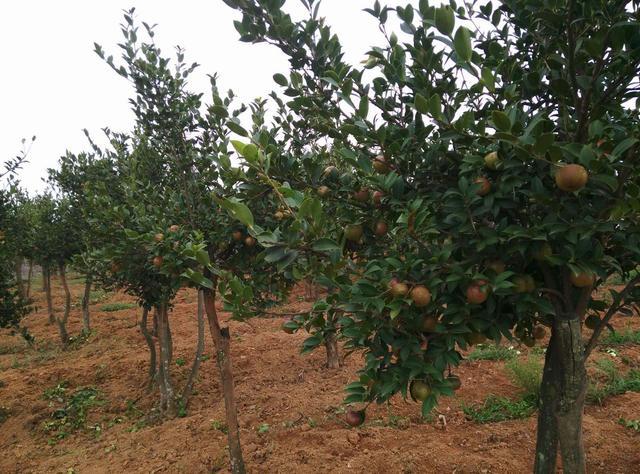
What problems exist in oil tea cultivation?
1 Current status of oil tea cultivation
Oil tea is a distinctive and traditional industry in China, and China is known as the "granary and oil sea." At present, the oil tea planting area in China has reached 34,700 hm2. Since 2010, the agricultural departments have continuously increased investment in the oil tea planting industry and actively summarized oil tea cultivation experience. The current status of oil tea cultivation in China is as follows.
1.1 Industrial awareness is gradually taking shape
At present, China treats the oil tea industry as a major pillar industry, promptly establishes a leading group for oil tea industry development, formulates reasonable and effective opinions on oil tea industry development according to the current development situation, carries out overall planning for the future development of the oil tea industry, and incorporates oil tea industry development into the scope of county-level target management assessment. At the same time, oil tea cultivation demonstration sites have been established, actively promoting the stable development of the oil tea industry, and funding for oil tea industry projects has been continuously increased, promoting infrastructure construction through the participation of the whole population.
1.2 Industrial development is showing scale
The establishment of oil tea planting cooperatives, professional oil tea planting teams, and oil tea bases has promoted the scaled development of the oil tea industry. The newly added oil tea planting area can reach 8,700 hm2 per year, and the enthusiasm of growers has continuously increased, thus making oil tea base construction show a trend of scaled development [2].
2 Main problems existing in oil tea cultivation
2.1 The breeding system is not sound
Although the oil tea planting area has increased year by year in recent years and the construction of oil tea planting bases has been continuously advanced, there is a lack of scientific certification of superior varieties. Some farmers do not pay enough attention to the prevention and control of oil tea pests and diseases. In addition, the oil tea breeding system is not sound, which slows down the renewal speed of superior seedlings and cannot meet the basic requirements of the modern development of the oil tea industry. This ultimately leads to a decline in oil tea production capacity and reduced oil tea yield, directly affecting agricultural development.
2.2 Management methods are single
In traditional oil tea planting and management work, fixed planting techniques are mainly used. Before science and technology became widespread, the oil tea industry developed slowly. Now, Chinese society has entered a period of rapid development, and various technologies have been optimized. Therefore, oil tea planting work must also keep up with the pace of the times. However, in actual work, there are still problems such as backward planting techniques and low awareness of breeding superior varieties, mainly manifested in planting any seedling available, resulting in a lack of superior varieties and directly affecting oil tea yield.
2.3 Shortage of funds
Due to insufficient funds, the smooth progress of oil tea base management work has been affected. Therefore, some farmers only focus on the oil tea planting area and do not pay attention to pest and disease problems during oil tea growth, thus adversely affecting oil tea planting benefits [Jishan Huayao].
3 Effective strategies for solving oil tea cultivation problems
3.1 Actively build oil tea demonstration bases
In order to fundamentally improve the current situation of oil tea cultivation, it is necessary to combine the strength of local governments, county-level leaders, and the public to build a group of high-yield oil tea demonstration bases, actively adopt advanced technologies and management methods to promote healthy oil tea growth, and promote the rapid renewal of superior varieties. At the same time, strengthen guidance on planting techniques and actively use theory to drive practice. Use oil tea demonstration bases as a display platform for oil tea planting techniques, organize farmers to learn advanced oil tea planting techniques and pest and disease prevention and control measures, continuously update the knowledge structure of growers, and promote the effective improvement of growers' professional skills through the method of using one point to drive an area.
3.2 Comprehensively master breeding and planting techniques
3.2.1 Seed selection and germination promotion. Select seeds from larger fruits and remove small seeds. Then, dry and disinfect the selected seeds, avoiding direct sunlight exposure, and place the seeds in a ventilated, cool place. After that, place the disinfected seeds in moist fine sand for storage, and cover them with a layer of film on top to promote germination. If the number of grafts is large, germination can be promoted in batches.
3.2.2 Scion collection and storage. Select robust branches with full leaf buds and no pests or diseases, insert them into a sand bed or cellar in a cool place, and maintain appropriate humidity.
3.2.3 Selection of nursery. Use a plot with sufficient sunlight and convenient drainage and irrigation as the nursery. The nursery needs to be applied with organic fertilizer and compound fertilizer to ensure that the soil is fertile and loose with sufficient nutrients. Then make the seedbed, with the width controlled at 120 cm. In addition, a shade shed should be set up, with the shed height controlled at about 180 cm.
3.2.4 Grafting treatment. First, cut at 2.0 cm above the cotyledons, remove the growing point, then make a vertical cut at the incision to split the rootstock into two halves. Then hold the scion upside down between the left thumb and middle finger, with one side closely against the fingertip, and begin to make a slanted cut at 0.2 cm from the base of the bud, with the cut surface at 30°, and the cut surface length 1.2 cm. Then, turn the scion over and make a slanted cut symmetrical to the first cut, so that the scion forms a thin wedge shape. Finally, make a slanted cut at 0.3 m above the bud tip, cut off the scion, and perform rootstock cutting treatment, after which the scion can be inserted.
3.2.5 Water and fertilizer management. During the growth of oil tea, close attention should be paid to the soil moisture content, especially in dry seasons, when moisture checks should be carried out regularly to ensure sufficient water in the soil; water only after the soil has dried thoroughly. When fertilizing, seedlings and mature plants should be distinguished, and the frequency of autumn fertilization should be controlled. The best fertilization time is from September to October each year. For 667 m2, 2,000 kg of farmyard manure, 300 kg of organic fertilizer, and 52 kg of phosphate fertilizer can be applied to promote healthy oil tea growth.
3.2.6 Pest and disease control. In the process of pest and disease control, actively establish the prevention and control idea of "prevention first, comprehensive management." At present, the main pests and diseases harming oil tea growth include oil tea soft rot, oil tea southern blight, and tea longhorn beetle. For the control of oil tea soft rot, timely pruning and trimming can be carried out on oil tea forests with excessive density to ensure good ventilation and light transmission; set the nursery land in a place with good drainage, and when disease occurs, spray 1:1:120 Bordeaux mixture, or dilute 50% Tuzet wettable powder with water into a 300-600 times solution for spraying, to prevent the spread of the disease. For oil tea southern blight, 1% copper sulfate solution can be used to irrigate the seedling roots, effectively avoiding the expansion of the disease's scope of influence and achieving good control results. For oil tea sooty mold, it is necessary to strengthen the tending and management of oil tea forests, make the forest well ventilated and light-transmitting, and promptly prune and burn diseased branches and leaves at the early stage of disease to avoid the spread of the disease. For the tea longhorn beetle, before the emergence of adults, apply whitewash to the trunk and root neck to prevent egg laying; manually capture adults during the adult occurrence period; promptly inject an appropriate amount of imidacloprid into the trunk of infested trees, and seal the hole with clay for effective control.
3.3 Increase capital investment
Local governments should increase capital investment in the oil tea industry and issue relevant preferential policies to attract enterprises or individuals to invest and broaden funding sources. At the same time, they should ensure that invested funds are used effectively, such as introducing advanced technology and recruiting professional talent, to provide basic support for oil tea production.