What kind of growing environment suits Phalaenopsis orchids? They need to experience low temperatures before they can bloom
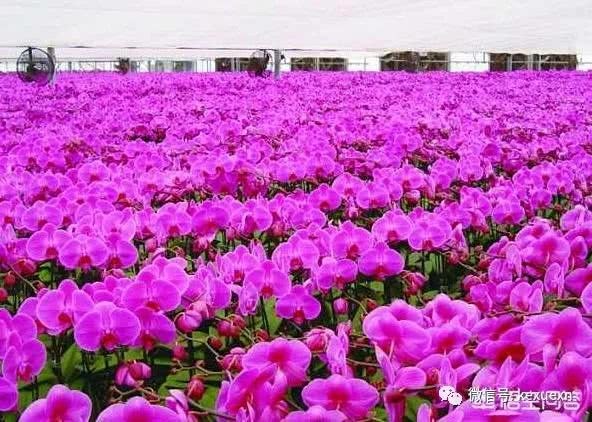
Where is it suitable to grow Phalaenopsis orchids? This question really is hard to answer. Science Xingnong can only put it this way: anywhere that suits its growth is suitable! To grow Phalaenopsis orchids well, we still need to have a relatively clear understanding of all aspects of the orchid's physiological habits and so on. Only once we understand this work can we care for them properly.
Physiological habits of Phalaenopsis orchids
First, let one thing be clear: Phalaenopsis orchids come from the tropics. In tropical regions such as Malaysia and Taiwan, China, Phalaenopsis orchids are very abundant, so when it comes to caring for Phalaenopsis orchids, the first thing is to provide them with a relatively high-temperature, high-humidity and well-ventilated environment.
It is worth mentioning that although Phalaenopsis orchids like high-humidity environments, they cannot tolerate waterlogging. If waterlogging occurs when they are grown at home, they will still die just the same.
The suitable growing temperature for Phalaenopsis orchids is 18-30 degrees; below 15 degrees they stop growing, and below 10 degrees they will even die. So for orchid growers in the north, this work must be done properly, otherwise the Phalaenopsis orchids will already have frozen to death before winter even arrives.
About blooming
Flowering plants all need a vernalisation condition, and Phalaenopsis orchids are no exception. If you want Phalaenopsis orchids to bloom, they need to experience a temperature condition of around 15°C for about one month. Of course, this period should not be too long either, otherwise it easily causes stunted growth in Phalaenopsis orchids.
Management
Everyone can imagine what a tropical environment is like: dense trees, and in such an environment there naturally would be no direct sunlight shining on Phalaenopsis orchids. But if we grow them at home, we won't have such conditions, so we need to pay attention when the midday sun is fierce. You can move the Phalaenopsis orchids indoors to avoid sunburn. At the same time, you can use a sprayer to increase the humidity around the Phalaenopsis orchids.
As for choosing a position, you can consider a balcony facing east or north, where the sunlight is not too fierce but there is still some sunlight, which is quite suitable.
When watering, pay attention that the amount of water each day should be just enough to evaporate dry that same day. Water daily, aiming for "dry when dry, wet when wet" as the standard, and do not use too much water. But they must not dry to death either. This is very helpful for reducing the incidence of pests and diseases in Phalaenopsis orchids.
For fertilisation, pay attention to balance, and do not blindly apply extra fertiliser. Throughout the entire growth cycle, you can follow the principle of applying small amounts more often. At the stage when flowering is imminent, you can spray some potassium dihydrogen phosphate to promote blooming.
The above is a little bit of insight that Science Xingnong has shared with you, and I hope it is helpful to you.