Treat rose rust like this, and with careful care your roses will be even more beautiful
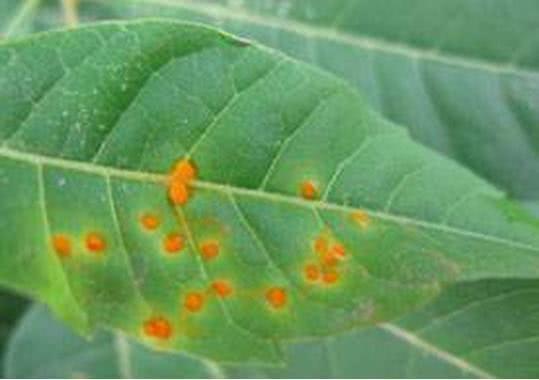
Roses have high ornamental value, but while their blooms are beautiful, they also need more care. The rose is actually a rather delicate and frail beauty, prone to catching all kinds of diseases, and rust is one of the diseases roses catch with very high frequency. Rust can occur on young shoots, branches and leaves, flower buds and other parts, and the most severely affected are often the leaf buds.
Rose rust is caused by several kinds of pathogens, and spring and summer are the high-risk periods for the disease. The disease begins to sprout widely in spring, so when new shoots grow in spring, you need to watch closely; rust often starts by attacking young shoots. Look carefully and you will find the surface covered with orange-red powder, then the young shoots become swollen and deformed, and fall off after a few days.
At this point the situation is relatively mild. If you discover it in time and prune off the young shoots promptly, you can greatly reduce the infection rate. If you let it continue, then next you will find some orange-yellow small spots on the upper side of the leaves, then orange-yellow small spots also appear on the underside, and after that white small spots appear on the upper side of the leaves.
When fertilizing roses, Huahua recommends using organic fertilizer, fermented purely from plant sugarcane stalks, rich and balanced in nitrogen, phosphorus and potassium, with various organic matter, minerals and amino acids added, promoting the plant to grow vigorously, making the plant strong and producing many flowers.
The main conditions for rust pathogen germination are suitable temperature + moisture, and a temperature of around 20 degrees is most favorable for the reproduction of this pathogen. So in regions with a mild climate and plenty of rain, the incidence of rust is highest. Therefore, timely pruning of branches and leaves helps the plant's ventilation and the drying of the leaves, and can reduce the reproduction of the pathogen.
At the same time, you need to keep the rose's growing environment ventilated and dry. In spring and other seasons of continuous rainy weather, you especially need to shelter it from rain; when placing it indoors to avoid rain, you must also pay attention to indoor air circulation. If it is too stuffy and hot, you can use an exhaust fan or a small fan to exchange the air and speed up air flow.
In the early stage of the disease, you can use 0.2 lime sulfur mixture to control the condition. Before the peak period (especially when air humidity is high), using 50% chlorothalonil 600-fold solution can effectively suppress the condition, or using 15% triadimefon 1000-fold solution also has a very good preventive effect.
In order to improve the resistance of roses, you must give them fertilizer that promotes growth, rich and balanced in nitrogen, phosphorus and potassium, promoting the plant to grow vigorously and bloom abundantly.
When the condition is more serious, you can use 25% triadimefon 1500-fold solution, or 50% dinitro dispersible wettable powder 200-fold solution, or 75% oxycarboxin emulsifiable concentrate 3000-fold solution, or 70% thiophanate-methyl 1000-fold solution, or 50% carboxin wettable powder 1000-fold solution to spray the diseased plants, with a spraying frequency of once a week.