Learn to grow bowl lotus this way, and it will produce bright, vivid flowers
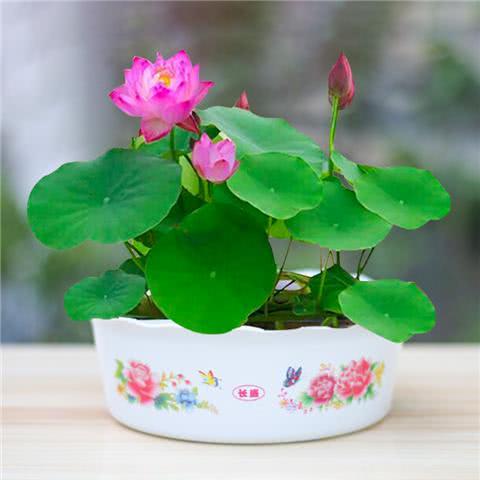
Bowl lotus is small and delicate, with tender, lovely flowers. Grown at home, it beautifies the environment and makes the room fresher. Let's take a look at how to grow bowl lotus.
How to grow bowl lotus?
(1). Pot and soil
Choose a porcelain or glazed pot with a watertight bottom. You can pick a suitable pot according to personal preference and home decor. The chosen container should have a mouth diameter of 25~35cm and a depth of 20~25cm, which can provide the plant with more space and is conducive to root spreading and growth.
The best soil for growing bowl lotus is river-pond mud. River-pond mud is rich in organic matter. Generally, the thickness of river-pond mud placed in the container is about 15cm.
(2). Light
Bowl lotus loves light, so it needs at least 5 hours of light. To let bowl lotus receive sufficient light, place it on a south-facing balcony with good light. You can appropriately move the plant so it receives even light, but it cannot be kept indoors for a long time. If conditions permit, it is best to move it outdoors for care.
(3). Fertilizing
Bowl lotus is a fertilizer-loving plant. Before planting, add an appropriate amount of decomposed soybean cake to the soil as base fertilizer. When upright leaves are found emerging, an appropriate amount of potassium fertilizer can be added to promote flower bud formation and help flowering. Fertilizing should not be excessive. If the fertilizer is too concentrated, water it promptly to dilute it and reduce the fertilizer effect.
(4). Water
When bowl lotus has just been planted, do not water too much, as the young roots grow slowly and are prone to root rot. When the leaves are large, increase the amount of watering and irrigate with clear water; in summer, water once in the morning and once in the evening.
Tap water needs to be left to sit for 1~2 days before use so the water temperature is suitable. The water used should be clear, and the water should be changed frequently to ensure water quality, otherwise the plant is prone to disease.
(5). Pruning
If bowl lotus leaves become too dense, appropriately prune away diseased leaves and withered leaves, which is beneficial to the healthy flowering and growth of bowl lotus, otherwise it will affect air circulation.