What to do about abnormal rose leaves? 17 pictures teach you to identify and deal with them
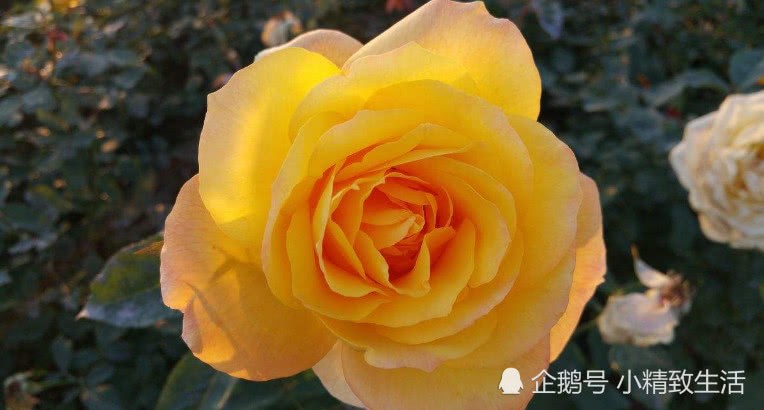
Rose is called the "queen of flowers" and ranks fifth among the top ten famous flowers, deeply loved by flower enthusiasts. But at the same time, rose is also a famous "medicine jar"; for inexperienced beginners, growing roses well takes quite a bit of effort. Below, Xiao Jingzhi Life has sorted out 17 causes of abnormal rose leaf appearances and the corresponding measures for handling those abnormal situations, to share with everyone.
1. The lower part of the rose, thin and weak slow-growing weak branches, bud points, and shaded leaves will turn from green to yellow. These are all normal metabolism of the rose, such as the lower part gradually lignifying upward and shedding leaves, normal elimination due to untimely nutrient transport, or yellowing due to lack of light from being shaded, etc. Yellow leaves like these just need to be removed promptly.
2. If the rose's branches and leaves droop, most flower buds also droop downward, flower buds always fail to form and blind branches easily appear, and the leaves yellow from top to bottom, it is mainly caused by waterlogging from frequent watering and poor soil drainage. In this situation, it is best to replace the soil with good drainage, place it in a well-ventilated environment, and control the watering frequency: do not water until dry.
3. If the rose's leaves gradually wither and dry from bottom to top, or even the whole plant's leaves dry up, and the soil becomes compacted, there is no need to ask - this is the rose being short of water. If at normal temperature, immediately water once thoroughly; if it is summer and above 35°C, first move it to a cool place to lower the temperature, then water thoroughly.
4. If the rose lacks light for a long time, the color of the whole plant's leaves will slowly fade from green, turn yellow, and then fall off. If this happens, by no means should it suddenly receive full sun all at once; you must proceed step by step, gradually increasing the duration and intensity of light until it fully receives full sunlight.
5. If the rose's leaf edges yellow or even scorch, it is mainly caused by sunburn. In particular, some friends like to spray water on flowers and plants. If the water droplets remaining on the leaves after spraying meet the strong midday sun in summer, I think there is no need to say more about the principle of a convex lens starting a fire. The prevention and control measures for this situation are to provide shade during high summer temperatures to avoid direct sun exposure, and the environment also needs ventilation.
6. If the summer temperature is above 35°C, the rose will enter dormancy due to the high temperature. If watered too much at this time, it will cause the rose's young leaves to curl, the leaf color to fade, and the plant to droop listlessly, and there may also be a certain degree of scorching or random dead leaves. So please remember 10 words: high temperature, not high humidity; high humidity, not high temperature.
7. If the temperature is below -5°C, the rose will stop growing and enter dormancy. The branches and leaves will begin to turn red from top to bottom. If the low temperature continues, they will gradually yellow and then shed leaves. Measures such as double-potting or laying dry grass can be used to protect the rose from freezing.
8. If the leaves are infected by red spider mites, the initial manifestation is small white spots appearing on the upper side of the leaves from bottom to top, which will then gradually increase; more and more red or white spots will appear on the underside of the leaves, white webbing will appear between the leaves, and finally the leaves will completely wither, yellow, and fall off. Red spider mites are extremely prone to outbreaks in dry and unventilated environments, so roses must be placed in a well-ventilated environment, and water should often be sprayed from bottom to top to increase air humidity for prevention. If already infected, they must be isolated promptly. Remove the diseased leaves, and use pesticides such as Jinmanzhi and Aikaman diluted with water, focusing the spray on the underside of the leaves.
8. In the hot and rainy summer, rain, splash from sprinkler irrigation, and insects can easily spread black spot fungus. In the early stage of black spot infection, the leaves will have small purple-brown to brown spots, which will later develop into black or dark brown. The main prevention method is to reduce the chances of leaves getting wet. If the disease has already occurred, the diseased leaves need to be cleared away, and then pesticides such as DuPont Fuxing and Gaozhao diluted with water should be sprayed to cure it.
9. If the air humidity is too high, it will cause the rose to be infected with downy mildew. The symptoms are that in the early stage of infection, irregular chlorotic spots appear on the underside of the lower leaves and are covered with a frost-like mold layer. In the later stage of infection, they will appear water-soaked dark purple until becoming angular scorch-like brown mold layers. In severe cases, all the leaves will fall off until the whole plant dies. Preventive measures are to reduce air humidity and maintain light. If already infected with the disease, it is necessary to clear the diseased leaves and cure it by spraying downy mildew fungicide plus root drenching.
10. If the rose plants are too densely packed in a high-temperature and high-humidity environment, pathogens are very likely to invade through rose wounds and infect leaf blight. The specific manifestation is that in the early stage of infection, yellow-green pinpoint spots appear on the leaf surface; later the lesions expand, forming round or irregular shapes with purple edges; after further expansion they connect into patches, and small black spots appear, with the edges of the diseased leaves looking as if burned by fire. Plant density can be reduced and attention paid to avoiding rain for prevention. If already infected, first clear the diseased leaves, and cure it by spraying chlorothalonil plus root drenching with carbendazim.
11. In March, April, and November, during low-temperature and high-humidity weather, roses are very susceptible to infection by gray mold fungus. The symptoms are that in the early stage, the leaf tips or leaf edges have smooth, sunken, water-soaked light brown spots, which later expand and rot, ultimately preventing flowering and causing diseased buds to wither and die. Therefore, during these three months, special attention must be paid to keeping the air dry. If the disease has already occurred, promptly clear the diseased leaves and treat by spraying hymexazol diluted with water plus root drenching.
12. In the rainy months of June, July, August, and September, roses are prone to rust disease. The specific manifestation is that many small orange-yellow powdery spots appear on the upper side of the leaves; shortly afterward yellow small spots appear on the underside of the leaves; later white spots appear on the upper side of the leaves. The preventive measure is also mainly a dry and ventilated environment. If infected with the disease, promptly clear the diseased leaves and spray chlorothalonil for treatment.
13. If the rose shows symptoms of young leaves beginning to curl and wrinkle, then the leaves gradually hardening, and flower buds becoming deformed, it is because it has been infected by thrips pests. Although this insect is small, its harm is great, and it occurs throughout the year. Pesticides such as Huhuashen, imidacloprid, Baichongling, and matrine can be used to eliminate the insects.
14. If green small spots appear near the rose's young leaves, new shoots, and flower buds, it is very likely infected by aphid pests. When aphid infestation occurs, attention should be paid to clearing the diseased leaves, and at the same time use pesticides such as Huhuashen, imidacloprid, Baichongling, and Mieyawei to eliminate the insects.
15. From May to September, if the rose has poor ventilation, it is extremely susceptible to powdery mildew fungus under high temperature and dryness, leading to powdery mildew. The main symptom is that in the early stage of infection there are yellow-green irregular small spots. As the lesions expand, a layer of white powdery substance appears on the leaf surface and young shoots. When the disease is severe, it will cause the leaves to yellow and fall off, seriously affecting plant growth and flowering. It can be prevented by strengthening ventilation, supplementing water, increasing air humidity, and reducing nitrogen fertilizer. If already infected with the fungus, it can be cured by spraying pesticides such as chlorothalonil, mancozeb, and Guoguang triadimefon.
16. If the rose branches gradually turn yellow-brown from top to bottom and then turn black, it is very likely infected with black cane disease. Black cane disease is mainly caused by pathogen invasion in an environment with insufficient light, excessive moisture, and poor soil aeration. In severe cases, it will cause the whole plant to wither, so light must be maintained, soil aeration increased, and pruning should avoid before and after rain, choosing dry weather for pruning. If it has already occurred, just cut off the diseased branches in dry weather.
17. If the rose is fertilized too frequently, at too high a concentration, or with fertilizer that is not fully decomposed, it will cause fertilizer burn in the rose, with symptoms of young leaves losing green and turning white and then scorched yellow, and the leaf tips and leaf edges of old leaves appearing scorched yellow and brown. Therefore, usually be sure to apply thin fertilizer frequently. If fertilizer burn happens accidentally, water can be poured to dilute it; in severe cases, the plant can be dug out, the roots washed, the soil replaced, and repotted.
The above are the 17 symptoms shown by rose leaves and their corresponding manifestations. It can be seen that in the process of caring for roses, suitable conditions such as ventilation, light, temperature, humidity, watering, and soil are all indispensable. To fully master the care methods, one still needs to learn more, practice, and accumulate experience.
The above was compiled and published by Xiao Jingzhi Life. I hope it is helpful to you.