A Detailed Guide to the Medicinal Resources and Cultivation Techniques of Paris luquanensis
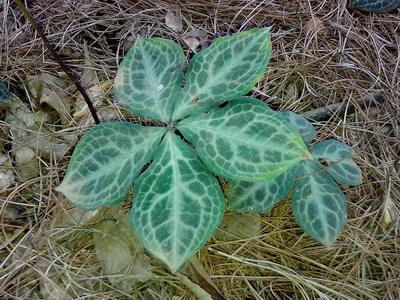
Medicinal Resources of Paris luquanensis, Cultivation Techniques of Paris luquanensis
1 Basic Information on the Variety
Luquan Paris luquanensis generally grows in Luquan in central Yunnan and Pingbian in southeastern Yunnan, as well as in the northern part of the Gaoligong Mountains, and is also distributed in southern Sichuan (Huidong, Puge and Yuexi). It is a rare variety under provincial-level protection. Because Luquan Paris luquanensis is small, grows slowly and has relatively strict requirements for its growing environment, it is mostly a wild variety. As early as 2011, some large Chinese medicinal herb growers in Luquan County began trial cultivation of Paris polyphylla. Because this medicinal herb is difficult to cultivate and there was no technical experience to draw on within the county, they encountered quite a few problems during cultivation. Over two years, the Luquan Panmao Chinese Medicinal Herb Planting Cooperative persisted in collecting wild Luquan Paris luquanensis from township markets and concentrated them at a seedling base (Tuanjie Town) for greenhouse cultivation. After more than two years of unremitting effort, more than a thousand plants of Luquan Paris luquanensis have now been collected and successfully cultivated, forming a small planting area for protection and propagation.
2 Growth and Development Habits
Luquan Paris luquanensis likes to grow in shaded areas under forest at an altitude of 2100-3000 m, with a humid climate and appropriate rainfall. Generally, the suitable temperature for seed germination, root growth and development and terminal bud germination is 18-20°C, for seedling emergence it is 20°C, for aboveground plant growth it is 16-20°C, and for underground rhizome growth it is 14-18°C. The growth of Luquan Paris luquanensis requires a shaded environment; strong light will cause the leaves to wither. Generally, the seed germination and seedling stages require relatively good shading, while in the two years before maturity, shading should be appropriately reduced and light increased, which is beneficial for the accumulation of secondary metabolites and dry matter. If the soil moisture content is too low, it easily causes the stems and leaves to lose water and the root system to dry up and die, while if it is too high, pests and diseases are likely to occur and the rhizome to rot. It is suitable for growing in slightly acidic humus soil or red loam soil with good permeability; clayey, water-accumulating and compacted soil is not suitable for planting.
3 Planting Methods
1) Site selection and land preparation. Choose a vacant area under forest or sloping land or dry land with relatively high terrain and good drainage, with soil that is humus soil rich in humus or acidic red loam soil, as the planting base. Luquan Paris luquanensis is a perennial shallow-rooted crop that grows slowly and has few but relatively long roots. Generally, in the first year of transplanting, the land should be deeply plowed, which is beneficial for root growth. In winter, choose a sunny day and plow when the field is relatively dry, plowing to a depth of about 25 cm. When plowing, break up the soil clods and remove stones and weeds. After drying in the sun for one or two days, apply 30-35 t of decomposed farmyard manure per hectare as base fertilizer, and level and make beds. The bed surface width is 120 cm, the ditch width is 30 cm, and the ditch depth is 25 cm. After planting, the ditch soil should be broken up and spread on the bed surface. The ditches should be unobstructed to facilitate drainage.
2) Transplanting. Collect Luquan Paris luquanensis seedlings from the market and transplant them to the planting base, with a plant spacing of 15 cm x 20 cm. Cut pieces with terminal buds are planted at a spacing of 15 cm x 20 cm; for cut pieces without terminal buds, dig them out in the second winter when adventitious buds have already formed and plant them at a spacing of 20 cm x 30 cm. After transplanting, cover with chopped grass or humus soil to retain moisture and maintain a shaded environment. The transplanting time should preferably be in winter, after the aboveground stems have withered and while the rhizomes are dormant. During transplanting, take care to protect the terminal buds and fibrous roots from damage.
4 Management
1) Intertillage and weeding. Because the root system of Luquan Paris luquanensis is relatively shallow and new roots sprout in autumn and winter, attention must be paid during intertillage. Around September to October, at the early stage of underground stem growth, use a small hoe to intertill gently and not too deeply, so as not to damage the underground stems. When intertilling and weeding, combine this with earthing up and with the application of winter fertilizer. Around the Beginning of Spring, the seedlings gradually emerge. If weeds are found, they should be pulled out by hand in time. When weeding, be careful not to injure the seedlings and underground rhizomes, so as not to affect the growth of Paris polyphylla.
2) Drainage and irrigation. Drainage ditches should be opened well around the field to facilitate drainage. The depth of the drainage ditches should be more than 35 cm, basically achieving that the water dries up after the rain stops. The growth of Paris polyphylla var. yunnanensis avoids water accumulation, and the soil moisture content should not be too high. Before the aboveground stems emerge, it should not be watered, otherwise the roots are prone to rot. After emergence, however, it cannot lack water, so before the rainy season arrives, water in time. When the rainy season arrives, pay attention to drainage.
3) Fertilization. Apply 30-35 t of decomposed farmyard manure per hectare as base fertilizer.
Winter fertilizer. This is generally carried out from late November to early December. First, gently intertill the surface soil once, then choose a sunny day and apply 150-250 kg of compound fertilizer per hectare. Then cover with 30 t of barnyard manure, and then cover with some fine soil.
Spring fertilizer. After the seedlings have all emerged, apply decomposed farmyard manure 1-2 times, 15-20 t each time, and afterward spray foliar fertilizer 2 times. Around the Beginning of Spring, when the young seedlings emerge through the surface soil and the seedlings are about 3 cm tall, topdress in time.
4) Top removal. At the end of vegetative growth, for plants not kept for seed, remove the ovary but retain the sepals (which can carry out photosynthesis), to ensure the transfer of organic matter to the rhizome. In addition, after new shoots of Paris polyphylla emerge, remove the old yellow leaves to reduce nutrient consumption.
Luquan Paris luquanensis