Planting a thousand mu of gardenia and madder yields profits comparable to a thousand-household marquis
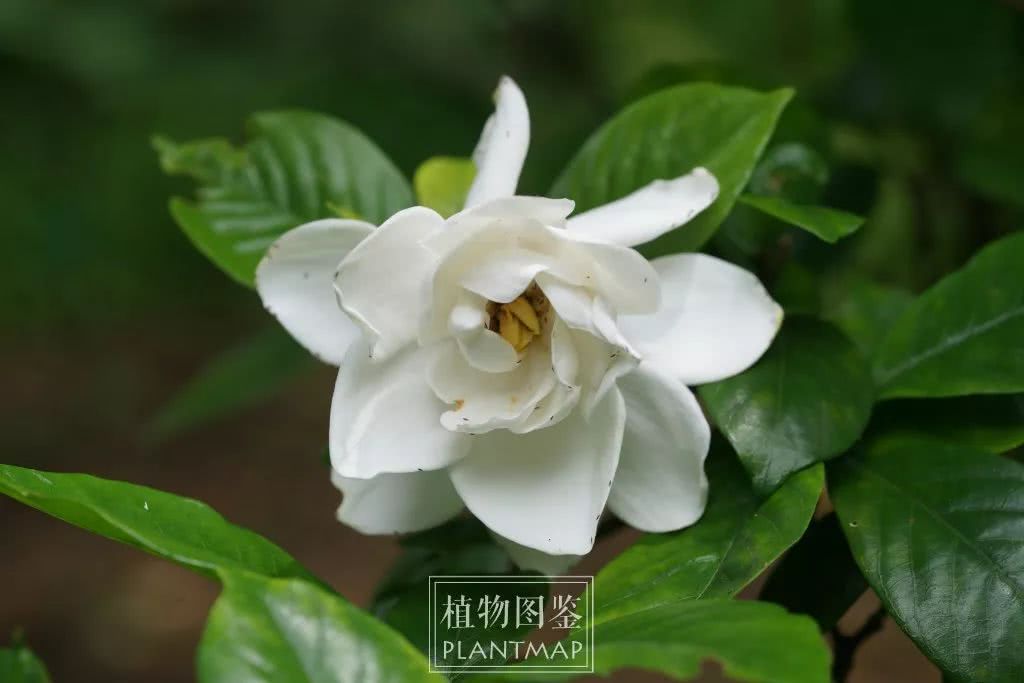
Not long ago, I bought fresh-cut gardenia flowers online. They were picked in the early morning, shipped from Chongqing in the morning, and I received them after work. The courier probably knew they were fresh flowers, so he didn't dare delay and hurriedly called me to pick up the package. When I got the delivery, I couldn't resist leaning close to the gap in the cardboard box - what a familiar fragrance!
1Gardenia, Summer, and "Dawn Blossoms Plucked at Dusk"
At this time last year, I also asked my father to send me some gardenia flowers grown by our front door. I missed this scent so much. Ever since I went north to study, every summer vacation when I returned home it was already the end of June, and the gardenias had already withered away completely - I had perfectly missed the blooming season.
When I was little, there was a gardenia tree in front of our house. On early summer mornings, the gardenias would bloom, and you could smell their fragrance from far away. The thing I looked forward to most after getting up every day was going to pick the flowers, put them in a bowl in my room, and the fragrance would fill the whole room, so I could fall asleep accompanied by the scent at night. The girls in my class liked to pin gardenia flowers in their braids, so the classroom was also full of gardenia fragrance. Back then I also saw people selling gardenia flowers at the school gate. An old granny would carry a bamboo basket on her arm, the basket full of white gardenia flowers, which must all have been grown in her own yard, picked in the dim morning light with dew still wet on the petals. The old woman's hair and shirt were the same color as the gardenias. I guess in the end she didn't sell many - I only ever saw her that one time.
Gardenia petals are white as snow, overflowing with fragrance. I like to break them off together with the branches and leaves and put them in a vase. I remember the summer vacation after the college entrance exam, staying at home in the river city during days of heavy rain, the weather gloomy. Before the exam results came out, I felt anxious and uneasy, as if waiting for doomsday judgment. Fortunately there was still one thing I could do: put gardenia flowers with branches and leaves in a transparent goldfish bowl, placed on the desk made from a sewing machine by the window. Green leaves, white flowers and yellow stamens paired together were simple, elegant and distinctive. Smelling the fragrance and looking at the flowers, doing nothing at all, I could while away a whole morning. The rich floral scent that summer once gave a young person's heart a moment of peace.
And in May 1927, when Lu Xun was in hot Guangzhou editing old pieces for "Dawn Blossoms Plucked at Dusk," a pot of gardenia on his desk probably also helped dissolve some of the writer's "strangeness and confusion." He wrote in the "Prefatory Note" to "Dawn Blossoms Plucked at Dusk":
The weather in Guangzhou gets hot so early. The setting sun shines in through the west window, forcing one to barely wear a single layer of clothing. The pot of "shui heng zhi" on the table was something I had never seen before: it is just a piece of tree, and as long as it is soaked in water, its branches and leaves become green and lovely. Looking at the green leaves and editing old manuscripts, at least I am doing a bit of work. Doing such work, truly, though alive, feels like a year of death - it can quite dispel the heat.
According to "Flora of China," this species of gardenia is used as a bonsai plant and called "shui heng zhi." Ma Junjiang's article "The Shui Heng Zhi in [title]" says: "Lu Xun's shui heng zhi should be a bonsai planted in a transparent glass flowerpot: a bowl of clear water, with root tendrils either still or moving in the water." So gardenia can actually be grown in water! I have never seen a water-grown gardenia bonsai either. It is said that water-grown ones can also bloom.
2Gardenia as a Dye
"Gardenia" had many names in ancient texts, such as zhizi, xianzhi, xianzhi, mudan, yuetao, and so on. The name "gardenia" originates from "Shuowen Jiezi": "A tree fruit that can dye. From wood, zhi sound."[1] It can be seen that in Xu Shen's view, the fruit's dyeing function was an important characteristic of the gardenia. The gardenia used as a dye is a plant in the Rubiaceae family. Madder is also a red dye, and the part used for dyeing is its root; while gardenia is a yellow dye, and the part used for dyeing is its fruit. But in my impression, gardenia flowers never bear fruit. However, in my childhood I once saw in the mountains the orange-yellow fruit borne by "wild" gardenias.
In winter, every fruit of the wild gardenia has been pecked once by birds
There are two common types of wild gardenia: Gardenia jasminoides Ellis and Gardenia stenophylla Merr. Apart from leaf width, there is very little difference between the two. Both fruits can be used for dyeing, and both flowers are single-petaled.
It turns out that the double-petaled gardenia now used for ornamental purposes is a variety. I only learned after asking a classmate in a related field that the single-petaled ones can bear fruit, while the extra petals of double-petaled varieties are transformed from stamens, thus producing less pollen and leading to a lower probability of fruiting.
The double-petaled gardenia is also called "white toad." Several other double-petaled gardenias used in landscaping all have very narrow, small leaves, and are more like double-petaled narrow-leaf gardenias. The gardenias that bear fruit used for dyeing should be their single-petaled forms. In the early Qing dynasty, Chen Haozi's horticultural monograph "Flower Mirror" records: "Those with single leaves and small flowers bear many seeds; those with thousand leaves and large flowers bear no seeds."[2] The so-called "those with single leaves and small flowers" refers to single-petaled gardenias.
A kind of double-petaled gardenia, called "small-leaf gardenia" or "sparrow-tongue gardenia" in landscaping
Wild single-petaled Gardenia stenophylla
Gardenia, in fact, also comes in cream yellow
Gardenia was used as a yellow dye from the Qin and Han dynasties onward. Sima Qian's "Records of the Grand Historian: Biographies of Money-Makers" records: "If one has a thousand mu of zhizi and qian, a thousand plots of ginger and leeks: such a person is equal to a thousand-household marquis." Here "zhi" and "qian" both refer to dyes. In Sima Qian's era, if a family had a thousand mu of gardenia and madder, their wealth could rival that of a thousand-household marquis, showing that gardenia and madder were dye crops of considerable economic value at the time.
There were so many plant dyes, so why were gardenia and madder the ones that could make people rich? I believe this is closely related to the colors revered during the Han dynasty. After Liu Bang established the Han dynasty, in order to solidify his image as the "son of the Red Emperor," he promoted red, and the dragon robe was also made red (the Qin dynasty was black); after Emperor Wu ascended the throne, he believed in yin-yang and the five elements. The Qin dynasty was associated with the virtue of water, and earth can overcome water, so the Han dynasty was associated with the virtue of earth. Among "metal, wood, water, fire, earth," the corresponding colors are "white, green, black, red, yellow," so Emperor Wu changed the dragon robe to yellow, but at the same time also retained the red dragon robe. By the Eastern Han, Liu Xiu changed the Han dynasty's "virtue of earth" to "virtue of fire" and continued to revere red.[3] Therefore, throughout the Han dynasty, both red and yellow were favored by rulers. The Eastern Han scholar Ying Shao wrote "Han Official Ceremonies," specifically introducing Han dynasty institutions. The book says: "The dye garden produces zhi and qian, to dye imperial garments." The "zhi" here should also be "gardenia." The Ming dynasty poet Chen Changming's "Greeting the Immortal Guest" praises gardenia: "Gardenia chambers, old through frost, once dyed the sleeves of Han palace robes yellow." This can prove it.
Plump gardenia fruit
In addition, during the Qin and Han periods, the main raw material for yellow dyeing was gardenia. Other yellow-dyeing crops such as rehmannia, sophora flowers, Amur cork tree, turmeric, and smoketree had not yet been promoted, and among mineral pigments, orpiment and realgar used for yellow dyeing were both used relatively late.[4] Therefore, during the Qin and Han dynasties, gardenia can be said to have held a monopoly in yellow dyes. Coupled with Emperor Wu's reverence for yellow, and since yellow had not yet become an exclusive color for emperors, demand for gardenia as a dye among both court and common people must have been considerable. No wonder that large-scale cultivation of gardenia could rival a thousand-household marquis.
3Dragon Boat Festival Flower Arrangement and Craft Decoration
Gardenia was used in flower arrangements during the Southern Song dynasty. "Record of the Bustling Old Man of the West Lake," when mentioning the Dragon Boat Festival customs in Jiangnan, records:
Inside and outside the city, every household made offerings, all inserting calamus, pomegranate, hollyhock flowers, gardenia flowers, and the like. In one morning ten thousand guan were sold, and the money spent was incalculable. How can this be seen? Qiantang had a million households; if one household bought a hundred cash of flowers, this can show it.
Gardenia flowers bloom around the Dragon Boat Festival, appearing together with calamus, pomegranate, and hollyhock flowers in the market. Ordinary people also bought these floral materials to arrange in vases. Just think about such a flower arrangement combination - because of the gardenia, it gained a touch of distinctiveness and elegance. I do not know whether this custom still exists in the Hangzhou area.
"Zhang Cheng Zhi" carved red gardenia pattern round plate, Yuan dynasty, height 2.8 cm, mouth diameter 16.5 cm. Former Qing palace collection.
Image from the official website of the Palace Museum
Gardenia must have always been beloved, and its patterns gradually came to be used as decoration on crafts. A "carved red gardenia pattern round plate" now collected in the Palace Museum must be mentioned. This exquisitely beautiful lacquerware came from Zhang Cheng, one of the most accomplished carved lacquer art masters of the Yuan dynasty. It is not hard to see that at the center of the round plate is a blooming double-petaled gardenia, indicating that the double-petaled gardenia variety already existed in the Yuan dynasty.
Carved lacquer is one type of lacquerware craft. According to different colors, it can be divided into carved red, carved black, carved polychrome, carved rhinoceros, and so on. "Carved red" means applying thick layers of vermilion lacquer on the base, and when it is half-dry, painting the draft, then carving the pattern. Because the lacquer is thick, it can ultimately achieve a relief effect. This lacquerware with a gardenia pattern as its main design was made in this way. According to Sun Ji's "Material Culture of Ancient China," the lacquer layers observable in the round plate reach eighty to one hundred coats[5]. Just thinking about the craftsman applying lacquer again and again without impatience is enough to inspire admiration. And Sun Ji's praise of its craftsmanship allows us to better appreciate the artistic beauty of this Yuan dynasty carved red masterpiece:
In the plate is carved one large gardenia flower, smiling warmly to greet people. The leaves around it are very dense, yet they unfurl and roll freely, revealing a sense of sketching from life. Correspondingly, the carving and polishing are extremely delicate, fully matching the description in "Xiu Shi Lu" of "hidden edge clear and distinct, rounded and smooth in relief."[6]
Zhang Cheng was from Yanghui in Xitang Town (now near Yanghui Pond north of Xitang Town in Jiashan). His birth and death years are unknown, and his life is not well known. It is unknown for whom this exquisite lacquerware was made, nor why its owner chose gardenia flowers as the main subject of the image rather than the Four Gentlemen among flowers, or the opulent peony. Perhaps behind this there still hides an interesting story waiting to be discovered.
Cloisonne enamel gardenia pattern candlestick, Ming Wanli period, made by the Imperial Household Workshop, overall height 9.6 cm, plate mouth diameter 18 cm, plate base diameter 13.3 cm. Former Qing palace collection.
Image from the official website of the Palace Museum
Besides lacquerware, gardenia flowers also appear in cloisonne, for example the "cloisonne enamel gardenia pattern candlestick" from the Wanli period of the Ming dynasty. On the folded rim of the candlestick's round plate there is a ring of gardenia pattern, which appears to be single-petaled gardenia. Beyond objects, clothing also could not do without it. In this "blue satin beaded embroidery gardenia and heavenly bamboo lined mandarin jacket" collected in the Qing palace, the image of the gardenia is not especially realistic, and one cannot tell whether it is single- or double-petaled, but the branches and leaves are relatively lifelike. The leaf veins and flower stamens embroidered in gold thread correspond to each other and can highlight the sense of light. According to the official website of the Palace Museum, this was casual clothing for Qing dynasty empresses and concubines.[7]
I guess this casual clothing should have been worn in the fifth lunar month when gardenias bloom. Could it be that gardenias were also planted in the Qing palace? And the appearance of gardenia flowers on casual clothing also shows that this flower has a different temperament from peonies and the like.
Before the Dragon Boat Festival in 2018
Image excerpted from "Plantes de la Chine"
[1] Li Shizhen's "Compendium of Materia Medica" explains it: "Zhi is a wine vessel. The gardenia resembles it, hence the name."
[2] (Qing) Chen Haozi: "Flower Mirror," Agriculture Press, December 1962, 1st edition, page 131.
[3] Chen Lunan: "Weaving Color into History," Zhonghua Book Company, August 2014, 1st edition, page 154.
[4] Chen Lunan: "Weaving Color into History," Zhonghua Book Company, August 2014, 1st edition, page 147.
[5] Sun Ji: "Material Culture of Ancient China," Zhonghua Book Company, July 2014, 1st edition, page 278.
[6] Sun Ji: "Material Culture of Ancient China," Zhonghua Book Company, July 2014, 1st edition, page 279.
[7] See: http://www.dpm.org.cn/collection/embroider/231370.html?hl=%E6%A0%80%E5%AD%90
About the author: Jianghan Tangtang, corporate employee / art museum public education volunteer / freelance writer, currently living in Beijing.
Text and image editing: Jiang Mouren
This work is licensed under the (CC BY-NC-ND 4.0) license agreement. Please retain this statement when reposting.
iPhone users can tip the author via the QR code below