Blockchain Knowledge for Beginners: What Is a Consortium Blockchain?
By: DaDa
Earlier we briefly got to know public blockchains and private blockchains. Today, let DaDa introduce consortium blockchains to you.
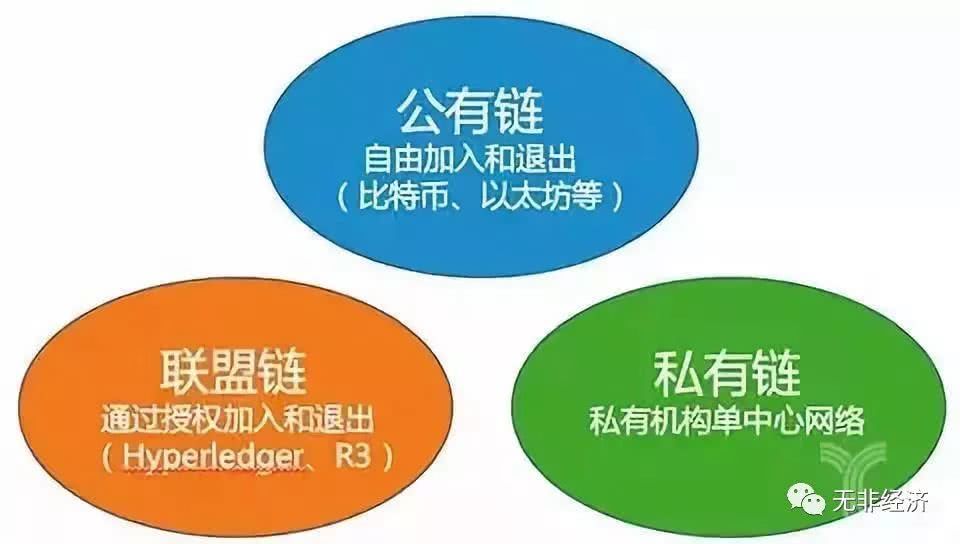
A consortium blockchainrefers to a blockchain jointly managed by several institutions, where each institution runs one or more nodes. Data on it can only be read, written and used to send transactions by different institutions within the system, and they jointly record transaction data. Each participant in the consortium blockchain does not need to worry about where their own data is stored; the data they generate is visible only to themselves, and only with a key authorized by the other party can they see the data of other participants. This solves the problems of data privacy and security while also achieving decentralization.
Features of a consortium blockchain
1. Partially decentralized
Unlike a public blockchain, a consortium blockchain to some extent belongs only to the members within the consortium, and it is easy to reach consensus, because after all, the number of nodes in a consortium blockchain is very limited.
2. Stronger controllability
Once a public blockchain is formed, it cannot be tampered with. This is mainly because the number of nodes in a public blockchain is generally massive; for example, Bitcoin has too many nodes, so tampering with block data is almost impossible. With a consortium blockchain, however, as long as most of all the institutions reach consensus, the block data can be changed;
3. Data is not public by default
Unlike a public blockchain, data on a consortium blockchain can be accessed only by the institutions in the consortium and their users, who have permission to do so.
4. Very fast transaction speed
Like a private blockchain, a consortium blockchain is essentially still a private blockchain. Therefore, because it does not have many nodes, it is easy to reach consensus, and the transaction speed is naturally much faster.
Compared with the operating space and efficiency of a private blockchain, a consortium blockchain has greater value; and compared with the completely decentralized, uncontrollable and privacy-risky nature of a public blockchain, a consortium blockchain becomes more flexible and more operable.
Applications of consortium blockchains
Previously, China UnionPay and China Everbright Bank jointly announced the completion of preliminary testing of a multi-center trusted POS electronic signature purchase order system built using the Qulian Technology blockchain platform. This test means that the first consortium blockchain application scenario in China spanning physical spaces and based entirely on an internet environment was born. The test of the multi-center POS electronic signature purchase order system by China UnionPay and China Everbright Bank based on Qulian products marks the successful interconnection of China's first multi-party cross-regional blockchain network and is a big step in the development of consortium blockchains.
In its own blockchain white paper, JD.com focused the application of its consortium-type blockchain mainly on five areas: anti-counterfeiting traceability of goods, anti-counterfeiting public welfare traceability of contracts and invoices, big data security, insurance anti-fraud, and transaction clearing and settlement. Among them, JD.com's target positioning for its consortium-type blockchain is: to build blockchain infrastructure for enterprise-level applications, provide enterprises with blockchain technology solutions that can effectively solve business pain points, and in the process of blockchain research, development and application, always pay attention to the five aspects of performance, functionality, security, contracts and compliance, and focus on carrying out optimization of blockchain technology capabilities in these five aspects.
However, while a consortium blockchain brings together many advantages, it also has challenges of its own that need to be overcome.
For example, how can the same underlying blockchain technology be used to adapt to the different business needs of different business formats in the consortium?
The more tentacles the consortium has, the higher the requirement for the versatility of the underlying technology. At present, before the international community and the state have made unified regulatory standards for underlying blockchain technology, any attempt may be invalidated.
In addition, even if a consortium blockchain is built, how to balance the interests of all parties in the consortium blockchain and the speaking rights of all parties will also be an important challenge for consortium blockchains.
Among them, in the final summary section of its own blockchain white paper, JD.com also truthfully said: how to establish a good incentive mechanism for blockchain application scenarios through business models, so that each blockchain application truly generates commercial value, is one of the core challenges of large-scale blockchain application.