Key points for succulent cuttings in summer: they will still propagate and grow
Cuttings propagation is not only the specialty of succulents; it is widely used from fruits and vegetables to large nursery stock. Every cell in a plant body is produced by embryonic cells dividing repeatedly countless times. Some species among summer-growing and intermediate-type succulents, such as variegated jade plant, jade plant, portulacaria, golden ball cactus, dragon tree cactus, offset-producing cactus, euphorbia cactus, and crown cactus, can be propagated by cuttings taken from fleshy stems or by removing offsets.
Before taking succulent cuttings, they must be left to dry for 3 to 5 days or longer, and only after the wound has dried should propagation be carried out, so as to avoid wound rot. For species in the Agavaceae and Aloaceae such as Gasteria, Haworthia cooperi, and Haworthia, side shoots can be broken off; those with roots can be potted directly, while those without roots should be propagated after the wound dries. After cuttings are taken, keep the medium slightly moist to encourage rooting. In addition, for variegated cultivars in the Cactaceae such as Astrophytum asterias variegata, Stenocactus variegata, Parodia, and Echinocactus, or other slow-growing species, as well as Euphorbia species such as Euphorbia 'Spring Peak' and Euphorbia obesa, and Apocynaceae species such as desert rose, grafting can be done this month to speed up growth.
Leggy growth in succulents is very common, and pruning and taking cuttings gives succulents more chances to propagate. One plant can become two or even more, and a single head can become double or even multiple heads. Generally, the first thing to do after pruning is to place the cutting in a shaded place to let the cut end dry and heal, then remove the leaves from the lower end of the cutting (they can be kept for leaf propagation), leaving about 3 cm of stem.
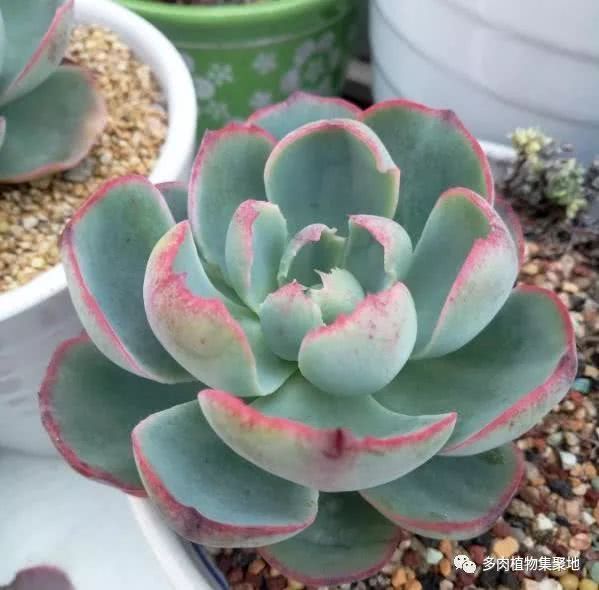
A reminder here: some succulents are not suitable for having the lower leaves removed immediately after pruning, such as Echeveria 'Red Tip' or Echeveria pulvinata, because with too much water, removing the leaves easily damages the leaf base or even the stem, making the leaves unsuitable for leaf propagation. In addition, stem wounds also rot easily when the cutting is planted, so it is best to wait two or three days until the water in the branches and leaves has drained somewhat before removing them.
The rooting of succulent cuttings is called "adventitious roots" because there is no fixed position for them to emerge. According to where the adventitious roots arise on the stem, they can be divided into two types. Bark rooting type: under normal conditions, the cambium area of the cutting can form many groups of parenchyma cells, called root primordia, and these root primordia are the material basis for producing large numbers of adventitious roots. Through cell division, they differentiate outward into a conical root cap, invade the phloem, reach the lenticels, and finally form adventitious roots through the epidermis. This rooting method belongs to varieties that root easily, and the survival rate is also relatively high.
Callus rooting type: on the cut surface at the base of the cutting stem, the protoplasm of the injured cells decomposes and produces wound hormones, and at the same time, under the combined action of auxin transported from above and rooting-inducing substances, callus tissue forms on the cut surface. While protecting the cut from invasion by external bacteria, it continues cell differentiation.
As for the soil, I mainly use akadama, lay pot-bottom stones at the bottom of the pot, then add some large-grained kanuma soil for air permeability, and finally cover the top with akadama. In fact, in the past I mostly used the most ordinary peat mixed with a little vermiculite and so on, and germination was no problem at all; it is just that it is not as clean as akadama. After preparing the soil, leaf propagation has requirements for the moisture of the potting soil: if it is too wet, the leaves rot easily; if it is completely dry, it is not good for rooting, and after rooting it is also not good for root growth. So the potting soil should not be too wet, but it should still be kept relatively moist, especially the surface soil, so generally before planting I use a spray bottle to moisten the surface soil.
This is a gathering place for succulent lovers, sharing succulent care tips; you are welcome to follow and exchange ideas.