These potted plants are very suitable for keeping at home; they purify the air and are also ornamental
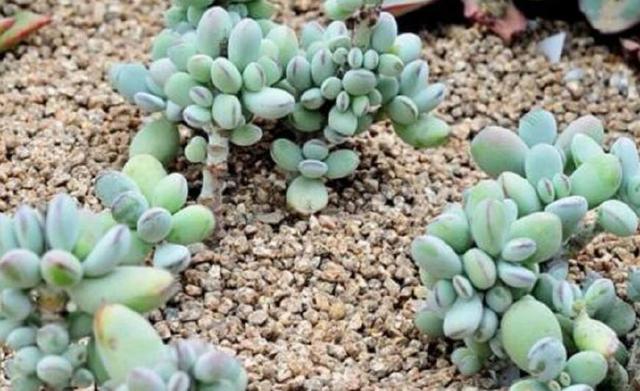
1. Fucai (Cotyledon orbiculata var. oblonga 'Fucai')
The optimal growing temperature is 15-25 degrees, and in winter not below 5 degrees; the soil mix can generally be a blend of peat, vermiculite and perlite; during the growing season water thoroughly once the soil has dried out, and during the summer dormancy period ensure ventilation and cooling and restrict watering, especially in midsummer when it must not be watered, and in winter keep the potting soil slightly dry. During the growing season fertilize generally once a month. The leaves of Fucai are rather beautiful in shape and color and have a certain ornamental value; the potted plant can be placed beside a TV or computer, where it can absorb radiation, and it can also be planted indoors to absorb substances such as formaldehyde and purify the air.
2. Hongzhilian (Echeveria 'Hongzhilian')
The leaves of Hongzhilian are green to yellow-red all year round; with a large day-night temperature difference or during low-temperature periods in winter the leaf margins turn bright red or deep red, while in weak light the leaf color becomes pale tender green, the leaves also stretch out, and the red edges of the leaf margins fade. The leaf surface of the plant is smooth and does not easily hold water. Hongzhilian needs sufficient sunlight for the leaf color and leaf margins to be vivid and for the plant shape to be more compact and attractive. After clustering for many years, the plant becomes very spectacular, producing clustered flower spikes. It likes a warm, dry and ventilated environment, likes light, is drought-tolerant, cold-tolerant and shade-tolerant, and is not tolerant of harsh sun exposure, with no obvious dormancy period. Hongzhilian needs a sunny, cool and dry environment, is tolerant of partial shade, afraid of waterlogging, and averse to muggy, humid conditions. It has the habit of growing in the cool season and going dormant in the high temperatures of summer.
3. Sanjiao Liuli Lian (Haworthia cooperi)
Sanjiao Liuli Lian, a succulent plant, also called a succulent, has a certain ornamental value. Sanjiao Liuli Lian is a perennial succulent herbaceous plant; the plant is initially solitary and later gradually forms clusters. The fleshy leaves are arranged in a compact rosette; the leaves are fleshy and, compared with Haworthia cooperi var. obtusa, more pointed and elongated, emerald green, with a transparent or semi-transparent window in the upper half. The leaves of Sanjiao Liuli Lian are rather beautiful in shape and color and have a certain ornamental value; the potted plant can be placed beside a TV or computer, where it can absorb radiation, and it can also be planted indoors to absorb substances such as formaldehyde and purify the air.
4. Wasong (Orostachys)
Wasong grows on stony hillsides and rocks as well as on the roofs of tile-roofed or thatched houses, and is widely distributed on sunny slopes in deep mountains; it also grows in rock crevices and in the cracks of old roof tiles, and is drought-tolerant and cold-tolerant. It grows on roofs, wall tops and rocks. Wasong grows below 1600 m in altitude, and in Gansu and Qinghai it can be found below 3500 m in altitude on hillside rocks or roof tiles. Wasong also grows on sunny slopes in deep mountains, in rock crevices and in the cracks of old roof tiles, mostly in roof tile cracks or on rocks, and is drought-tolerant and cold-tolerant. In parks, mainly some horticultural varieties of Wasong are cultivated, such as Fuji and Fenghuang.