What are the reasons a Kalanchoe (flaming Katy) does not bloom for three years?
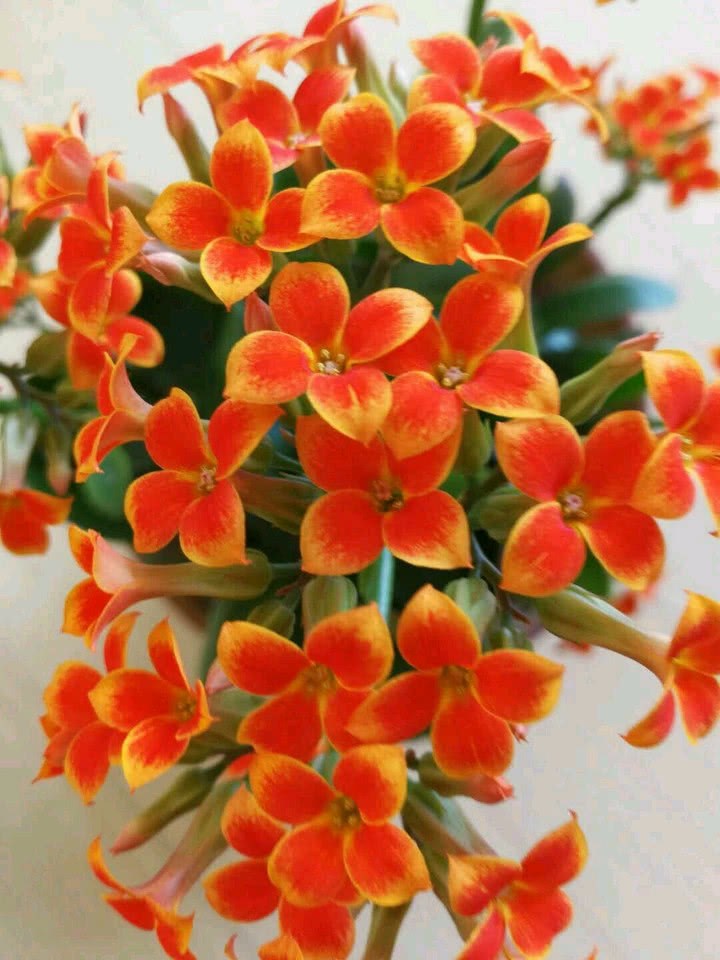
Kalanchoe is a very common potted flower, so normally, if a Kalanchoe grows slowly or does not grow at all, what exactly is the reason, and how should it be solved? Today let us take a look.
Kalanchoe easily ages, and belongs to a type of flower with a relatively short life cycle. Generally, after three or four years of growing, it will age, grow slowly, and bloom less. An already aged plant should either be discarded or reasonably pruned to let it sprout new branches, gradually replacing the old branches with new ones. So when growing Kalanchoe, it is best to take cuttings often, so that generation after generation, the flowers keep blooming continuously.
Too high a temperature in summer or too low a temperature in winter can also cause Kalanchoe to grow slowly. So when the weather is hot in summer, it is best to place the Kalanchoe in a ventilated, cool spot. When the weather is cold in winter, it is best to place the Kalanchoe in a warm spot with good light.
Kalanchoe has a long flowering period, so its nutrient demand is also high. Before and after flowering and during the peak growing season, be sure to fertilize. If the Kalanchoe is not repotted for a long time and is not fertilized either, it will grow listlessly, sallow and thin.
Pests and diseases can cause Kalanchoe to grow slowly, such as powdery mildew, scale insects, and so on. In daily care of Kalanchoe, pay attention to observation, especially the underside of the leaves, look more often, and when pests or diseases are found, check promptly and deal with them promptly.
If the Kalanchoe does not have the above four problems and still grows slowly or does not grow, then eight out of ten times the problem is with the roots, either the roots have already rotted or the fine hair roots have already dried up. Your Kalanchoe is in exactly this state, so promptly take it out of the pot, trim the roots, and replant it. When it is recovering in the pot, do not rush to water too much, and do not rush to fertilize. Give it more time to grow roots; only when the roots grow well can the branches and leaves be lush.
In addition, when growing Kalanchoe, it is suggested not to use too large a flowerpot. Use a small pot for a small plant and a large pot for a large plant. If a small plant is put in a relatively large pot, it often does not grow as lushly as it would in a small pot.