Overview of Medicinal Resources of Moutan Cortex and Pest Control Techniques
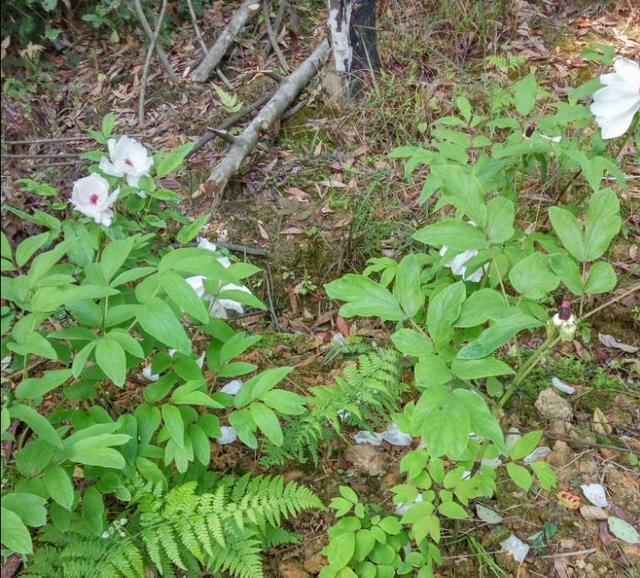
Medicinal Resources of Moutan Cortex, Pest Control
Due to the influence of environmental conditions, combined with its fleshy and sweet roots, the tree peony (moutan) is susceptible to damage from both above-ground and below-ground pests.
1. Above-ground pests
(1) Scale insects: The whole body is orange-red or tangerine-red, with two generations per year. Females often cluster on leaf stalks or stems to suck sap, causing leaves to turn yellow, twigs to wither, and plant vigor to weaken. When pests are found, the affected branches and leaves can be pruned and burned; during the larval hatching period, 1000-1500 times diluted dichlorvos or omethoate can be sprayed. To ensure the quality of medicinal materials, pesticides should be used with caution; during the dormant period or before sprouting in early spring, spraying branches and trunks with 3-5.5 Be° lime-sulfur mixture has a good control effect.
(2) Longhorn beetle: This is the "Chinese peony saw longhorn beetle," commonly known as the "woodpecker worm." Adults are cylindrical; larvae are milky white with small heads and plump bodies, with one generation every 3 years. From May to June, they hatch into larvae that enter the pith of the rhizome, harming the plant. They are difficult to detect and cause the plant to weaken or die. After years of experimentation, drilling 3-4 holes around the peony root zone, about 20 cm deep, and placing one tablet of aluminum phosphide in each hole, or fumigating pest-infested seedlings in a sealed room with aluminum phosphide, has achieved a kill success rate of up to 100%. Therefore, aluminum phosphide fumigation is a relatively good method for controlling longhorn beetles. Before the larvae bore in, 20% chlorantraniliprole 3000 times diluted solution can be sprayed for control.
(3) Yellow slug moth: From mid-July to the end of August, the yellow slug moth metamorphoses from larva to adult, with the whole body being yellow-orange. It feeds on the lower epidermis and mesophyll of leaves, causing the leaves to become riddled with holes. In severe cases, it eats entire leaves. After maturing, it enters the soil to cocoon and pupate; larvae spin silk to wrap around branches and trunks. In autumn and winter, remove the cocoons or crush the cocoons on the trunks to reduce the pest source. In summer, remove and destroy the infested leaves and stems, and spray 1000-1500 times diluted dichlorvos on the underside of peony leaves, greatly reducing larval survival rates.
To purchase medicinal peony seedlings, contact WeChat: 18374545223
2. Below-ground pests
(1) White grubs: They cause damage year-round, with the most severe damage from May to September. They mainly harm the peony roots, biting them into uneven notches or holes. In severe cases, they can cause the peony roots to die, leading to weakened growth or death of the above-ground parts. Drench the roots with 50% phoxim 2000 times diluted solution or 90% trichlorfon 1000 times diluted solution; broadcast 250 g of 5% phoxim granules per mu (667 sq m) on the soil surface, then deep-plow into the soil.
(2) Cutworms: Damage is most severe in spring and autumn. They often bite off seedlings at ground level or feed on young shoots that have not yet emerged, causing missing plants. They occur more severely in weedy plots, with several generations per year, varying with local climate. Generally, the first generation of adults appears in late May. For control, weeds that cutworms rely on for survival can be cleared. Young larvae can be controlled by spraying 98% trichlorfon crystal 1000 times diluted solution or 50% phoxim emulsifiable concentrate 1200 times diluted solution. For older larvae, 30 parts of chopped fresh preferred grass can be mixed with 1 part trichlorfon powder and scattered in the field in the evening for trap-killing.
(3) Mole crickets: They mainly gnaw on root bark and bite tender shoots and seedlings. Poison bait made from soybean cake or wheat bran can be scattered in the field in the evening for trap-killing; they can also be caught at night using light traps.
(4) Root-knot nematode disease: Generally, the most root knots form from May to June, with the highest incidence occurring 5-10 cm deep in the soil. It mainly harms peony roots. The disease occurs on the roots, producing tumor-like growths of varying sizes, yellowish-white and hard in texture. When cut open, white glossy nematode bodies can be found. It also causes leaves to turn yellow and, in severe cases, premature leaf drop. Apply 80% dichloroisopropyl ether emulsifiable concentrate granules 5-10 cm deep into the planting holes, 5-10 g per plant, once a year. Root drenching with 1.8% abamectin 1000 times diluted solution can also be used.
To purchase medicinal peony seedlings, contact WeChat: 18374545223