Detailed Explanation of Citrus Planting Techniques and Management Key Points
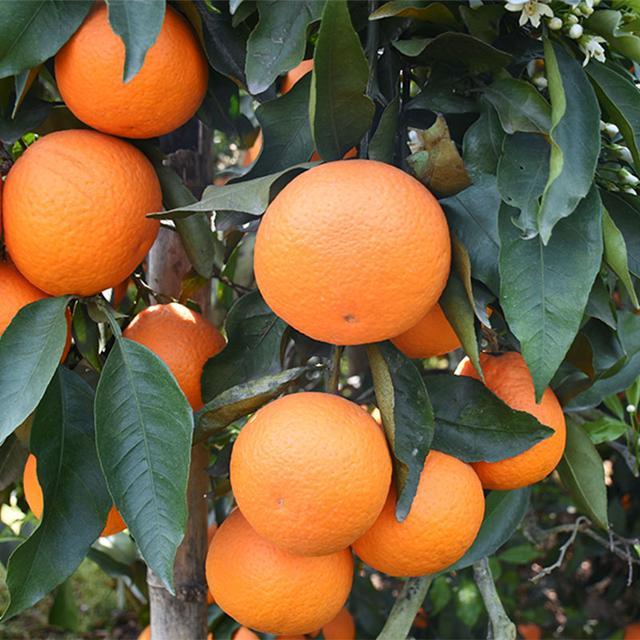
Citrus Planting Techniques and Management Techniques
1 Main Problems in Citrus Planting
1.1 Small planting area
Citrus planting is an important part of the agricultural economy, and increasing citrus yield can increase economic returns. What is closely tied to citrus yield is the planting area of citrus. At present, most orchards in China inherit land from the previous household contract responsibility system, so the planting area is relatively small, and the planting techniques are not advanced, so that the economic benefits of planting citrus gradually decline. At present, many citrus growers are just waiting for the shortcut of land expropriation compensation, and have not invested much enthusiasm in citrus planting. Under the national environment, most agricultural enterprises and citrus professional cooperatives hope to expand the citrus planting area, but the extensive management that the citrus orchards have followed to this day is a major obstacle, and this management method also increases the difficulty of large-scale citrus management.
1.2 High production costs
Large-scale citrus planting requires large amounts of fertilizer, pesticides, labor, etc., while the price of citrus is very low. Due to the introduction of new policies, the price of agricultural labor and agricultural materials continues to rise, while the selling price of citrus has been declining year by year, causing the economic benefits obtained by fruit growers to continuously decrease, with the possibility of being unable to make ends meet, which hinders the development of the citrus planting industry.
1.3 Difficult to formulate scientific cultivation management plans
In the current citrus planting industry, most are small and medium-sized, and the extensive management model in production affects the improvement of citrus planting quality and the expansion of scale. At the same time, citrus planting needs to be guided by correct and scientific cultivation techniques, but such techniques are still relatively scarce at present, resulting in maintenance technical work such as fertilization, weeding, drought resistance, and pest control not being done properly, affecting the improvement of citrus yield.
1.4 Lack of mastery of large-branch pruning techniques for citrus
The large-branch pruning technique for citrus is based on the theory of apical dominance and reasonably prunes overly dense branches of citrus trees. Excessive branches and leaves of fruit trees will reduce fruit yield and quality, so timely and reasonable pruning is needed. This technique is to prune overly dense side branches other than the canopy that affect light, so that the canopy grows vigorously, and the fruit trees form an appropriate amount of flowers and bear fruit without weakening tree vigor. In recent years, labor has been scarce and expensive, citrus planting costs have increased, and the lack of mastery of scientific and complete citrus pruning techniques has hindered the improvement of citrus yield.
2 Citrus Planting Techniques and Management Strategies
2.1 Seedling raising
Seedlings are the foundation of the tree body. Healthy and strong seedlings with developed root systems, straight taproots, and no quarantine diseases or common diseases are the starting point for cultivating a healthy tree body. Container seedling raising and grafted seedling raising are both relatively common. Container seedling raising has many characteristics, for example: the culture soil can be freely configured as required, and most use three low-cost materials, rice husk, river sand, and peat, to configure the culture soil; container seedling raising takes a short time, requiring only about a year and a half; the root system of the seedlings is developed, the taproot is straight, and they can be transplanted with soil. The strong and developed root system of the seedlings can grow vigorously in lightweight and breathable culture soil, and seedlings with vertical taproots can survive better; pests and diseases are easy to control. Container seedlings are cultivated in their respective containers, so viruses cannot spread through the soil. Citrus grafted seedling raising commonly uses the single-bud side grafting method, single-bud cut grafting method, etc. Single-bud branches are selected as scions, and after grafting, all cuts and interfaces are wrapped with plastic film, exposing the grafted bud. For side grafting, a wide cut reaching the xylem needs to be made from top to bottom at 10-15 cm from the rootstock to the ground, then the scion is inserted and wrapped with plastic film. After the graft survives, the rootstock needs to be cut twice during spring sprouting and when the grafted seedling sprouts, and the film needs to be removed twice.
2.2 Orchard establishment
Water is an important component for plant photosynthesis, so citrus needs to be planted near water. A citrus orchard also needs to be built near water, and also in places with lower altitude, no freezing damage, and no quarantine pests or diseases. Citrus trees can grow vigorously in places with deep soil layers, good drainage, and low groundwater levels. While planting seedlings, a windbreak forest needs to be established first to provide a good environment for the growth of citrus trees. The tree species should use cold-resistant evergreen tree species such as coral tree and photinia. Planting citrus seedlings in autumn needs to be completed one month before severe cold arrives, and comprehensive cold protection work such as irrigation and earthing up must be done well.
Orchard establishment helps the formation of standardized orchards. Advanced planting techniques and production management techniques are the key to improving the economic benefits of citrus. Agriculture is an important part of China's national economy, so the agricultural economy is gradually being valued. At present, many convenient agricultural facility machines invented in China have been widely used in agricultural production. In citrus planting, agricultural machinery can reduce the burden on labor and improve work efficiency.
2.3 Pruning and bud removal for shoot control
In the first three years of planting citrus, it is suitable to cultivate the scaffold branches of the citrus tree, that is, the cultivation of the canopy, while pruning of young trees is mainly light pruning. The extension branches of each scaffold branch should be shortened as required, and diseased, pest-infested, and dead branches should be pruned to reduce the spread of pests and diseases. During this period, emerging flower buds should be pruned so that the tree does not bear fruit, reducing the consumption of tree nutrients by flower buds and fruit. Alternatively, gibberellin can be sprayed in late autumn and early winter before citrus flower bud differentiation, and basically there will be no flowers the next year. Different shaping and pruning methods are required in different seasons, such as: pinching in summer to prevent tree vigor from growing too vigorously; in spring and autumn, cutting off small branches, weak branches, and overlapping branches, and cutting off the main branches of overly dense citrus trees, so that the citrus trees receive sufficient light.
When citrus bears fruit, in addition to promptly pruning dry branches, thin and weak branches, densely growing branches, and leggy branches, the fruiting mother branches should also be properly pruned according to specific conditions to balance the contradiction between fruiting and growth.
During citrus growth, in order to reduce nutrient consumption, pruning and bud removal for shoot control need to be carried out frequently. For clustered and dense shoots, according to the standard of "remove two out of five, remove two out of three," remove too weak and too strong shoots, retain healthy and moderate shoots, remove the dense and keep the sparse, so that nutrients are concentrated, branches are evenly distributed, and growth is robust. Subsequently, a series of work such as soil, fertilizer, and water management, flower and fruit preservation, and pest and disease control needs to be carried out.
2.4 Soil, fertilizer, and water management
Citrus trees that bear fruit normally all have good root systems, so it is very necessary to keep the root system in a suitable environment. If the citrus orchard is on hills and mountains, the soil should be turned frequently to make the soil loose and breathable, making it easy for the root system to go deep into the soil layer, so as to achieve the effect of freeze protection. Citrus orchards can use intercropping and growing grass to improve soil fertility, and can also improve land utilization. In summer, use rice straw, green manure, etc. to cover the citrus tree disks, keeping the soil moist, which can ensure the citrus trees pass through summer smoothly. There are also specific requirements for the soil. The soil of the citrus orchard should have good fertility and suitable pH and organic matter.
As is well known, fertilizer is indispensable for citrus, and citrus trees in the full fruiting period generally need to be fertilized three to four times a year. One is post-harvest fertilizer, applied as base fertilizer between October and November. For medium-maturing varieties harvested later, it can be applied one week before harvest. At this time, the fertilizer gives the tree body nutrients that can be stored, and enhances cold resistance and restores tree vigor. The fertilizers commonly used now are mainly human manure, pig, cattle, and sheep manure, and cake fertilizer, and quick-acting chemical fertilizers can also be added. One is bud-promoting fertilizer, applied in spring when the weather turns warm, 1-2 weeks before citrus sprouting, which can delay the shedding of old leaves, make the citrus tree grow robustly, and improve the fruit-setting rate. One is fruit-strengthening fertilizer, applied in July after physiological fruit drop stops. The fertilization period must be appropriate and not too late. If fertilization is too late, the fertilizer will not achieve the best effect. The fertilizer types are mainly a combination of the three elements nitrogen, phosphorus, and potassium. When producing and planting citrus, fertilizers containing aerobic bacteria and anaerobic bacteria should be used, such as American microbial fertilizer. American microbial fertilizer can well decompose harmful substances in the soil, reduce agricultural residues in the soil, and increase the survival rate of citrus trees.
2.5 Pest and disease control
In different time periods, different methods are needed for citrus tree pest and disease control. For example: (1) From December to February, the main control target is overwintering larvae. The control methods are pruning dead branches and diseased and pest-infested branches; carrying out winter plowing to eliminate pests in the soil; using a chemical agent with lime:water:salt = 1:10:a small amount to whitewash the citrus trunks. (2) March is the flower bud stage and early flowering stage, and the main control targets are pests such as flower bud maggots, red and yellow spiders, and flower thrips. When citrus shows flower buds, ground spraying needs to be carried out; when the flower buds turn from green to white, canopy spraying is carried out; the pesticide sprayed needs to be one that also controls mites and aphids. (3) April is the full flowering stage and flower fading stage, and attention should be paid to controlling longhorn beetles, aphids, jewel beetles, leaf rollers, etc. The main methods are catching and killing the larvae of jewel beetles and longhorn beetles, controlling from the root and cutting off the source; releasing Australian ladybugs, predatory mites, parasitic wasps, etc. for biological control. (4) May is the young fruit stage, and it is necessary to control citrus fruit flies, aphids, etc., mainly by catching and killing larvae and adults and by spraying pesticides.
3 Planting Benefits and Evaluation
With the support of advanced citrus planting techniques, the planting benefits of citrus are very considerable. At present, China has bred many excellent citrus varieties, and the demand for citrus of excellent varieties is also continuously rising, so citrus also brings extremely high economic benefits. Although the current citrus planting techniques are not yet perfect, with the development of science and technology in China, citrus planting techniques have also improved, so citrus yield has also increased. Moreover, after commercial processing, current citrus can be traded in export trade, creating wealth. By continuously improving planting techniques and proposing suitable management strategies, citrus planting will become a major giant in China's agricultural economy.
In short, citrus planting is currently also an important part of agriculture. Scientifically implementing citrus planting management techniques requires selecting superior orchard sites, scientific fertilization, effective shaping and pruning, and optimizing intercropping in the field. Citrus planting and management involve details in many aspects. We need to pay attention to all details in citrus planting and management, so that we can improve citrus planting yield and promote the development of the citrus industry.