Detailed Explanation of the Key Techniques for Cultivating Yellow Ginger (Turmeric) Under Plastic Shed Film
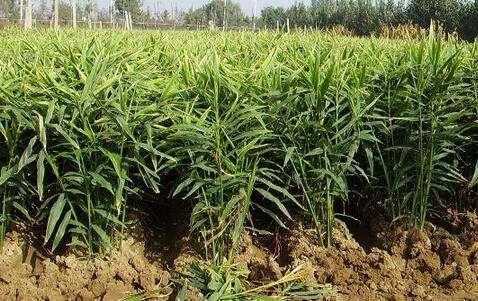
Cultivation Techniques for Yellow Ginger (Turmeric) Under Plastic Shed Film
Ginger is best grown in deep, loose, fertile soil with good drainage. The ginger growth cycle is 6 months, and the accumulated temperature over the entire growth period is 5000°C. Ginger prefers warm and humid climatic conditions, is not tolerant of low temperatures or frost, and should not be grown in continuous cropping. It prefers weak light; under strong light, the leaves tend to wither and turn yellow, so shading cultivation is used in production, though it is not very demanding regarding day length [[Jishan Huayao]]. The plant's fleshy roots penetrate shallowly into the soil, and the root system is not well developed, so it requires a relatively large amount of fertilizer. In addition to applying sufficient basal fertilizer[2], timely topdressing should be carried out at different stages.
1 Fertilization and Land Preparation
Before plowing, evenly spread 12 cubic meters of chicken manure and 8 cubic meters of high-quality decomposed cow manure over the soil surface, then use a rotary tiller to deep-plow 20-30 cm, so that the soil and fertilizer are thoroughly mixed, ensuring the soil is loose and well aerated to promote root growth and development.
2 Seed Selection
Select excellent varieties that store well, have good quality, high yield, and strong stress resistance. Choose plump, large ginger rhizomes with a glossy surface, free of mechanical damage and pests and diseases, to keep as seed.
3 Ginger Seed Treatment
3.1 Sun-Drying the Ginger
20-30 days before sowing, wash the mud off the ginger seed, taking care to avoid damaging the ginger seed during washing. On a sunny day, turn and sun-dry the ginger seed for 1-2 days. Bring it back indoors in the afternoon to avoid frost damage to the ginger seed. If the sunlight is intense, provide appropriate shade to prevent exposure to strong light.
3.2 Resting the Ginger
After the ginger seed has finished drying, cover it with a layer of straw matting, keep the temperature between 11°C and 15°C, and after stacking for 2 days, discard the inferior ginger seeds that are shriveled, wrinkled, soft in texture, or brown in color.
3.3 Sprout Promotion
Begin variable-temperature sprout promotion around early April. Place the ginger seeds layer by layer in baskets, put them on a farmhouse heated brick bed (kang), then cover with straw matting, and control the temperature at 21°C-29°C. After more than 20 days, when the young sprouts have grown to about 1 cm in length, take out the ginger seeds for sowing.
3.4 Cutting the Ginger Seed
Use a knife to cut the ginger seed into pieces of 50-100 g, preferably uniform in weight, keeping 1-2 strong sprouts on each piece and removing all the remaining young sprouts.
3.5 Seed Soaking and Disinfection
Soak the seed in wood ash solution for 30 minutes, or in 1% Bordeaux mixture for 30 minutes, or in 50% carbendazim solution for 30 minutes, or in 1% limewater for 30 minutes. After removing from the disinfectant solution, place on clean ground to air-dry before sowing.
4 Sowing
4.1 Sowing Period
Sow between mid-to-late April and early May, when the soil temperature at 5-7 cm is stably above 16°C.
4.2 Sowing Density
For fields with high soil fertility, plant 5000 plants per mu; for fields with medium soil fertility, plant 5500 plants per mu; for fields with poor soil fertility, plant 6000 plants per mu. At the same fertility level, plant large ginger seeds sparsely and small ginger seeds densely.
4.3 Sowing Method
Lishu County generally adopts the strip-ridge cultivation method. Open planting furrows at a row spacing of 50-60 cm, evenly apply basal fertilizer, and water thoroughly. After the water has seeped in, place the ginger seeds, evenly coated with wood ash and with the young sprouts facing upward and toward the west, horizontally in the furrow at a plant spacing of 16-22 cm, cover with 4-6 cm of soil, and spray herbicide on the field.
5 Field Management
5.1 Shading
When the ginger emergence rate in the greenhouse reaches 50%, a layer of shade netting should be placed over the cold shed to avoid strong light exposure. The shade netting must be removed promptly in early August.
5.2 Intertillage and Earthing Up
During the growth period, carry out intertillage and earthing up 3-4 times. Since there are few roots in the early growth stage, deep cultivation should be done appropriately; in the mid-to-late growth stage there are many roots, so shallow cultivation must be used to avoid damaging the roots. Carry out intertillage and earthing up once every half month.
5.3 Temperature Control
After planting until emergence, small arched sheds can be set up to keep the soil temperature at 20°C-30°C. When the seedlings grow to 20 cm, remove the small arched sheds. Throughout the entire growth period, keep the temperature inside the cold shed at 20°C-39°C.
5.4 Water and Fertilizer Management
When emergence reaches 80%, water once. When the vigorous growth stage begins, water once every 4-7 days depending on soil moisture conditions.
The first topdressing is when the ginger seedlings grow to 30 cm and small branches appear; the second topdressing is at the three-fork stage; the third topdressing is at the rhizome enlargement stage.
6 Pest and Disease Control
6.1 Agricultural Control
Practice crop rotation with cruciferous crops for more than 3-4 years; avoid continuous cropping or following crops of Solanaceae plants such as tomato and eggplant; choose loamy soil with good terrain and no waterlogging.
6.2 Disease Control
6.2.1 Ginger blast disease. Soaking the seed and disinfecting before sowing can prevent ginger blast disease. If the disease occurs later, promptly spray with 50% amobam 1000-fold solution 2-3 times.
6.2.2 Ginger spot disease. In the early stage of the disease, spray with 70% thiophanate-methyl wettable powder 1000-fold solution, or 64% oxadixyl·mancozeb wettable powder 500-800-fold solution, once every 8 days, for 2-3 consecutive sprays.
6.3 Insect Pest Control
6.3.1 Wireworms. After land preparation is completed and before planting, spray nematicide solution or Dichongwang solution on the field to prevent wireworms.
6.3.2 Black cutworm. During the 2nd-instar larval stage, spray the leaves with 2.5% cypermethrin emulsifiable concentrate 3000-fold solution, or 50% phoxim emulsifiable concentrate 1000-fold solution.
7 Harvesting and Seed Saving
The usual harvest time is mid-October. Harvest when the plants have withered and yellowed and the rhizomes are plump and full. Before harvesting, first apply a little water to moisten the soil thoroughly, then after the soil has dried slightly, pull out the plants, cut off the stems 2 cm above the stem base, remove the fibrous roots from the ginger, and it is ready for storage.