Light is very important for orchid care; handle it this way and the leaves will be glossy green with vigorous growth
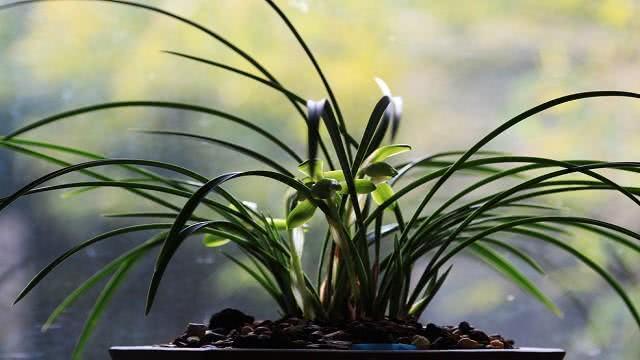
Overall, orchids are shade-loving plants. However, light is also indispensable for their normal growth. In summer, when light is intense, they can receive light before 7 a.m., and should be shaded after 7 a.m. In winter, let them bask in the sun as much as possible. In addition, different species have different light requirements, which needs attention.
1. Is light indispensable?
Although orchids are generally shade-loving plant species, they cannot be kept in a completely dark environment. The role of light is also indispensable, mainly in these aspects:
(1) Light is one of the important sources for the plant to produce nutrients; without sunlight, the accumulation of organic matter will be hindered.
(2) Light is also a necessary factor for producing chlorophyll.
(3) A series of important life activities, such as the opening and closing of stomata, water absorption, and flower bud formation, all require the help of light.
2. Handling in different seasons
Mainly talking about winter and summer. Winter temperatures are very low, so they should receive as much light as possible so they can survive the winter safely. However, in summer the light is too intense, but there must not be no light. Therefore, they generally receive light before 7 a.m., when the light is very soft and will not scorch the leaves. After 7 a.m., a shading rate of about 50 to 90 percent is fine. In spring and autumn, scattered light is enough.
3. Requirements of different varieties
Light requirements are related not only to the season but also to the variety. For example, Cymbidium ensifolium has a relatively high demand for light, and 60 to 70 percent shading is fine. Cymbidium goeringii and Cymbidium faberi need about 70 to 80 percent shading. Cymbidium sinense does not like light much, with a shading rate of about 85 percent.