These common plants actually symbolize good fortune - you've been growing them all wrong
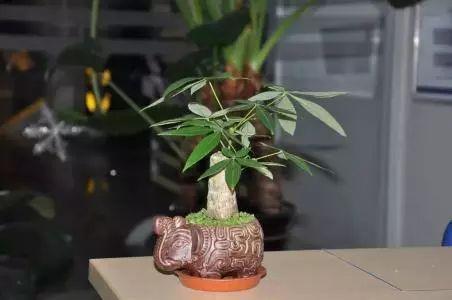
Magical nature fills plants with vitality and life, and people always give them auspicious meanings and omens to signify good luck for the coming year. Today let's talk about those plants with auspicious names.
1. Money Tree
The Money Tree, scientifically known as Pachira aquatica (Malabar chestnut), is an evergreen tree. Just from its name you can feel the good wishes it brings to people. For a new store opening, moving into a new home, or placing it at home, if you want to attract wealth and good fortune, you must not go without a Money Tree.
Growing environment:The Money Tree likes high temperatures, humidity and sunlight, and cannot be shaded for long periods. Therefore, during care and management it should be placed in a spot with ample indoor sunlight.
2. Money Tree (Chinese Money Tree)
The leaves are long and slender, dark green in color. It is a shade-loving plant with a strong air of wealth and nobility. The Chinese Money Tree's scientific name is Cyclocarya paliurus (Chinese wingnut), hailed as the giant panda of the plant kingdom and the third tree of the medical world. It is also known as the "tree of human health." This tree gets its name because its fruit wings are round like coins, green in color and drooping like willow!
Growing environment: In poorly ventilated environments with insufficient light, the leaves of the Chinese Money Tree are easily harmed by scale insects' piercing and sucking.
3. Peace Lily
The Peace Lily has leaves similar to arrowroot, and its flowers closely resemble a crane with its head raised, graceful and pure white. It was specially named "Peace Lily" (Smooth Sailing) after the beauty of its flowers, carrying an auspicious meaning. So it gives people a sense of "purity, calm, peace and well-being," and is called the "flower of innocence."
Growing environment:The Peace Lily likes high temperatures and is especially afraid of cold. Its most suitable growing temperature is 20-28°C. Once winter arrives it must be brought indoors. The lowest temperature it can withstand is 10 degrees.
4. Alocasia (Dripping Guanyin)
The Dripping Guanyin's original name is Alocasia macrorrhizos. When placing plants at home, round and thick leaves are preferred, so the Dripping Guanyin is very suitable for placing at home. The Dripping Guanyin belongs to the category of plants that do not leak wealth; placing it in the wealth position can do a good job of attracting fortune.
Growing environment:It likes high temperatures and humidity, tolerates shade, is not suitable for strong winds or strong light exposure, and is suitable for cultivation in large pots. It grows very vigorously and spectacularly, with a tropical atmosphere.
5. Fortune Tree
Many people confuse the Fortune Tree with the Money Tree. In fact, the Money Tree is an imported species, while the Fortune Tree is authentically Chinese, and the two look completely different. The Fortune Tree is favored by gardening enthusiasts because of its strong adaptability and good landscaping effect.
Growing environment:It likes high temperatures, high humidity and ample sunlight, is not cold-tolerant, fears direct strong light, is fairly shade-tolerant, and has a certain drought tolerance. Fertile, loose loam soil is best. It tolerates pruning. Winter temperatures should not drop below 10°C.
6. Happiness Tree
The Happiness Tree has a graceful form, with small emerald-green leaves and swaying shadows. It is a precious indoor ornamental plant. You can write your wishes on a card and hang it on the tree. Because people believe it can bring happiness, many people like to place it in front of their homes.
Growing environment:It likes high temperatures, high humidity and sunny environments. It tolerates high temperatures, fears cold, prefers moisture and avoids dryness. For cultivation, loose, fertile, well-drained loam and sandy loam rich in organic matter should be used.
7. Lucky Bamboo
Lucky Bamboo has deep green leaves and vigorous growth, and is widely cultivated. Also called Wannian Bamboo, it is generally used for household vase arrangements or potted care, especially the "tower-shaped" style that spread from Taiwan, China, also known as "Fortune Bamboo."
Growing environment:Lucky Bamboo likes shady, humid and high-temperature conditions, tolerates waterlogging, has strong fertilizer tolerance and strong cold resistance, and likes semi-shaded environments. It is suitable for growing in well-drained sandy soil or semi-muddy sand and alluvial clay.
8. Green Yuanbao
The Green Yuanbao's original name is actually Castanospermum australe (Black Bean Tree). What is commonly seen on the market is its seedling. Since the seedling's base has two nutrient-rich cotyledons that look just like a little yuanbao (gold ingot), it was given the name Green Yuanbao for good luck.
Growing environment:The Green Yuanbao likes semi-shaded environments and does not tolerate sun exposure or deep shade. In winter it can be managed in full sun, which helps it survive the winter.
9. Lucky Grass (Reineckea carnea)
Lucky Grass has another name, Rui Cao (Auspicious Grass). Just from its name, you can tell it is a plant with an auspicious meaning. Lucky Grass is small in form and keeps its emerald-green color all year round. It grows easily whether placed in soil or water, symbolizing "good luck and happiness."
Growing environment:It likes warm, humid environments, is fairly cold-tolerant and shade-tolerant, has low soil requirements, and is highly adaptable. Well-drained fertile loam is best.
10. String of Coins
Anyone who has grown a String of Coins should know that its leaves look like they are arranged in circles, appearing like little copper coins stuck together - extremely cute! And when the String of Coins grows long, it can also be hung up to grow.
Growing environment:It likes ample sunlight and cool, dry environments, tolerates partial shade, fears waterlogging, and avoids stuffy heat and humidity. It has the habit of growing in cool seasons and going dormant in high summer temperatures.