How to Make Flower Pots More Breathable? These Simple Methods Are Easy to Learn
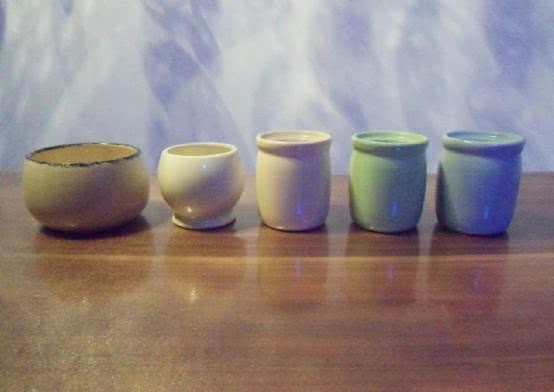
During the process of planting, we often hear the phrase "ensure soil breathability." But in fact, besides the soil, whether a flower pot also has breathability is quite important for plant growth. And it must be admitted that this issue is the most easily overlooked in our daily lives. So how do you choose a breathable flower pot, and for pots you have already bought, how do you make them more breathable? You can certainly try the following methods.
Selection: Which Flower Pots Come with "Breathability" Built In
There are many kinds of flower pots we come into contact with, including unglazed clay pots, purple clay pots, wooden barrel pots, plastic pots, glazed ceramic pots, and so on. Among them, the first three types have a certain degree of breathability in the pot body itself, so if you take this factor into consideration, they are indeed worth considering. As for the latter two, there is no need to worry either. In the following article, we will teach everyone how to make less breathable flower pots more breathable.
What Should You Do If a Flower Pot Has Poor Breathability?
First, after getting a flower pot, we need to check whether there is a drainage hole at the bottom. If there is, it proves that the flower pot has a certain degree of breathability. It should be noted that when filling it with soil, it is best to place two pieces of broken tile on both sides of the drainage hole, so that a three-dimensional breathable and water-permeable space is formed at the bottom of the pot. The effect of doing this is actually quite good. When watering, excess water can also be drained out, avoiding too much water accumulating in the pot, which can lead to oxygen deprivation and root rot in the plant.
Second, we can increase breathability by making holes in the pot wall. This method is mostly used on plastic pots, because the plastic pot body itself is soft in texture, so piercing a few small holes with an awl is enough. The positions of the small holes can be spread all over the pot body, but note that if too many holes are made, it is best to place a larger tray underneath. This can effectively prevent water from spilling out.
Third, use the method of placing a small pot inside a large pot. When buying flower pots, we often overestimate the plant's growth, so the pots we buy always end up a bit larger. In fact, at least during the new sprout stage, plants do not need a pot that is too large. The trick of putting a small pot inside a large pot is actually a bit like the Russian nesting dolls we are familiar with. The outer large pot is only used as decoration, while the inner small pot is the core.