The "mad grass" farmers hate can absorb selenium, and some people have gotten rich from it
Friendly reminder
Hemu Report aims to share and popularize information about various plants and their uses, for reference only. If medicinal use is needed, it is recommended to consult a professional physician to avoid problems!
In rural areas, there are always a few months each year when farmer friends are busiest, and June is one of them. June has a special solar term, "Mangzhong" (Grain in Ear). When this time comes, many farmer friends who work the fields usually harvest the previous season's crops during Mangzhong and are also busy sowing the next season's crops.
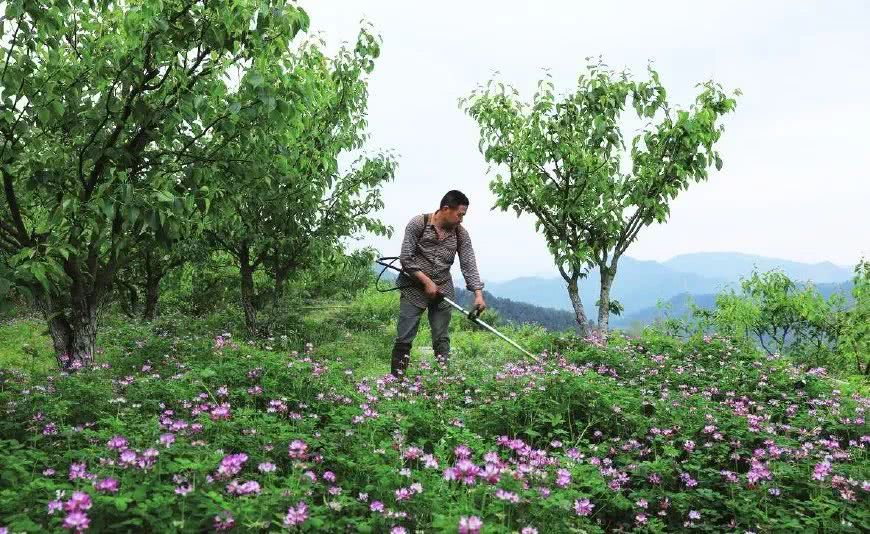
For farmer friends who grow orchards, they are likewise busy harvesting fruit. However, before the harvest, what gives farmer friends the biggest headache is not the harvest itself, but the problem of harmful weeds in farmland and orchards. In order not to affect the growth of crops and fruit trees, farmer friends are busy weeding before the harvest.
In the past, many weeds in farmland and orchards made farmers very annoyed, and Chinese milk vetch (Astragalus sinicus) was one of them. When it comes to this Chinese milk vetch, many older farmer friends hate it deeply. There is no other reason: Chinese milk vetch has too great an impact on farmland and orchards.
Farmer friends familiar with Chinese milk vetch know that its adaptability, vitality and reproductive capacity are all very strong. Its reproductive capacity in particular is outstanding. As long as you are slightly careless, it will grow wildly and can cover large areas of orchards and farmland in a short time, so that farmer friends cannot finish weeding it out, and even spraying pesticide cannot finish it off. Therefore, many farmer friends who farm fields and grow orchards dislike Chinese milk vetch.
It is precisely because of this wild growth that farmer friends also call Chinese milk vetch "mad grass", which shows the place Chinese milk vetch once held in the hearts of farmer friends.
However, everything has two sides, and Chinese milk vetch is no exception. Despite the fact that the wild growth of Chinese milk vetch has adverse effects on crops and economic crops such as orchards, Chinese milk vetch has an ability that other plants do not have: it can absorb the selenium element present in the soil and accumulate it in its body, becoming an indicator plant for selenium ore.
Also because Chinese milk vetch can absorb and store the selenium element, it has both medicinal and edible value. According to records, the tender shoots of Chinese milk vetch can be eaten as a wild vegetable, and it is also one of the nectar sources of a traditional Chinese medicine in China. It has a naturally fresh aroma, bright and sweet, making the Chinese milk vetch honey collected by bees purely natural, sweet and rich in nutrients.
In addition, Chinese milk vetch also has a supportive effect on conditions such as improving eyesight and reducing swelling, dispelling wind and promoting urination, and sore throat and cough. It helps improve anorexia, and helps with listlessness and weakness of qi and blood, which has also made it a fine health product today.
It is precisely because Chinese milk vetch can absorb and store selenium that it has these effects. Therefore, in rural areas, quite a few shrewd farmer friends use the growth characteristics of Chinese milk vetch to specially plant Chinese milk vetch and make money from it. According to farmer friends who grow it, Chinese milk vetch not only has these values, but because it can store selenium, after cutting Chinese milk vetch, drying it and burning it to ash, selenium can also be extracted. Each hectare of Chinese milk vetch can extract 2.5 kg of selenium, which has also become one of the important sources of income for farmer friends who grow Chinese milk vetch.
Dear friends, do you know about "Chinese milk vetch"? You are welcome to leave a message and share your thoughts.
Text/Hemu Report, images/Internet
If you like Hemu's articles, you are welcome to follow.