Don't miss the traditional natural plant-ash alkaline rice dumplings in the zongzi wars
Text / by Upstream and Downstream reporter Lin Peijun
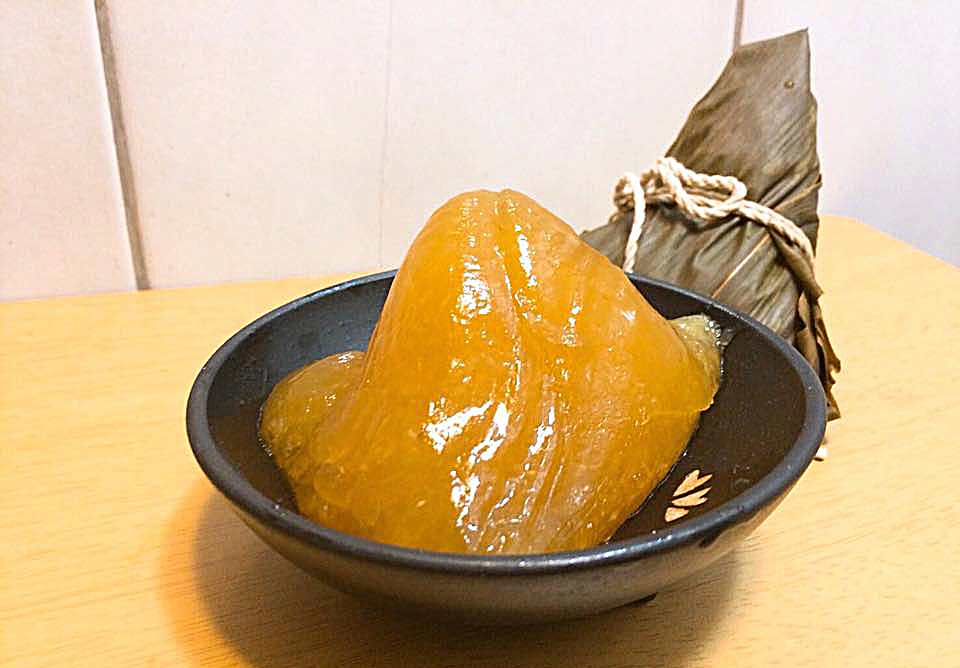
Every year during the Dragon Boat Festival, all kinds of zongzi always draw special attention. Among them, alkaline zongzi, also called sweet zongzi or jing zongzi, look similar to ordinary meat zongzi but are smaller, with a deep yellow translucent appearance and a sticky, gluey texture when eaten, a bit like "guo".
Making alkaline zongzi requires alkaline powder or alkaline oil to make the glutinous rice undergo "alkaline gelatinization" and develop stickiness and elasticity. Some shops insist on using traditional natural alkaline water made from plant ash, wanting to make zongzi that feel safer to eat. In addition, to promote not using borax while still wanting to improve the texture of alkaline zongzi, the government calls for replacing it with "sodium trimetaphosphate", but vendors say it is "not recommended", stressing that the texture can be improved through zongzi-wrapping techniques and that there is no need to use too many additives just to pursue a springy, chewy bite.
Expert: Too much sodium trimetaphosphate intake can easily lead to calcium loss
According to expert opinion, although sodium trimetaphosphate has good water retention and strong preservative function, its main component is inorganic phosphorus, and excessive intake can easily lead to calcium loss in the human body. The expert said the government should not promote sodium trimetaphosphate in order to oppose borax, arguing that this will only cause abuse of chemical additives while also making the public overly favor foods with a chewy texture.