How to fertilize houseplants correctly? Master the techniques and avoid fertilization mistakes
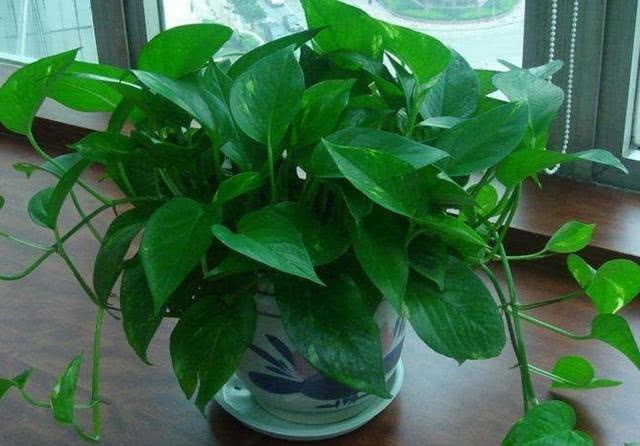
Anyone who often grows flowers knows that to grow flowers well, besides proper light, watering and pruning, fertilization is also a very important part. Master the correct fertilizing methods and techniques, and the plants will flourish with abundant leaves and nonstop blooms; otherwise, you may get half the result with twice the effort, not only wasting money but also affecting the flower grower's mood.
Generally, houseplant growing falls into two main categories: foliage plants and flowering plants. Common foliage plants include pothos, spider plant, lucky bamboo, money tree, and so on. Flowering plants include jasmine, azalea, gardenia, camellia and various herbaceous flowers. Foliage plants and flowering plants are completely different in how they are fertilized. Broadly speaking, foliage plants are fertilized mainly with nitrogen fertilizer, while flowering plants are fertilized mainly with phosphorus and potassium fertilizer. Here it is necessary to explain the effects of the three fertilizers nitrogen, phosphorus and potassium on plants: nitrogen fertilizer can promote the plant's synthesis of protein, increase the area for photosynthesis, and promote the synthesis of chlorophyll. Phosphorus fertilizer can participate in photosynthesis within the plant, promote cell division, and also enhance the plant's disease resistance, drought resistance and cold resistance. Potassium fertilizer can promote photosynthesis; it is like a person's bones, making the plant grow more robust and enhancing its resistance to disease and lodging.
It seems that fertilizing plants is quite simple, but that is not actually the case. No matter which fertilizer is applied to which plant, it is never absolute; fertilization must also be decided according to the plant's growth condition, the soil's fertility, whether it is in a dormant period, the climate and various other conditions. Take foliage plants such as pothos and spider plant: during the vigorous growth period, it is generally recommended to apply a mainly nitrogen fertilizer once every 10 days. You can buy quick-acting nitrogen fertilizer on the market, or make your own decomposed organic fertilizer such as soybean water. But some flower growers notice that other people's spider plants or pothos grow many branches and long vines, while their own only grow leaves. This is not only related to factors such as light and watering during care, but is actually also closely related to fertilization. Applying only nitrogen fertilizer for a long time, without phosphorus and potassium fertilizer to promote cell division and photosynthesis, will cause the plant to grow fewer branches and be thin and less robust. So we say that foliage plants should be fertilized mainly with nitrogen fertilizer, with phosphorus and potassium fertilizer as a supplement.
For flowering plants, take jasmine for example: if only phosphorus and potassium fertilizer is applied without nitrogen fertilizer, it will cause jasmine during the branch and leaf growth period to have less lush branches and leaves, with few leaves and weak branches. So we recommend fertilizing flowering plants with a mainly nitrogen fertilizer during the vigorous branch and leaf growth period, and after entering the flower bud differentiation period, apply less nitrogen fertilizer and increase the supply of phosphorus and potassium fertilizer to promote flower bud differentiation and bud formation. If you still mainly use nitrogen fertilizer, it will cause the plant to only grow leaves without blooming or to bloom little.
Besides the different types of fertilizer, you must also keep in mind the principle of light fertilizer applied frequently, in small amounts many times, to prevent too much fertilizer from burning the roots. Some plants enter a dormant period in summer or winter; during this period the plant does not need nutrient supplementation, so fertilizing plants during dormancy is not recommended.
There is also the difference between inorganic fertilizer and organic fertilizer, which is actually very simple. Inorganic fertilizer is fertilizer produced through chemical methods; its advantages are comprehensive nutrition and no special odor, while its disadvantage is that long-term application easily makes the soil compact, which is not good for the plant's absorption of water and nutrients. Organic fertilizer is a kind of fertilizer you can make at home without spending money, such as rice washing water, cooked soybean water, leftover melon rind and vegetable peelings, or chicken intestines and fish intestines, all of which can be mixed with water and fermented, then used to water flowers after decomposing. The advantages of organic fertilizer are that it not only allows resource reuse, but also has a quick effect and is mild, and after dilution with water it is not easy to damage roots when watering flowers. The disadvantage is that it has an odor, and especially in summer it easily attracts small insects. So for growing flowers in a courtyard, you can apply organic fertilizer; for indoor growing, try to apply inorganic fertilizer, and at the same time regularly loosen the soil to prevent the soil from compacting. When applying organic fertilizer, you can move the plant outdoors and move it back indoors after the odor has dissipated.