Clever use of the growth cycle in rose care, and the flowering season will come again
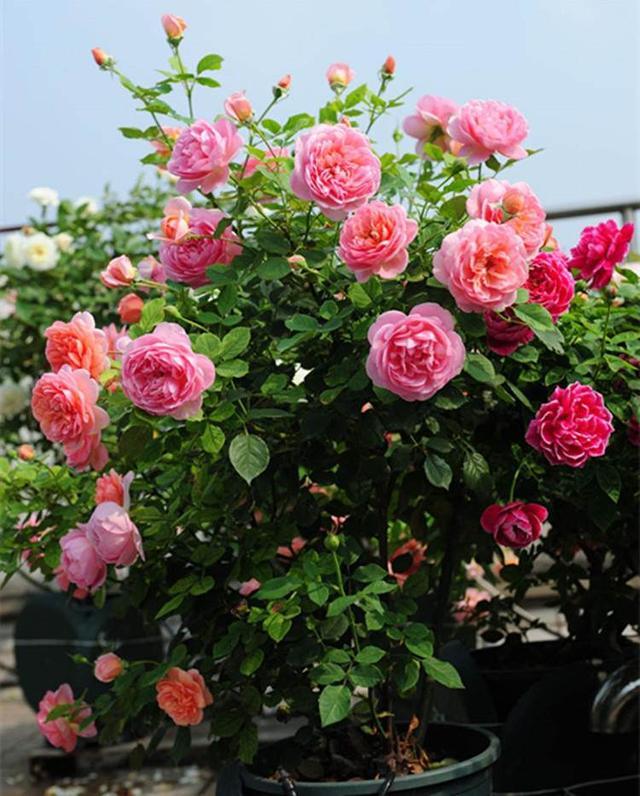
The growth period of roses is from March to November. Although there are some differences among varieties, usually after the temperature drops below 15°C, new buds basically stop growing and begin to enter a state of preparing for dormancy, and dormancy begins after the temperature drops below 5°C. Therefore, if you want to grow roses well, you must make good use of the rose's "growth cycle." In this way, the rose will welcome its flowering season again.
Generally, after fully resting through winter, roses will put forth energy to grow new buds in spring and bloom with very splendid flowers. Especially for varieties that bloom only once a season, if they do not go dormant in winter, they cannot form flower buds. For varieties that bloom in all four seasons, if they are kept in a greenhouse at no lower than 15°C, they can do without dormancy and continue blooming all year.
It can be seen from this that the rose's growth cycle is crucial. Understanding and making good use of the rose's "growth cycle" can bring the rose to a peak flowering period when it blooms again.
1. Spring (April to May)
During this period, it is suitable for gardening enthusiasts to buy rose plants that are in bloom.
2. Spring of the following year (March)
As the temperature rises, roses end dormancy, and new buds and flower buds change in an instant. Be sure not to miss enjoying them. While enjoying them, you need to apply fertilizer to the roses in time. Use an organic nutrient solution specially for roses, dilute it with water at 500 times, and water the roots once every 7 days. At the same time, do not forget to control aphids and powdery mildew.
3. Plum rain season (June to July)
During this period, the rose's second flush of flowers opens and the plant grows. If the air is rather dry, pay attention to using a spray bottle to supplement water appropriately. Cut back the elongated shoots to create a better plant shape. In addition, pay attention to preventing black spot disease and gray mold.
4. Summer (July to August)
This is the hardest season for roses, and you need to pay attention to preventing the plant from consuming too much energy. If leaf drop occurs in summer, it indicates that the plant has become weak. You need to pay attention to preventing the soil from becoming too dry, and to preventing leaf drop caused by root rot and black spot disease.
5. Autumn (September to November)
During this period, summer pruning (late August to mid-September) is needed to prepare for autumn flowering. In addition, black spot disease, powdery mildew, and noctuid moths need to be controlled. After autumn flowering ends, gradually reduce the amount of watering to prepare for dormancy.
6. Winter (December to February of the following year)
This is the dormant period for roses. Reduce watering to the minimum, and no additional fertilizing is needed. Carry out winter pruning. When changing the soil, fully add enough base fertilizer in preparation for spring flowering.