To grow hydrangeas, you must choose good seedlings, and only then will they bloom beautifully
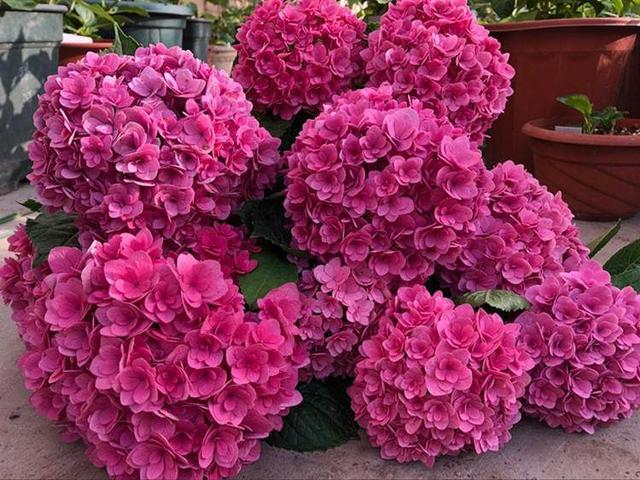
June is the flowering season for hydrangeas. In many flower lovers' gardens or on their balconies, the flower balls of hydrangeas have probably already "surrounded" everything, but some flower lovers' hydrangeas are still having problems. So, if you want hydrangeas to bloom abundantly and for the flowers to be "handsome" enough, you must know how to choose seedlings.
If flower lovers want to select good hydrangea seedlings, they must master this general "rule": 1. Whether the stems are thick and strong - choose seedlings with thick stems and no signs of aging; 2. Whether the leaves are yellowing - choose seedlings with glossy leaves and no yellow leaves; 3. Whether there are pests and diseases, such as powdery mildew, red spider mites, etc. - choose healthy seedlings with no pests or diseases; 4. Whether the plant shape is well formed - choose seedlings with balanced plant shape and graceful posture.
According to the above general "rule" for selecting seedlings, the screening methods for various types of hydrangea seedlings are introduced one by one below:
1. Large seedlings
Large seedlings generally go on the market during the early summer flowering season of hydrangeas. Flower lovers can transplant them after the flowers have been viewed and pruned. They can also go to a nursery base in early spring to buy them in advance and transplant them immediately. In this way, the hydrangeas can bloom in the same year
2. Bare-root seedlings
In winter, some flower lovers sometimes buy bare-root seedlings online, especially mainly woody hydrangeas such as panicle hydrangea. This kind of seedling is in a dormant state. After receiving it, transplant it into the ground as early as possible, or you can grow the seedling in a flowerpot for one year and then plant it in the ground the next year. Either way, after transplanting, you must do a good job of protecting against cold and wind to avoid the hydrangea dehydrating and dying before it takes root.
3. Young seedlings
Young seedlings are the small seedlings after hydrangea cuttings have survived. They have only one main stem and two large divided leaves. Although the leaves have unfolded, they have not yet begun to grow. The root system of young seedlings is still very fragile and especially afraid of lacking water. Flower lovers need to water them promptly with a spray bottle and take careful care of them.
4. Small seedlings
Hydrangea small seedlings are seedlings that have grown from young seedlings to the following spring. They generally have two branches, and some may bloom. The upper part of a small seedling plant is generally quite full, but sometimes the root system is not so substantial, so you still need to observe the plant's condition carefully for care. If it blooms, cut it off as early as possible to preserve the plant's strength.
5. Medium seedlings
Medium seedlings are hydrangea seedlings that have grown for another half a year to one year from small seedlings. Generally, the root system has already filled a gallon pot, and there are two to three branches. At this time, it is generally necessary to promptly add nutrients to the hydrangea seedlings, preferably through topdressing, using organic nutrient solution diluted with water at 500 times, once a week, and they can soon bloom.
In addition, it should be noted that the root system of medium hydrangea seedlings sometimes becomes root-bound and should be transplanted promptly. If they have flowers when purchased, wait until the flowers fade before transplanting.
6. Greenhouse flowering seedlings
Many of the flowering hydrangea seedlings are cultivated in greenhouses and then forced into bloom. Because such seedlings have used large amounts of flowering fertilizer and hormones, the plant's strength is concentrated in the flower buds. Flower lovers had better cut off the spent flowers as early as possible to preserve the hydrangea's strength and prepare for producing larger flower balls next time.