Growing This Flower in Summer: A Few Minor Problems Are Nothing to Worry About
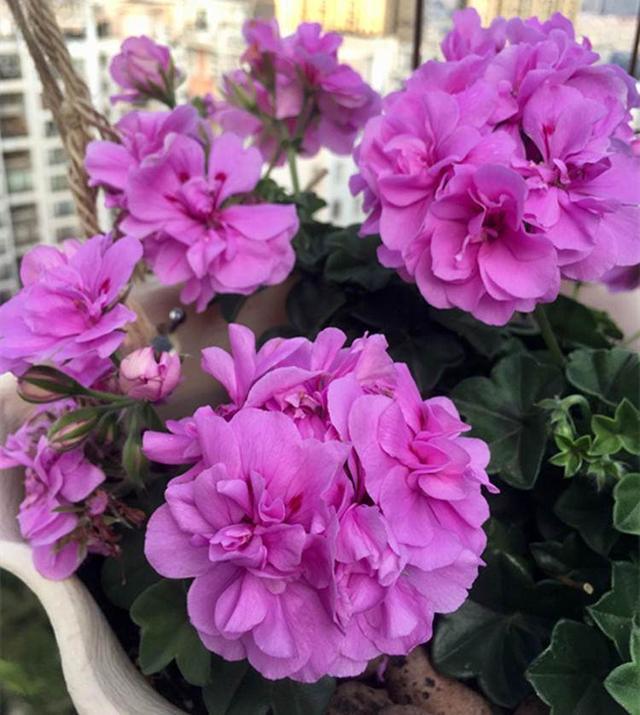
Geraniums (Pelargonium) originate from South Africa and are perennial herbaceous flowers, with more than 700 varieties. Plant a few geraniums in the garden or on the balcony, and once they bloom, they instantly catch the eye and lift your mood. Overall, geraniums are still fairly easy to grow; as long as you pay extra attention in summer, even if you run into a few "minor problems," there is nothing to worry about at all.
So, how do you solve these commonly encountered "minor problems" when caring for geraniums?
1. Yellowing leaf edges, or leggy growth and even root rot
This "minor problem" indicates that the grower has watered the geranium too much, or it has been exposed to heavy rain, causing water to accumulate in the potting soil. At this point, you need to reduce watering or loosen the soil promptly to drain away the standing water.
To reduce the occurrence of this "minor problem" in geraniums, growers should know that geraniums are somewhat drought-tolerant and afraid of waterlogging, so watering should follow the principle of watering when dry and letting them dry out between waterings. In spring and autumn, on sunny days, water once every 1-2 days; in winter, water once every 5-7 days; in summer, moisture should be controlled, with just a light watering every 3-5 days.
2. Leggy branches and leaves with no blooming
If a geranium's branches and leaves become leggy but it does not bloom, or blooms sparsely with poor flower quality, it means the grower has used too much nitrogen fertilizer. You need to reduce farmyard manure or kitchen waste fertilizer and apply more phosphorus fertilizer.
In addition, note that geraniums do not like heavy fertilization; too much fertilizer makes them grow too vigorously, which is not conducive to blooming. To achieve abundant blooming, water once every 1-2 weeks with a general-purpose organic flower nutrient solution diluted 500 times, and during the flowering period, spray once every 10 days with an organic nutrient solution diluted 800 times.
3. Flowers suddenly dropping off
If, while caring for geraniums, growers notice that the flowers suddenly drop off after blooming, it may be due to a sharp change in temperature. So during seasons with large weather fluctuations, growers should move the geraniums indoors in advance.
Geraniums generally prefer warmth and cannot tolerate high temperatures or scorching sun. The suitable growing temperature is around 15°C during the day and no lower than 5°C at night, and the optimal temperature for blooming is 15-20°C.
4. Dry, scorched leaf edges
If a perfectly healthy geranium suddenly develops dry, scorched marks on its leaf edges, it means the light is too intense, and growers should provide appropriate shade to reduce light exposure. If the branches and leaves become leggy without blooming, or formed buds shrivel and dry up, it means there is insufficient light, and at that point you just need to supplement the light.
In addition, geraniums need ample light during the growing period. In autumn and winter, they grow well under full sun or partial sun, and during the flowering period they can be enjoyed in a bright spot indoors. In summer, when the plant goes dormant or semi-dormant and the leaves take on an aged appearance, it should be placed in a semi-shaded spot for care.