Orchid leaves with sufficient nutrients still bloom abundantly
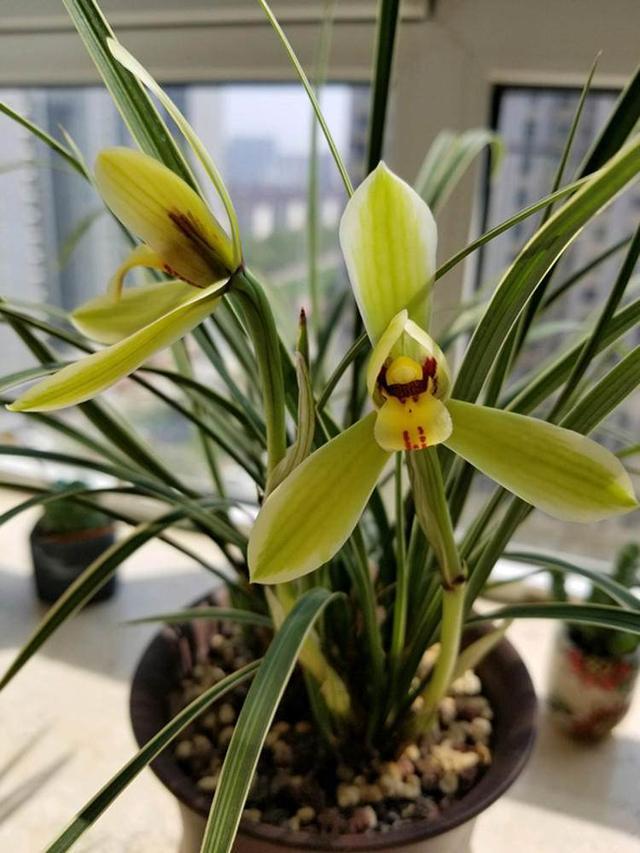
If you want your orchids to bloom profusely, besides supplying nutrients through the roots, growers can also have nutrients absorbed by the leaves. Foliar feeding is highly targeted, nutrients are absorbed quickly, and the results are remarkable. Therefore, when you apply foliar fertilizer to orchids, if the leaves "eat well," they will still bloom abundantly.
So how do you master the techniques of foliar feeding orchids to better achieve the goal of abundant orchid blooming? Please read on carefully:
1. Suitable temperature
When the air temperature is 15-28°C, all the stomata on orchid leaves are open, and the orchid's respiratory function is extremely strong. Spraying fertilizer solution at this time helps the leaves absorb and transport nutrient elements, and can improve fertilizer efficiency.
2. Suitable humidity
When air humidity is high, spraying foliar fertilizer keeps the fertilizer solution moist on the leaves for longer, so more nutrients are absorbed by the leaves; when air humidity is low, the fertilizer solution dries quickly after spraying, making it not only difficult for the leaves to absorb, but also causing the fertilizer solution concentration on the leaves to increase due to water evaporation, leading to fertilizer burn on the leaf surface.
Therefore, foliar spraying of fertilizer is best done on a windless cloudy day or on a sunny morning. After spraying foliar fertilizer, when the moisture on the leaf surface has mostly dried, you can spray the leaf surface again with clean water to moisten it. This not only prevents fertilizer burn from the foliar fertilizer, but also extends the soaking time on the leaf surface, thereby improving fertilizer efficiency.
3. Suitable concentration
Generally, when applying foliar fertilizer, a higher concentration is more easily absorbed than a lower one, as its penetrating power is stronger and the soaking time is longer, giving better absorption results. However, orchids dislike strong fertilizer, and improper concentration often causes fertilizer burn. Therefore, when spraying foliar fertilizer on orchids, you should choose an organic liquid fertilizer specially made for orchids, dilute it with water at 1000 times, and keep it mainly light; better too dilute than too concentrated.
4. Correct location
When applying foliar fertilizer, some growers think foliar fertilizer simply means spraying on the leaf surface. In fact, the ratio of stomata on the upper leaf surface to the underside of orchid leaves is 3:7, and the underside of the leaf has a stronger ability to absorb fertilizer than the upper surface. Therefore, when spraying fertilizer solution on the leaves, you should mainly spray the underside of the orchid leaves, while also covering both sides, as this is more conducive to nutrient absorption and improves spraying efficiency.
5. Fertilize according to the plant's condition
Orchid plants of different sizes and growth states have different nutrient requirements. Strong seedlings have a higher ability to absorb nutrients, while weak seedlings have a lower absorption capacity. Orchid plants deficient in nitrogen grow slowly, are thin and short, and have yellowing leaves. Fertilization should focus mainly on nitrogen fertilizer, combined with phosphorus and potassium fertilizer. During the flowering period, the supply of phosphorus and potassium fertilizer should be strengthened.
6. Accurate timing
The leaf moistening time should ideally be 30-60 minutes, so foliar feeding is best done in the early morning in windless weather; spraying fertilizer on a morning with dew will dilute the solution concentration and affect the fertilization results, so in that case you can mix it slightly more concentrated. After spraying foliar fertilizer, the orchid leaves must not be exposed to rain or rinsed with water, as this makes nutrients easy to wash away and reduces fertilizer efficiency.
If the climate is dry, after spraying foliar fertilizer and waiting for the moisture on the leaves to dry, you can spray the orchid leaves again with a fine mist to moisten them, extending the soaking time and improving fertilizer efficiency. Foliar feeding should be done continuously, either once a week or once every ten days, with an interval of more than one week each month.