Master watering for orchids in summer, and you need not worry about blooming
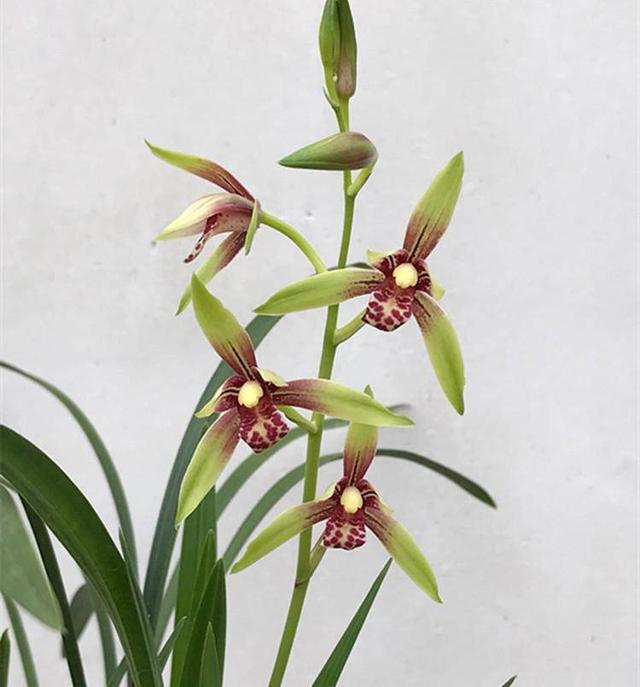
Summer is hot with dry air. This is the season when orchids need watering most frequently in the whole year, and also the season with the highest demands on watering skill. In summer, under the conditions of growing orchids on a home balcony, watering is needed almost every day. How to get past this "gate" of orchid watering? This should start from the specific circumstances of each grower's orchid-growing conditions, and adopt the corresponding watering method.
1. Timing of watering
In summer the daytime temperature is high, the amount of water evaporation is large, and the potting soil loses water fairly quickly, so watering is usually done around sunrise every morning. Morning watering can also promptly meet the orchid's water needs for photosynthesis during the day. If the water evaporation from the pot is too great during the day, then to prevent the orchid roots from dehydrating, you can water once more at sunset, but be sure to pay attention that the temperature difference between the water and the potting soil is not too large.
If the potting medium is still moist, then you can skip watering in the evening, and instead, after sunset and at night, spray water mist on the orchid leaves and around the pot to cool things down and increase air humidity. When watering orchids in summer, the worst thing is to water at midday when the temperature is high, because high temperature and high humidity most easily trigger pests and diseases in orchids and scorch the orchid leaves.
If the midday temperature is too high, some growers sprinkle water on the ground and other places inside the orchid shed, and keep an electric fan blowing (note: do not blow strong wind directly at the orchid plants), so that the air in the orchid room keeps circulating and a better cooling effect is achieved. For balcony orchid growing, especially open-style balcony orchid growing, watering at midday in summer is the worst thing to do.
2. Amount of watering
Watering orchids is usually just a matter of keeping them moist. However, in summer orchids have a very large demand for water, and the amount of water evaporation is also very large, so at this time you can water more, and you must water thoroughly, and also water around the orchid pot to increase the air humidity around the pot. After sunrise when the temperature rises, a large amount of water will, through transpiration, carry away a large amount of heat, effectively cooling things down, preventing the temperature from rising too fast, and shortening the period of temporary dormancy that orchids enter because of high temperatures, which can effectively raise the growth rate of orchids.
In addition, when watering orchids, we can appropriately add a little orchid-specific organic nutrient solution to the water, diluted 500 times with water, and use it as water to irrigate the orchid roots; this can both replenish the orchid's water and increase the orchid's nutrients, promoting vigorous orchid growth.
3. Water according to the potting medium
Orchid pots differ in size, and the potting medium each person mixes is also different, so their water-holding capacity and air permeability differ from one another. Therefore, the watering methods also differ. Usually, water thoroughly once every early morning; for those grown in soft potting medium soil, in the evening you can use a finger to dig open the soil on the pot surface to a depth of about two index-finger joints, and if you find the potting soil is dry, then you can water thoroughly once more; if at this point you find the potting soil here is moist, then there is no need to water again, and you can water again the next morning.
For those growing orchids with soilless culture, the granular potting medium is very permeable and will not become waterlogged from too much watering; when the amount of water evaporation is very large, watering once more in the evening is generally necessary; watering in the evening can cool things down and, second, replenish water.
4. Water according to the size of the orchid pot
Orchid pots differ in size, and their water-holding capacity and moisture-retaining capacity also differ. Usually, for orchids grown in large pots, watering thoroughly once every morning is enough; while small orchid pots, because their water storage is limited, after a day of evaporation, are basically starting to run short of water by evening, so they should be watered once more in the evening.
4. Water according to the weather
In summer, generally on sunny days water more, while on cloudy days there is no need to water too much. You can decide the timing and amount of watering according to the specific conditions in the orchid pot. On cloudy days, when the amount of water evaporation is not great, appropriate water control can let the orchid accumulate nutrients, which is good for the differentiation of autumn shoots, and can also prevent the occurrence of pests and diseases.