High-yield and efficient cultivation techniques for organic rice support sustainable agricultural development
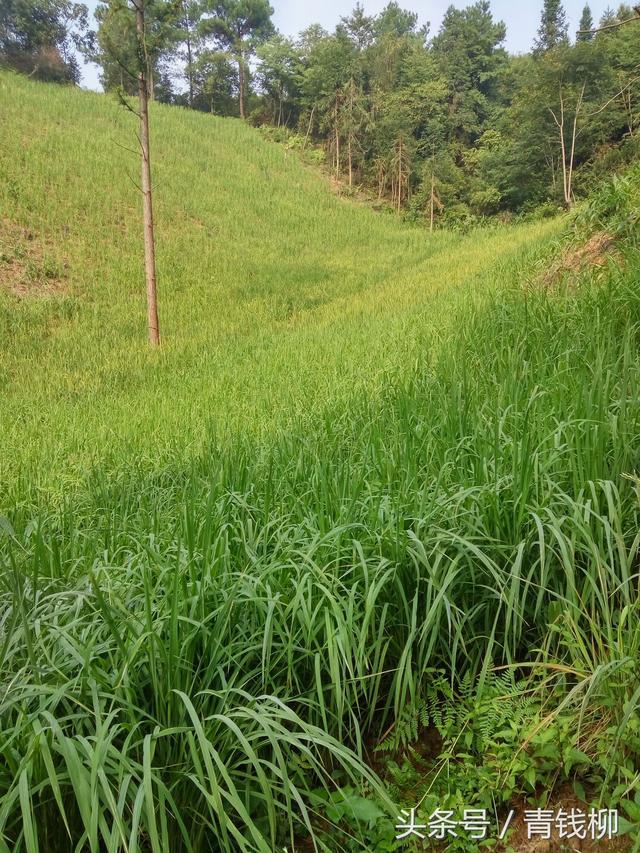
Sustainable agriculture: high-yield and efficient operational cultivation techniques for organic rice
1 Basic definition of organic rice
Organic rice mainly refers to rice that does not use chemical pesticides, growth agents, chemical fertilizers, or other cultivation and maintenance substances throughout the entire planting and production process. The whole process follows the natural laws and ecological principles of rice growth. It is an agricultural technique that maintains sustainable development and can effectively maintain the sustained and stable state of the ecosystem. It is an ecologically friendly agricultural planting method. Products made by organic processing using organic rice as raw material become organic food after meeting relevant production standards and international and national organic food standards and requirements. Organic rice cultivation has strict requirements for natural conditions, the ecological environment, and soil resource conditions, and must fully satisfy the natural growth needs of organic rice. The proportion of organic matter in the soil should be relatively high, and the natural and ecological conditions should be superior, thereby effectively supporting the normal growth of rice. To achieve high-yield and efficient organic rice cultivation techniques, the concept requires reducing the frequency of operations while planning operation timing and material inputs more precisely, ultimately achieving higher yield and economic and livelihood benefits. This concept has strong operational demand, but its operational requirements are more stringent.
2 Operational methods of high-yield and efficient cultivation techniques for organic rice
2.1 Selecting rice varieties according to regional conditions
The selection of rice varieties is not based on the most expensive variety or the one that performs best in other regions as the best choice, but should fully combine local soil, climate, environment, and economic conditions, with soil conditions especially used as the indicator. If the soil layer is deep, the capacity to retain water and fertilizer is strong, and the basic construction such as irrigation and drainage in the paddy field is relatively complete and convenient, then varieties with well-developed root systems, sturdy stems, large and numerous grains per panicle, excellent grain quality, and strong resistance can be usedmedium-late maturinglarge-panicle rice varieties. For example, common varieties such as Hefengzhan, Yinjing Ruanzhan, andShenxiangxiang; if the soil layer is shallow and the water and fertilizer retention capacity is ordinary or poor, varieties with excellent grain quality and strong resistance can be selected, such as Jinxiangzhan, Youzhan No. 8, and Guixiang No. 2.
2.2 Controlling the timing of sowing and transplanting
For sowing, early sowing can be carried out at the appropriate time, and effective analysis can be made based on local meteorological summary data from past years. For early rice, sowing can be carried out around Awakening of Insects, and transplanting should be fully completed before Qingming, which can effectively avoid the harm of late spring cold, and the damage rate can be reduced to within 20%. For late rice, sowing needs to be carried out around July 10, and transplanting should be completed before August 5, which can effectively avoid the harm caused by cold dew wind, and the damage rate can be reduced to within 15%. Therefore, in sowing and transplanting work, time planning should be done well so as to reduce damage to rice cultivation.
2.3 Optimization of strong seedlings
Seed treatment should be done well, including sun-drying and soaking the seeds. Sun-dry the seeds for 1-3 d on a sunny day before soaking, thereby effectively ensuring the enzyme activity of the seeds and improving the permeability of the seed coat, which is beneficial for uniform sprouting and uniform seedling emergence. At the same time, seed disinfection should be done well, using2 g strong chlorine crystal and 2-4 kg water to soak 4 kg seeds for 12 h. After soaking, clean them thoroughly and then soak them in clean water for 12-24 h to ensure the seeds are fully and thoroughly soaked. This treatment can effectively avoid rice bakanae disease and bacterial leaf streak, etc. In addition, a 500-fold solution of 50% carbendazim can be used to soak and disinfect the seeds to avoid rice sheath blight.
Apply basal fertilizer to the 667 m2 seedling field well. After treating the 667 m2 seedling field with a tractor, apply 500-1,000 kg of decomposed organic fertilizer per 667 m2. The organic fertilizer mainly uses chicken manure and cake fertilizer, and must be in a fermented and decomposed state. After fertilizing, fully and evenly mix the fertilizer with the topsoil, and sow the next day.
Under uniform sowing and sparse sowing treatment, sow 25-30 kg per 667 m2 in the seedling field, and 25-30 g of sprouted seeds should be sown in each seedling throwing tray. In early sowing, film should be used to fully cover the seedling nursery, thereby effectively improving the seedling formation rate and growth speed of the seedlings. Manage fertilizer, water, light, and temperature well in the seedling field. Seedling field management should mainly center on moisture. If applying topdressing to seedlings and using pesticides for pests and diseases, the seedling field should maintain a shallow water layer within 1 cm to avoid seedling burn
and thereby effectively improve the effectiveness of fertilization and pest control. Topdressing in the seedling field needs to be carried out when the seedlings are at the 3-leaf 1-needle stage, thereby effectively helping the seedlings tiller earlier and more. Three to five days before transplanting, the seedlings should receive one more send-off fertilizer, which helps the seedlings grow more new roots and is beneficial for greening after planting. The seedling field should be well managed for light and temperature. After the seedlings grow to 2 leaves, if the weather is clear, and the temperature inside the film in the seedling field rises to 25-30°C, the film at both ends of the seedling field should be lifted during the day, thereby helping lower temperature and humidity and benefiting seedling hardening. In the evening, the film needs to be put back. If the temperature is above 15°C and there is prolonged cloudy weather without sunlight, the film can be lifted to improve light exposure, which is beneficial for the seedlings to turn green and grow effectively. Three days before transplanting, the film at both ends of the seedling field needs to be lifted to help the seedlings effectively adapt to the external environment. Two days before transplanting, the film can be fully lifted to achieve the effect of seedling hardening.
2.4 Rationality of land preparation, transplanting, and dense planting
Before transplanting, puddle the main field, apply sufficient basal fertilizer, and then level the field. The height difference in the main field should be controlled within 2 cm to avoid quality differences affecting later field management. After preparing the main field, transplant the next day, which is beneficial for ensuring transplanting quality. Transplanting rice seedlings requires good timing control, generally carried out when the seedlings are at 4.5 leaves and the seedlings have more than 1 tiller. The seedling age is conventionally in the range of 20-25 d. For seedling throwing transplanting, it should be carried out when the seedlings are at 2.5-3.5 leaves, and the seedling age duration should be controlled at 15-20 d. In terms of dense planting, insertion or throwing planting should control the spacing at 23 cm x 16 cm, keep 2-3 grain seedlings per hill, and plant 17,000 hills per 667 m2, thereby effectively ensuring more than 80,000 basic seedlings per 667 m2, and maintaining shallow planting and uniform planting.
2.5 Rational fertilizer management
In fertilization operations, it is necessary to ensure sufficient basal fertilizer application in the main field. Before transplanting, after plowing the field, apply 2,000 kg of well-fermented chicken manure per 667 m2, and apply it evenly to avoid seedling burn. During the entire cultivation process, chemical fertilizers must be prohibited, the base fertilizer must be high quality and sufficient, and topdressing should be applied in small amounts and with high frequency. Topdressing should include tillering fertilizer, regulating fertilizer, and panicle-grain fertilizer. Panicle fertilizer should be used skillfully. Medium-late maturing rice varieties should be controlled to be fertilized at the stage when the penultimate leaf emerges, thereby helping the panicle become strong and the grains large. Avoid applying panicle fertilizer too early to avoid a decline in seed-setting rate, but applying panicle fertilizer too late will lead to delayed maturity with excessive vegetative growth, causing a decline in yield.
2.6 Scientific irrigation
For irrigation, maintain shallow water for planting, inch-deep water for greening, fertilize and spray pesticides when water is present, and drain and sun the field when there are enough seedlings. For medium-late maturing early rice, field sunning should be controlled in the first half of May, and for late rice it should be controlled in the first half of September. In the middle and late booting stages, roughly in the first half of June for early rice and after mid-September for late rice, irrigation is needed to effectively promote panicle and grain fertilizer. During the heading stage, maintain a water layer 2-3 cm deep in the field. After full heading, scientific management with alternating wet and dry conditions is needed, and irrigation should be stopped 1 week before harvest.
2.7 Pest and disease control
Insect killing and sterilization are needed. For pest and disease control, insect-killing lamps can be used to kill pests through phototaxis. After mid-June, starting after 18:30 every evening is most suitable. At the same time, biological control can be used, making good use of pest monitoring systems to grasp pest conditions, and then using biological or botanical pesticides for control, mainly focusing on the control of stem borers, leaf rollers, and planthoppers. Natural enemies of pests can be used to control the total pest population; ducks can also be raised to achieve insect control, achieving the operational model of rice-duck co-cultivation. The relevant methods all help reduce the base level of pests, diseases, and pathogens.