Causes and Control Methods of Grape Berry Size Irregularity
Occurrence and Control of Grape Berry Size Irregularity
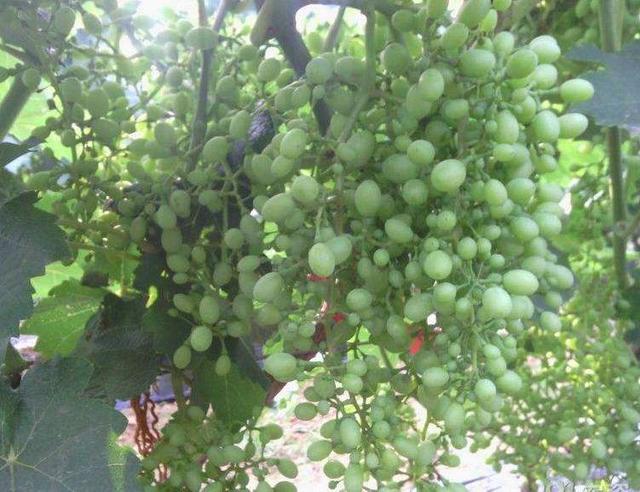
In grape cultivation techniques, uneven berry size is a long-standing difficult problem. It occurs in large and small vineyards both domestically and abroad, and to date it has not been well improved. Uneven berry size is mainly manifested as inconsistent berry size at fruit set, with obvious differences. If not controlled in time, it will directly reduce the competitiveness of grapes in the market and seriously affect growers' income. Therefore, in the face of this problem, relevant solutions are urgently needed.
1 Current Situation of Grape Berry Size Irregularity
In grape berry size irregularity, large berries refer to berries of normal size, while small berries are basically smaller than normal berries, and the gap is very large, even appearing as small as soybeans. Small berries contain almost no seeds. A bunch of grapes with such obvious uneven berry size is worth much less than a bunch of grapes that are all large berries. Nowadays, uneven grape berry size is very common. For example, Kyoho grapes are one of the varieties most prone to uneven berry size.
2 Causes of Grape Berry Size Irregularity - Taking Kyoho Grapes as an Example
2.1 Variety Degeneration
Variety degeneration is the primary cause of grape berry size irregularity. In Kyoho grapes, vines generally aged within 3 years basically do not show obvious differences in berry size, but once they exceed 3 years, such as at 4-5 years, genetic changes or degeneration will occur within the vine, and as the vine age increases, the difference in berry size will become more obvious.
2.2 Temperature Differences
As is well known, the greater the temperature difference between day and night in a grape-growing area, the sweeter the grape berries. However, if a cold winter season arrives and antifreeze and cold-protection measures are not taken in time, and if the temperature during the flowering stage is too low, flower buds will be damaged, pollination will be affected, and the fruit-setting rate will be directly affected.
2.3 Virus Damage and Growth Vigor of the Grapevine Itself
Compared with the cultivation of other fruit trees, the grape-growing process is very fragile. If grapevine fanleaf virus occurs, it will quickly spread to the entire grapevine, causing the vine's cold resistance and wind resistance to decline. In addition, if the vine's shoots and tendrils grow too vigorously and absorb nutrients unevenly, it can also lead to grape berry size irregularity.
2.4 Inadequate Nutrients or Incorrect Pesticide Use
During grape cultivation, sufficient nutrients are needed to improve the fruit-setting rate and berry quality. If necessary trace elements are lacking, uneven berry size is very likely to occur, for example, zinc deficiency, boron deficiency, etc. Some growers blindly believe that spraying excessive fruit-setting hormones on grapes can increase grape yield. In fact, this practice is wrong. Exceeding the grapevine's own tolerance range will produce the opposite result. In addition, spraying seedless agents can also cause grape berry size irregularity.
3 Control of Grape Berry Size Irregularity
The causes of grape berry size irregularity are relatively complex, so the prevention and treatment process also involves a certain degree of difficulty and must be considered from multiple aspects:
3.1 Cultivation Aspects
Strengthen the management of grapevines and carry out reasonable control according to vine growth vigor. If the vine's shoots and tendrils are too vigorous, pruning should be carried out in time to prevent excess branches from absorbing nutrients. Fertilization before fruit set should be reasonably controlled; excessive fertilization will cause vine burning.
3.2 Preventing Variety Degeneration
The main principle of preventing variety degeneration is to use microorganisms in the product to activate aging genes in cells, maintain and enhance cell activity, and slow down the rate of decline, thereby successfully avoiding grape berry size irregularity caused by variety degeneration. Second, activate the proteins in small grapes to promote the massive production of catalytic enzymes, accelerate cell division, and make small grapes grow rapidly into large grapes. Third, it can activate soil components, make the soil structure more stable, and ultimately promote root development, preventing uneven grape berry size caused by excessive growth vigor. Finally, it can better resist invasion by external viruses and enhance cold resistance and wind resistance [Jishan Huayao]
3.3 Reasonable Selection of Agents
Based on many years of planting experience, the author carefully summarized the various factors causing grape berry size irregularity. In order to find agents suitable for preventing uneven berry size, the author studied and repeatedly screened the agents and methods needed in grape cultivation, and finally chose Kaoshan Duoba "Grape Berry Size Irregularity Inhibitor" to solve this difficult problem. This inhibitor is simple and easy to use. It can be applied as a root drench at 3-400 times dilution before the grapes are taken out of storage and placed on the trellis, and sprayed on the leaves 2-3 times at 4-600 times dilution from leaf expansion to before fruit set. Only these two steps are needed to solve the problem of uneven berry size. To prevent uneven berry size in the coming year, it can continue to be used 2-3 times from the berry expansion stage to before harvest. This method has been widely applied in grape cultivation in the Jinzhou area, and all applications have achieved good results, receiving unanimous recognition from growers.